

A book, a film, a stage show, a film sequel … There seems to be a bottomless public appetite for the story of a young woman, with no idea how lucky she is, who gets the greatest possible starter job on fashion magazines, succeeds despite herself (total lack of respect for her superiors or the industry they work in, no personal style) – and then walks away from it all, feeling like she’s won.
Well, as a fashion magazine insider myself (I edited British Elle and covered the international designer shows for this newspaper for years, I’ve had dinner with Karl Lagerfeld, lunch with John Paul Gaultier and a right laugh with Vivienne Westwood), that was my first take on it.
But, over time, I’ve come to love the film of The Devil Wears Prada as much as the next woman who has ever bought a pair of shoes she didn’t truly need. Which is all of us, right?
It’s a proper shiny and sophisticated movie with hilarious one-liners, a new twist on the fish-out-of-water trope and one of the greatest transformation makeovers in film. And Paris. And Stanley Tucci.
So much better than the book.
When that came out in 2003, it made me see as red as the new black. Based on Lauren Weisberger’s own experience working as an assistant to actual Anna Wintour on actual US Vogue, after being given the privilege of the ultimate first job in fashion media, she turned around and betrayed not only Wintour, but – it seemed to me – the entire high-fashion clan.
The legendary editor is portrayed as nothing short of a psychopathic sadist, her staff as simpering airhead hyper-bitches, and designers as desperate sycophants. Weisberger worked on the most important fashion title in the world for just 10 months yet felt qualified to deride two major industries – fashion and glossy magazines (which were still very big business in the early noughties) – and all the people who work in them, while making a nice dollar for herself off the project. It just didn’t seem right. Sniff.
But then the film came out … and I forgave her, got over myself and just revelled in the romp. Plus there are specific moments in the film that raise it above the revenge-memoir level – the crucial one being the famous “cerulean sweater” speech (which does not appear in the book). This is when Runway (Vogue) magazine editor Miranda Priestly (Anna Wintour; no one denies it any more, not even Wintour herself) uses the ugly, cheap knit her new second assistant Andrea is wearing to explain how the whole fashion system – which Andrea thinks she’s above – actually works. The trickle-down.
Starting with the original ideas and choices of the great designers – in this case, the very specific shade of blue of the horrible sweater – these are then analysed and selected by the experts on fashion magazines as key trends, which then fan out to the entire global clothing industry.
As Miranda puts it: “And then it filtered down through the department stores and then trickled on down into some tragic Casual Corner where you, no doubt, fished it out of some clearance bin. However, that blue represents millions of dollars and countless jobs. And it’s sort of comical how you think that you’ve made a choice that exempts you from the fashion industry when, in fact, you’re wearing a sweater that was selected for you by the people in this room.”
That monologue – impeccably given by Meryl Streep, of course, as Priestly – makes up for all the insult of the original book concept. Even Wintour said so, in an interview about the new film in US Vogue. “What I liked about the first film,” she said, “is that it showed the world what a huge business fashion is. It’s a true economic force globally, and the first film acknowledged that.”
She’s not exaggerating. If the fashion industry were a country, it would be vying for a place in the 10 largest economies in the world. Yet the whole behemoth and all who sail in it continue to be dismissed as frivolous and irrelevant, which is one of the reasons the negative mythology around Anna Wintour’s personality and workplace style has always nipped my bunions.
There is no doubt she’s demanding. I’ve heard it from friends who’ve worked with her, and I’ve witnessed first-hand the chilly persona she presents from behind her omni-shades to the world. I sat across fashion runways from her for decades of my life and once stood behind her in the queue for the loo at the exhibition centre in Milan. Up close and personal, literally.
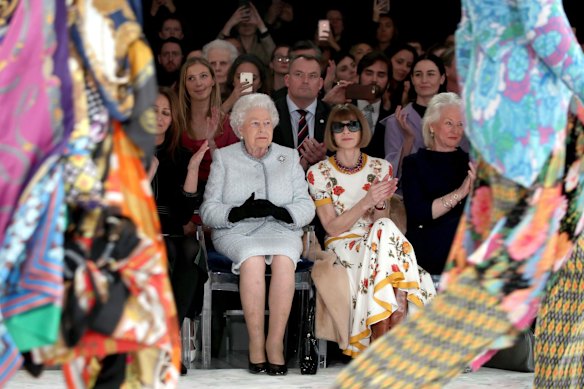
So she’s not warm. But she is incredibly hard-working and self-disciplined. She plays tennis before work every day, getting her hair blow-dried between one and the other, and twice a day on holiday. I was told that by the hairdresser who used to do her blowouts on St Barts. And, he said, she read proofs through every one.
So she’s incredibly disciplined, super-smart and globally successful. Why does she also have to be “lovely”? Are the CEOs of the Dow Jones top 30 companies expected to be lovely? No, because they’re doing “important” jobs (and the overwhelming majority are men).
Anna Wintour does a very important job (she’s now the global chief content officer and artistic director at Condé Nast) and I don’t need her to be fluffy while she does it, I just want her to continue to be amazing at it – but I do think the nightmare-boss-from-hell theme of TDWP is another source of the film’s so-broad appeal.
We’ve all had one, so to see a monster boss won over and then reveal her vulnerable soft centre is very satisfying – and all the more so when she then reverts to type.
The film also embraces another familiar workplace experience: that very specific stage of first proper job, post-university. When we emerge from about 17 straight years of pre-ordained ladder rungs in the education system and suddenly have to figure out for ourselves absolutely everything about the world, in big and real time, for ultra-high stakes. I remember it vividly; the closest thing I’ve ever experienced to skydiving.
Those sources of appeal are, more generally, about work life, but a specific fashion element of the film which I particularly adore is the “Andrea makeover”. When you see how Anne Hathaway looks after art director Nigel (Tucci) restyles her, it’s a source of wonder how costume designer Patricia Field ever managed to make her look frumpy and dull in the “before” section.
Striding out in head-to-toe Chanel, Hathaway looks absolutely amazing, and it reminds me of one of my favourite things about being a fashion magazine editor. I would get to watch such cygnet-to-swan style transformations happen over the first few months after a young person started work on a glossy, particularly at Elle.
Sadly, magazines don’t actually have cupboards of on-season designer clothes that the staff can dip into, the way Nigel casually does. There is the “fashion cupboard”, where the garments for shoots are locked up while they are on very brief loan from the designers, who at that stage have only one sample of the item in existence – the one that was worn in the runway show. Anyone caught helping themselves to that gear would be sacked on the spot.
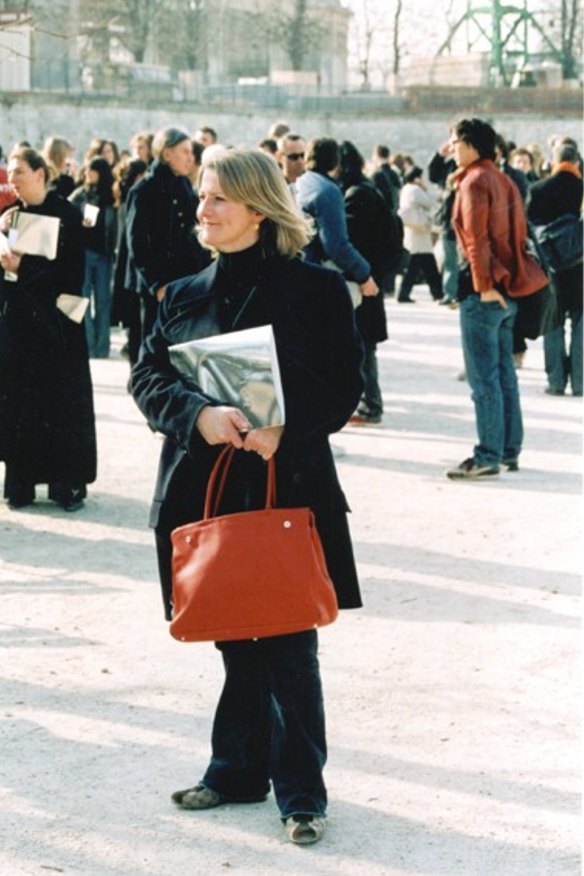
Equally, no one of Andrea’s pay-grade would ever be able to afford designer gear, not even with press discounts. The best you could hope for were sample sales (where you have to be sample size of eight and below) and the occasional donation from someone higher up the fashion-mag food chain.
So while there were no Chanel-runway looks walking past my office, what I did see over and over again was the development of a fabulous personal style that could be achieved on a low budget – and the embrace of that particular magazine’s house aesthetic (they all have one). Even on young women without Hathaway’s supermodel physical attributes, it was a joy to observe it.
That’s something that I, as an industry insider, love about the film. For civilians (as we call non-fashion people, sorry not sorry), I think there is another key appealing aspect: the never-fading glory of the triumph of the nerdy girl over the mean girls, which works equally well whether it’s a fashion magazine or one of the great phalanx of American high school movies.
Meanwhile, back in real life, the woman who seems to be presented as the meanest mean girl of them all looks to be coming out on top. Anna Wintour isn’t just surviving the TDWP flume ride, she’s owning it.
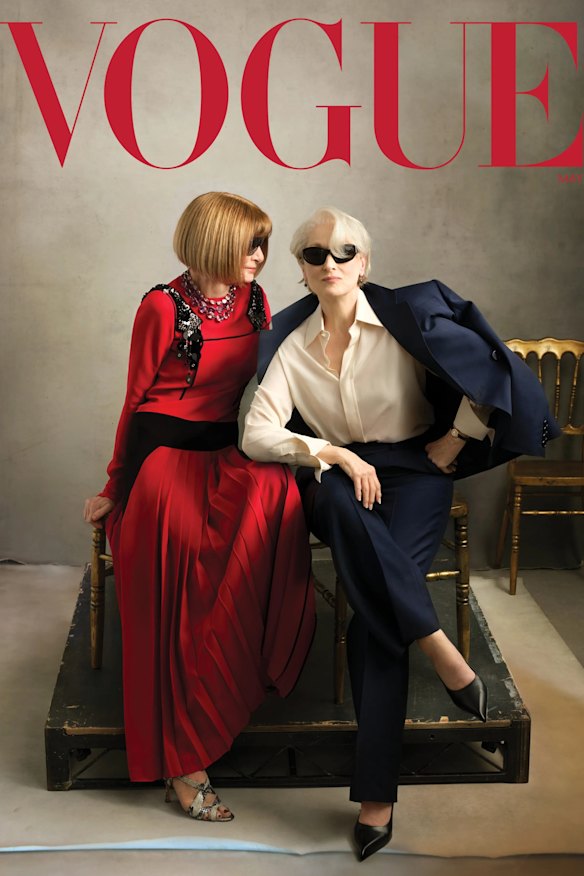
She’s on the cover of the May edition of US Vogue with Miranda Priestly … well, Meryl Streep in character. (Streep, her pal, persuaded her to do it, apparently.) Then they took it a stage further and produced a video clip of the two great editors encountering each other in an elevator. With dialogue. You have to hand it to anyone game to do lines with Meryl Streep for public consumption. Wintour comes off very well in it – and I particularly love that, just as always in real life, she isn’t carrying a handbag. She never carries a handbag; Priestly/Streep does, and looks frumpy for it.
The next TDWP moment to look forward to is the premiere, to see what they all wear – which also makes me wonder if there will be an awkward moment at that event if Wintour bumps into Weisberger.
It seems not, because Wintour is quoted as having no memory of Weisberger working in the Vogue office. Miranda Priestly would be proud of her.
Get the best of Good Weekend delivered to your inbox every Saturday morning. Sign up for our newsletter.
Disclaimer : This story is auto aggregated by a computer programme and has not been created or edited by DOWNTHENEWS. Publisher: www.smh.com.au






