TOCHIGI –
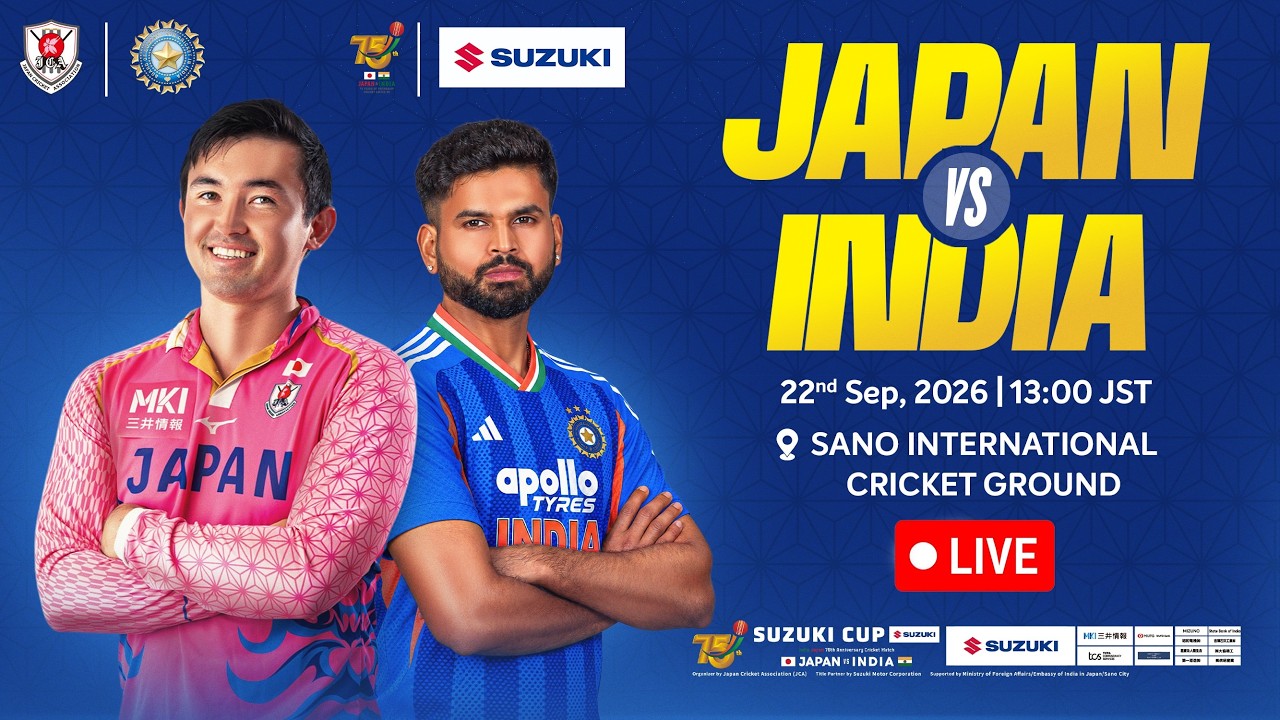
Japan came within two runs of producing one of international cricket’s biggest upsets on September 22, pushing reigning T20 world champion India to the final ball before losing a rain-shortened match at Sano International Cricket Ground in Tochigi Prefecture.
The first men’s international cricket meeting between Japan and India was reduced from 20 overs per side to just five after heavy rain associated with Typhoon No. 25 left the Sano outfield soaked and delayed the start for several hours.
India, ranked No. 1 in the world in T20 cricket, struggled badly after choosing to bat first and could manage only 32 runs for four wickets from its five overs. Japan then reached 30 for three in reply, leaving the hosts needing a boundary from the final delivery to complete a remarkable victory before India held on by two runs.
The closeness of the contest was remarkable considering the enormous gap between the two countries in cricketing resources and experience. India is the dominant commercial power in world cricket and entered the match as reigning T20 world champion, while Japan remains a developing cricket nation in a country where baseball, soccer and other sports receive far greater attention.
India captain Shreyas Iyer was named player of the match after making 16 from 12 balls, exactly half of India’s total. Sanju Samson made nine from seven deliveries, while Japan’s bowlers prevented India’s usually explosive batting lineup from finding any rhythm on a slow, low surface.
Charlie Hara-Hinze was Japan’s most successful bowler, taking two wickets for 17 runs from his two overs, while Benjamin Ito-Davis conceded only two runs and claimed one wicket in his single over.
The Japanese attack struck early and repeatedly. India lost four wickets in only five overs and never managed to accelerate on a pitch made difficult by the preceding rain.
Iyer later said the surface was extremely difficult for batting because the ball was turning and holding in the wicket. He said the five-over format meant the match could go in either direction and praised Japan’s attitude during the contest.
Japan began its chase of 33 cautiously but remained within range throughout.
Captain Kendel Kadowaki-Fleming led the innings with 12 from 12 balls and increasingly threatened to turn the contest in Japan’s favor. Japan reached 18 for two after three overs, leaving 15 runs required from the final 12 deliveries.
Kadowaki-Fleming produced the most memorable stroke of Japan’s innings when he moved across his crease and scooped Indian spinner Ravi Bishnoi for four during a 10-run third over.
Japan’s captain continued attacking before being dismissed for 12 from the final ball of the fourth over, caught off Washington Sundar. Japan nevertheless entered the last over needing only eight runs for what would have been an extraordinary victory.
Ito-Davis remained at the crease and finished unbeaten on nine from eight balls, with Alexander Shirai-Patmore also there at the finish.
India turned to experienced left-arm spinner Axar Patel for the deciding over.
Axar conceded only five runs, despite considerable tension surrounding two wide-ball decisions. One delivery was initially called wide before the decision was reversed after Indian captain Iyer spoke with the umpire.
Japan still required a boundary from the final delivery.
Shirai-Patmore attempted to work the ball across the line, but it struck his pads and ran toward fine leg, allowing only a single. Japan finished on 30 for three and India escaped with a two-run victory.
Washington Sundar finished with two wickets for 13 runs from two overs, while Axar conceded only seven runs from his two overs without taking a wicket.
The final margin nevertheless represented a significant performance for Japan.
Kadowaki-Fleming said afterward that coming so close made the defeat difficult to accept, but said he was proud that Japan had taken what he described as the best team in the world to the final ball.
He also praised the wider Japanese cricket community, including ground staff who had worked through the night to make the game possible after prolonged rain threatened to force its cancellation.
The players walked around the ground after the match to applaud spectators who had remained through the weather delays.
The Suzuki Cup had been organized as part of celebrations marking the 75th anniversary of diplomatic relations between Japan and India and was the first senior men’s international cricket match between the two countries.
The fixture was also part of the “Sport 75” initiative linked to cooperation between the two countries in sport. The Japan Cricket Association described the visit of the reigning world champions as a landmark moment for cricket in Japan.
Sano International Cricket Ground has become the center of Japan’s growing cricket infrastructure.
Located in Sano, Tochigi Prefecture, the venue was developed from the site of the former Tanuma High School and has emerged as the principal home ground of the Japan Cricket Association and Japan’s national teams.
The association described the September 22 match as the largest international cricket fixture ever staged in Japan. Suzuki Motor served as title sponsor, while Sano City, Japan’s Foreign Ministry and the Embassy of India in Japan were among the organizations supporting the event.
Demand for tickets was sufficiently strong that the Japan Cricket Association released an additional limited allocation of cancelled tickets in the days before the match.
The significance of the match extended beyond the result.
Cricket remains a relatively minor sport in Japan, but the country has steadily developed domestic leagues, youth programs and national teams while using Sano as the focal point for its growth strategy.
Japan’s men’s team has also become increasingly competitive internationally and will now move directly into the Asian Games cricket tournament.
Japan begins its men’s Asian Games campaign against Afghanistan on September 24, while India enters the competition at the quarterfinal stage on September 28.
India’s escape in Sano therefore provided both teams with an unexpectedly intense final preparation.
For Japan, however, the importance of September 22 may extend well beyond the two-run margin.
A Japanese team playing before a home crowd took the world’s leading T20 nation to the final delivery of the match, turning what had been organized partly as a celebration of sporting friendship into one of the most competitive and memorable international cricket matches yet staged in Japan.
Disclaimer : This story is auto aggregated by a computer programme and has not been created or edited by DOWNTHENEWS. Publisher: newsonjapan.com