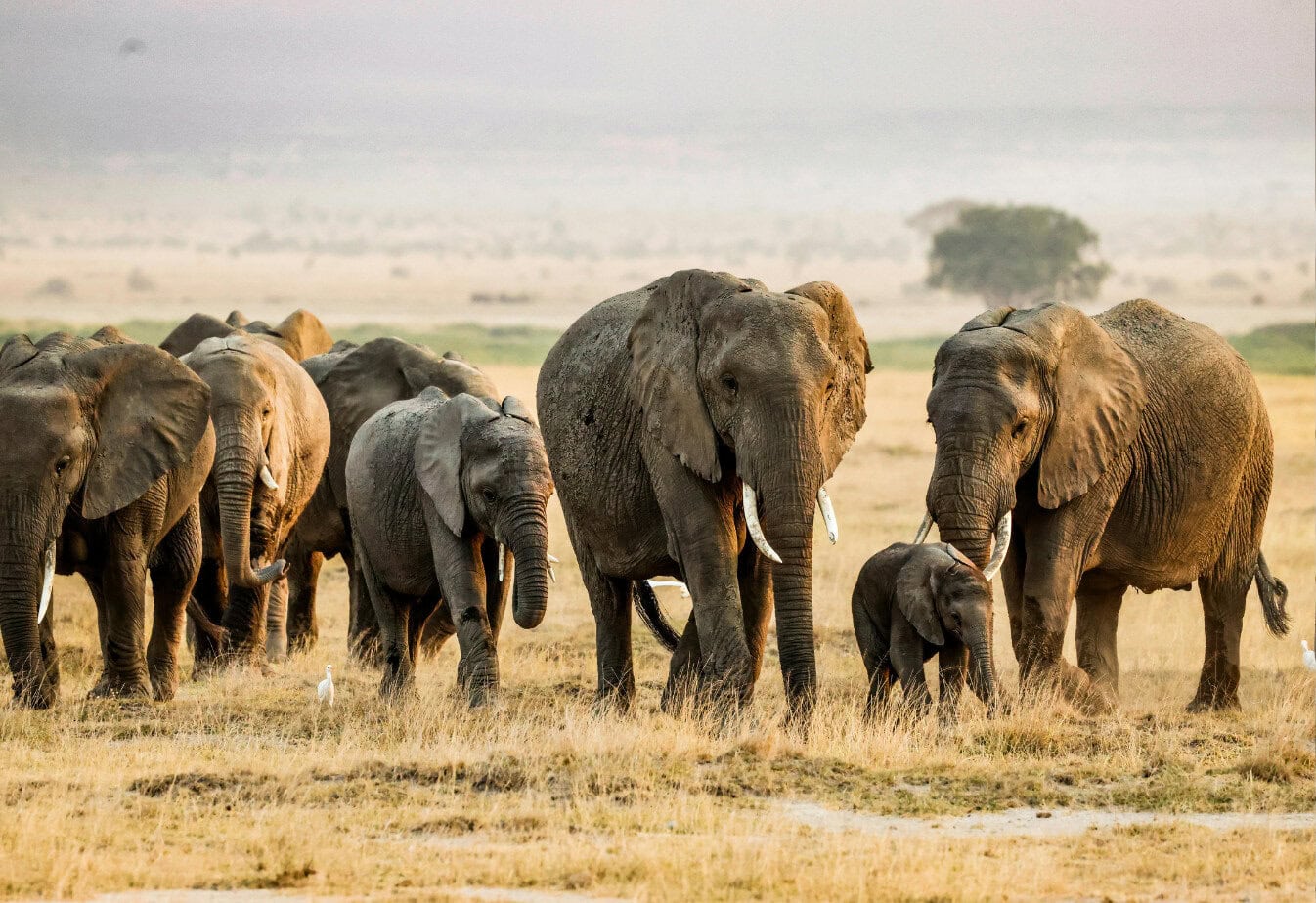
Elephants, rhinos, lions and other wild animals could receive stronger long-term protection under a new conservation programme launched in Kenya.
The ten-year Thamani Asili programme was launched on Wednesday at Tsavo West National Park in Taita Taveta County, southeastern Kenya.
Thamani Asili means “value of nature” in Kiswahili, one of Kenya’s national languages. The programme brings together the Kenyan government, the Kenya Wildlife Service, The Nature Conservancy and other funding partners.
The agreement combines $80 million from the Kenyan government with a planned $80 million from private donors. The money is intended to support conservation across about 17.3 million hectares, or 173,000 square kilometres.
The first work will focus on four large landscapes: Tsavo to the Indian Ocean coast, the Greater Ewaso region in central and northern Kenya, the Great Rift Valley and western Kenya, and southern Kenya.
These areas include migration routes and habitats used by elephants, black rhinos, lions and many other animals. The southern area connects the Maasai Mara reserve with the Serengeti ecosystem across the border in Tanzania.
Tsavo alone supports about 40% of Kenya’s elephants and 20% of the country’s critically endangered black rhinos, according to information supplied to Reuters by The Nature Conservancy.
Long-term funding
Many conservation projects depend on grants that last only a few years. Thamani Asili uses a system called Project Finance for Permanence. Under this model, donors commit long-term money while a government agrees to policy and management changes. Funding is released as agreed conditions are met.
A newly created independent trust fund will manage donor money and track progress. This structure is meant to offer more stability than a series of short projects. However, the programme’s value will depend on how the money is spent and whether promised protections are enforced.
Communities are part of the plan
Wild animals in Kenya often move outside national parks and across land used for agriculture and homes. Conservation therefore depends on the people who live in these areas.
The programme says communities will have a role in land-use decisions and will receive support for sustainable grazing, tourism and measures to reduce conflict between people and wildlife.
Disclaimer : This story is auto aggregated by a computer programme and has not been created or edited by DOWNTHENEWS. Publisher: theanimalreader.com