Maybe somebody out there is reciting the Eternal Rest Prayer for LIV Golf. I am not. There’s no intent to dance on a grave here. Still, this is a fitting time to repeat the words of baseball’s poetic seventh commissioner, Bart Giamatti, in his 1989 eulogy for Pete Rose’s baseball career:
“The banishment for life of Pete Rose from baseball is the sad end of a sorry episode. One of the game’s greatest players has engaged in a variety of acts which have stained the game, and he must now live with the consequences of those acts.”
LIV Golf has stained golf. Not golf as millions of us play it, for we are merely worker bees in this broad golf universe, sleeping in cars for Bethpage Black tee times, grateful if Collin Morikawa is willing to look our way at any point in the cut-free FedEx St. Jude Championship. No, the insidious thing that LIV Golf did was to make professional golf, in its northernmost reaches, seem more ordinary, less special, more like everything else in this show-me-the-money world.
There was something rugged and gorgeous about the cutthroat PGA Tour that I came up on as a fan and an occasional caddie the 1970s and ’80s. All those independent contractors. The players were cowboys, really. There were vestiges of that world still in place when Tiger Woods started proving his golfing superiority in the 1990s and into this century. That tour was already dying. LIV Golf fired off the fatal final round.
The modern, new-look, PE-fueled PGA Tour, rising now from the ashes of the old one, might entertain you, or not. (Many of us were there for the sport of it all.) It will surely give you something you can gamble on as you examine week-over-week trends in strokes gained: par-5s played with extra-long tees. (Many of us were there simply to watch a hard thing done artfully.) Anyway, I’m glad Chi Chi Rodriguez got his Hall of Fame consideration when he did, because his golf results didn’t hold up to “metrics.” But he was a joy to watch. What a swing and life, and now he’s enshrined in Pinehurst, alongside Donald Ross.
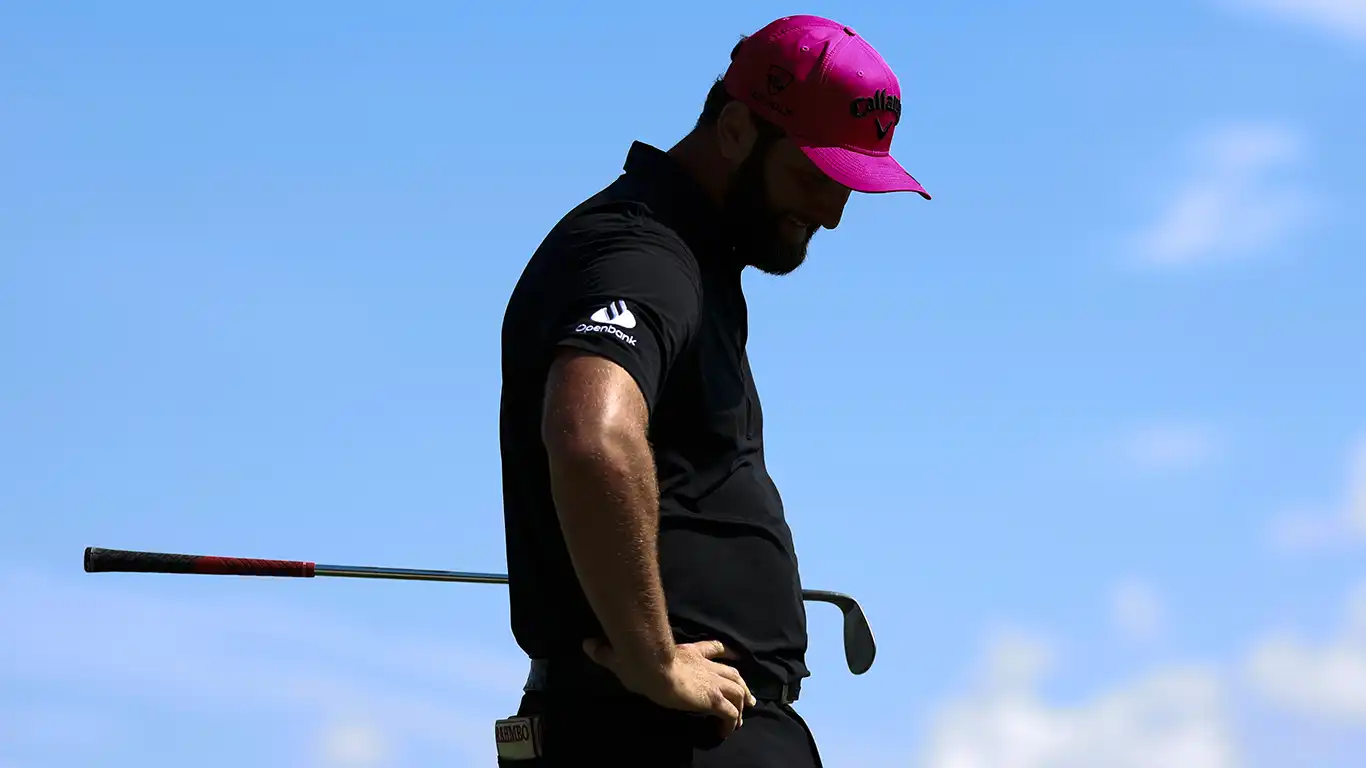
LIV Golf, ultimately, was its people, as all institutions are, and LIV Golf’s dyed-cash money bombs left a stain on some of the most dynamic figures in the modern game. Maybe I should say they spilled stain on themselves. This is an incomplete roster of the diminished: Dustin Johnson, Brooks Koepka, Bryson DeChambeau, Bubba Watson; various and talented South Africans and Australians; various European Ryder Cup stars, Jon Rahm chief among them; Pat Perez, of course — you could not leave Pat Perez off this list. And, first and foremost, Mr. Phil Mickelson, one of the most exciting figures in the game’s history. At 50 he became the oldest golfer to win a major championship.
It was thrilling, what he did at Kiawah, at the PGA Championship in 2021. At 51, he exiled himself, in the name (he claimed) of remaking professional golf.
As if professional golf needed to be remade. It didn’t. It just needed to be tweaked. It needed to evolve, as all living things do. It was Phil who opened the doors to LIV Golf for others, because he was at the top of the food chain. When he won that PGA Championship, he was the most popular figure in the game. For a minute there, he was Arnold. Arnold Palmer.
I’ve been typing this message in your direction for some decades now and I do so again but this time more cautiously: There was something magical and otherworldly about Hagen, Hogan, Palmer, Nicklaus, Watson, Norman, Seve. There was something magical about the meritocratic world they created for Phil Mickelson and Dustin Johnson and Bryson DeChambeau, and Lee Westwood and Ian Poulter and Graeme McDowell when they brought their exciting and accented games to this side of the Atlantic.
Please don’t lecture me about Milton Friedman and the power of the marketplace. LIV Golf did not operate in any sort of real-world marketplace. It was not a competing golf league to the PGA and European tours. It was an effort by a group of Saudi oil billionaires to buy a seat at the table of this ancient and special game that, through the centuries, has actually stood for something. You couldn’t buy your way into it, that was actually one of the things it stood for. But nobody told that to Yasir Al-Rumayyan, governor of the Saudi Arabian misnamed Public Investment Fund and LIV Golf bankroller. For starters, Greg Norman sold him on a concept of golf as a team sport.
But golf is not a team sport. Here and there, yes, but week in and week out, no. The LIV model, the Crushers and all those other teams with their ridiculous names, never made sense. Golf is sport for those of us who are attracted to notions of self-reliance. You have the chance to practice that very thing over every tournament shot, in every practice session, over every off-season. I love team sports because they’re about teamwork. I love golf because it’s not.
I think Rory McIlroy was off-the-mark about something the other day (and good for him for talking and sharing and being out there). In a press conference before the Abu Dhabi tournament this week, he said, “Talk to Jack Nicklaus or any of these older guys, they would have loved LIV to come around in their day. They would have made more money. And we’re all making more money because of [LIV].” It sounded like McIlroy was repeating what he has heard Nicklaus say. (Rory lives and plays at the Bear’s Club in South Florida, founded by Nicklaus.) I’ve heard Gary Player, and others, say the same thing.
But in their heydays, when they were in the thick of it, Nicklaus and Player thought they were earning vast sums, and they didn’t think of golf as a get-rich-quick scheme anyway. They loved the competition, the travel, the life, the side hustles — and the money, too. I happened to be at the 1985 Las Vegas Invitational, when Curtis Strange won and collected $171,000. Nobody could believe it, the sum was so vast. Jack’s payday for winning the 1986 Masters was $144,000. Nobody was picketing on Washington Road, in the name of higher wages.
In 1987, the movie “Wall Street” was released. You likely know the catchphrase that came out of it: Greed is good. Maybe you forgot that the character who says it, Gordon Gekko (played by Michael Douglas), goes to prison on an insider-trading conviction. What would be the equivalent in tournament golf? Sharing information about what club you hit? That tracks. Players in cahoots — the rulebook doesn’t permit it.
I was surprised that the Masters rules committee didn’t penalize Brooks Koepka for flashing five fingers for Gary Woodland’s benefit on the 15th hole of the first round in the 2023 Masters. Seemed obvious to me, what he was doing, signaling that he had just hit a 5-iron, for the tricky second shot over a pond. It all makes you wonder if golf is losing its way: The parade of stars that left the tour that made them suggests it has; that Koepka moment at the Masters does, too.
Through the Nineties and really ever since, greed-is-good has taken on a life of its own. Anything goes it its first cousin. Maybe, finally, we’re in for a correction. Maybe the demise of LIV is part of it. Calling two shots on McIlroy for being too aggressive with the flange of his wedge when addressing a shot in the rough this week, the same.
Bart Giamatti, banishing Rose in 1989, wrapped up with this:
“The matter of Mr. Rose is now closed. It will be debated and discussed. Let no one think that it did not hurt baseball. That hurt will pass, however, as the great glory of the game asserts itself and a resilient institution goes forward. Let it also be clear that no individual is superior to the game.”
For our purposes, sub in golf for baseball. Everything else, stet. In Arnold Palmer’s professional life, he practiced Giamatti’s final sentence. He always put the game ahead of himself. Good manners, and a good business practice, too.
Michael Bamberger welcomes your comments at Michael.Bamberger@Golf.com
Disclaimer : This story is auto aggregated by a computer programme and has not been created or edited by DOWNTHENEWS. Publisher: golf.com