- Iran’s World Cup hopes ended by VAR, mathematical eliminations.
- Severe administrative hurdles, border commutes hindered Iran’s performance.
- Team endured homeland conflict, political protests, impacting their focus.
- This World Cup likely concludes Iran’s golden football generation.
FIFA World Cup 2026: The beautiful game has rarely felt as cold, calculated, and unforgiving as it did on the rain-slipped sod of Seattle Stadium. For Iran, a footballing nation whose history is etched with the scars of narrative-altering near misses, this departure was an intense existential wound.
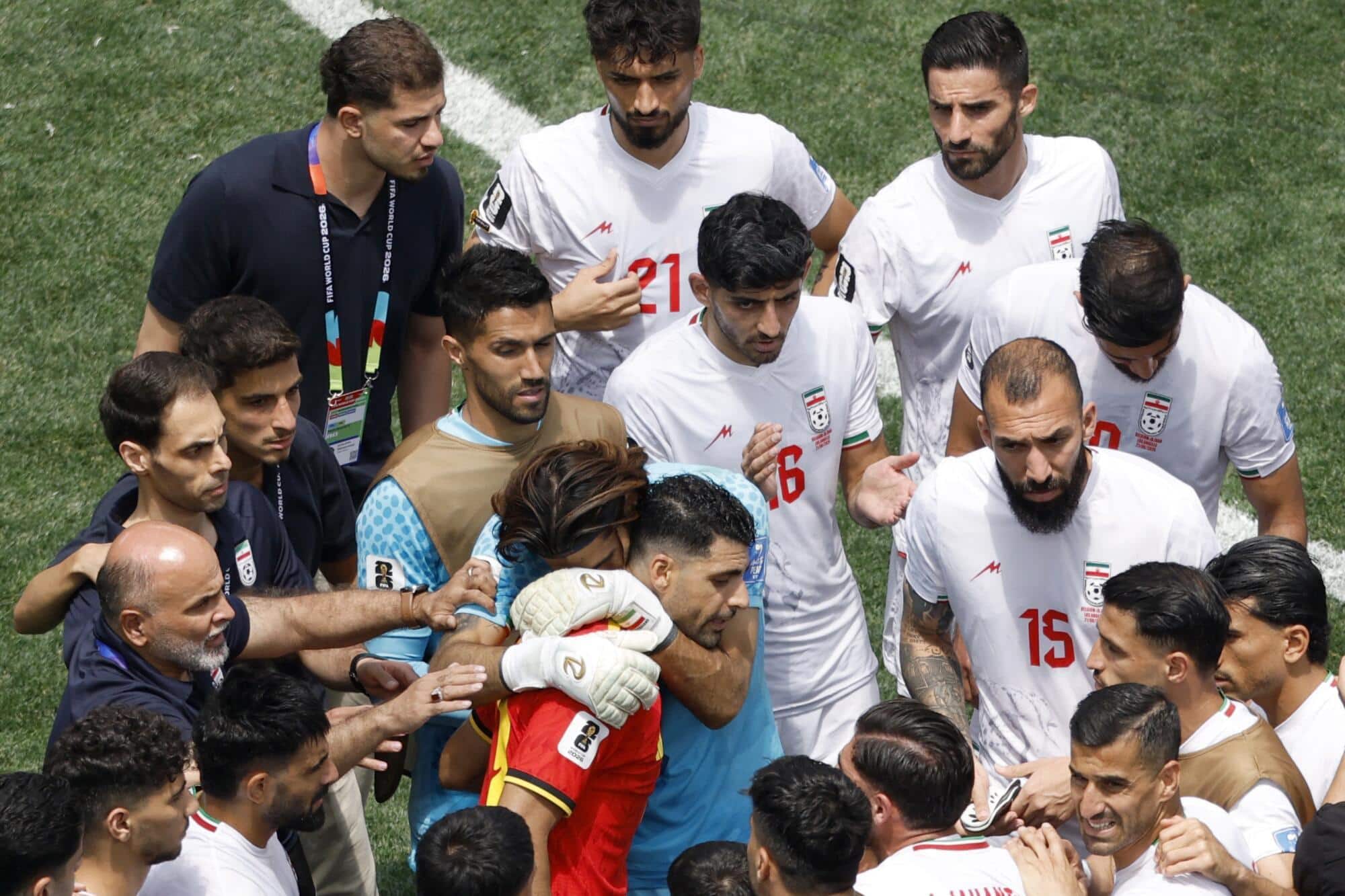
Captain Mehdi Taremi remained pinned to the turf for what felt like an eternity after the final whistle, looking past the stadium roof into a silent evening sky. His veteran teammates lay scattered across the field, completely drained by an agonizing journey that felt compromised from inception.
The subsequent twenty-four hours only served to extract the final remnants of hope, converting a tense structural wait into a mathematical execution. Supporters watched their final remaining pathways to survival evaporate on Saturday through a series of cruel, out-of-hand results.
The Cruelty Of The Micro-Margin
The definitive Group G encounter against Egypt will be remembered for the incredibly small fractions that can completely destroy four years of human preparation. A single goal would have altered history, propelling Team Melli into the knockout stages for the first time.
Instead, the match concluded with absolute tech-driven despair when Shoja Khalilzadeh’s last-minute winner was dramatically ruled offside. The razor-thin VAR intervention reversed a moment of pure domestic ecstasy, transforming the bench into a scene of complete desolation.
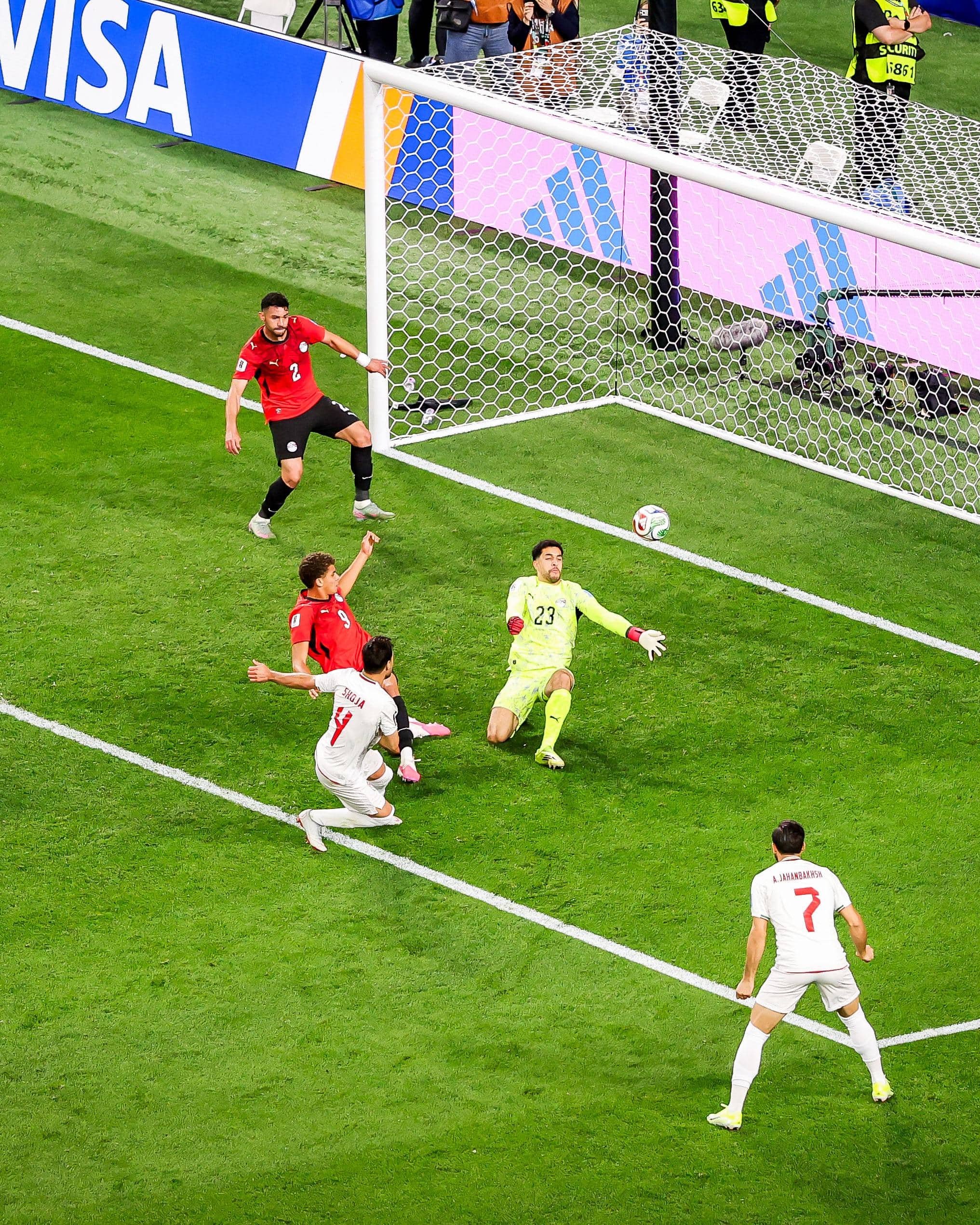
The setback followed an entire evening of agonizing near misses for the veteran forward line in Seattle. Taremi saw an early penalty parried away by Mostafa Shobeir, before Saeid Ezatolahi watched a thunderous header crash directly against the crossbar.
“For a few centimetres, five centimetres, 10 centimetres, 30 centimetres, not even a metre, these goals were ruled out,” head coach Amir Ghalenoei stated to the media panel. “I’m just unhappy and upset at the bad luck.”
The Slow Mathematical Execution
Following their third consecutive stalemate, the squad became completely dependent on external scorelines across the continent to progress as a best third-placed side. Saturday afternoon transformed into a slow, torturous dismantling of lingering sporting hope.
One of Iran’s potential routes to qualification disappeared when Croatia avoided defeat against Ghana. Then another avenue closed as the Democratic Republic of Congo secured a victory over Uzbekistan, leaving Team Melli’s fate hanging by a thread.
The final, fatal blow landed during stoppage time of the Austria-Algeria match. A dramatic late Algerian goal briefly reignited hope before an Austrian equaliser just two minutes later permanently ended Iran’s tournament.
The Logistical Border Exile
To evaluate the tactical output of this squad on the pitch without addressing the severe administrative hurdles imposed upon them is impossible. The international delegation was subjected to an unprecedented travel regime compared to most other tournament finalists.
The entire Iranian team was forced to base their official camp outside American soil in Tijuana, Mexico. The players endured grueling border commutes and multi-hour airport security screenings right before high-intensity competitive fixtures.
The constant travel delays significantly disrupted recovery windows between elite matches. The veteran players were effectively forced to function as political commuters while trying to compete against the finest athletic teams on earth.
“We don’t have recovery, we don’t have any logistics people here to help us,” a visibly exhausted Taremi explained during his post-match media press conference. “We always complain about these things, but no one helps. No one.”
WATCH VIDEO
🚨 Iran captain Mehdi Taremi just exposed @FIFAcom and the US:
“This is a disaster World Cup. Infantino promised to fix everything in our locker room… he did nothing. We can’t stay in Seattle — forced back to Tijuana every time. They want us out.”
Visa denials for staff.… pic.twitter.com/yGWN8DFC43
— New Direction AFRICA (@Its_ereko) June 27, 2026
An Institutional Stripping Of Support
The institutional hurdles escalated to a point where the squad was deprived of essential operational support. Host authorities denied entry visas to eleven key members of the official technical support staff.
The team navigated the tournament without their dedicated media relations group, professional kit managers, or routine medical rehabilitation assistants.
Despite those logistical challenges, the group earned widespread respect for their resilience and discipline throughout the tournament.
The Invisible Burden Of Home
The athletes took to the field while carrying the emotional weight of a homeland engulfed in a sudden escalation of regional military conflict. True sporting focus became secondary to the immediate human anxieties regarding families left behind.
The psychological strain of executing elite athletic strategies while worrying about loved ones at home was a burden that weighed heavily on the squad.
Furthermore, the stadium environments were often highly charged, with political demonstrations occurring outside the security perimeter. The players had to block out immense external noise while attempting to perform at the highest level.
The Cruel Passing Of A Golden Era
This tournament marks the likely curtain call for one of the most accomplished generations in Iranian football history. Operating as one of the oldest squads in the competition, several icons have now made their final international appearance.
Veterans who spent more than a decade elevating the country’s international standing must now walk away without achieving a long-awaited knockout milestone. To see their collective journey end while relying on external mathematics felt especially cruel.
“I do not understand what is wrong with our football,” a weeping Ramin Rezaeian stated to broadcast cameras. “At the end, I am just apologizing to my people in Iran, because they deserve more happiness.”
WATCH VIDEO
Iran’s Ramin Rezaeian in Tears:
It didn’t matter if we died today or whatever we just wanted our people to be happy.People of Iran, we love you and I can only say sorry. pic.twitter.com/NoIdJazL24
— Ryan Rozbiani (@RyanRozbiani) June 27, 2026
A Legacy Written In Eternal Character
The tangible heartbreak of 2026 now takes its place alongside a long history of agonizing tournament departures. It joins the ghost of Messi’s late strike in 2014 and the heartbreaking draw with Portugal in 2018.
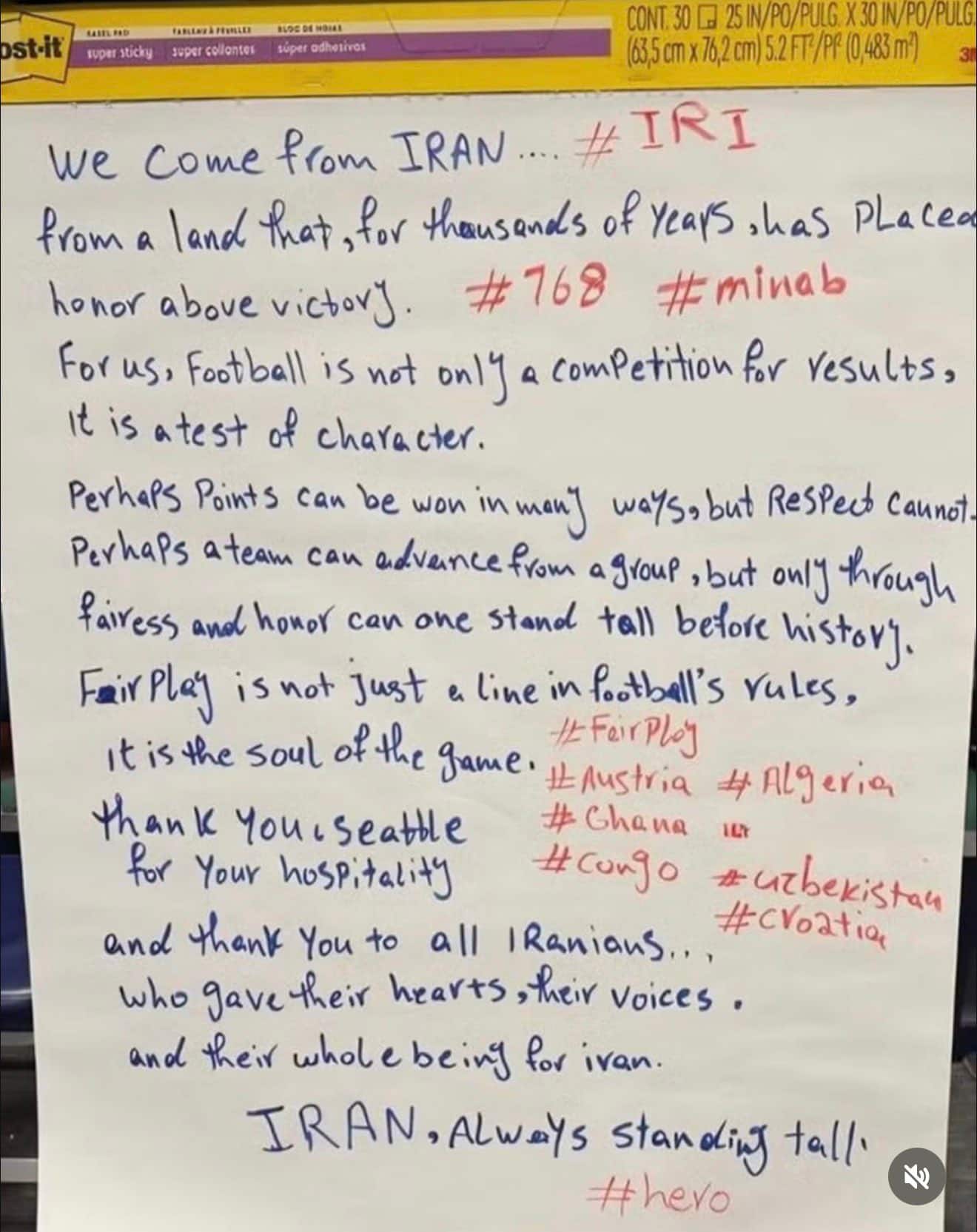
Before exiting the Seattle locker room for the final time, the players reportedly left an official handwritten message on the whiteboard, according to Tasnim News Agency.
“We come from Iran. A land that, for thousands of years, has valued honor above victory,” the locker room note stated. “For us, football is more than a competition for results; it is a test of character.”
Iran’s Locker Room Note
Before You Go
Pakistan In Turmoil: India Celebrates, Pakistan Reacts in Anger After Crushing Defeat
Disclaimer : This story is auto aggregated by a computer programme and has not been created or edited by DOWNTHENEWS. Publisher: abplive.com