
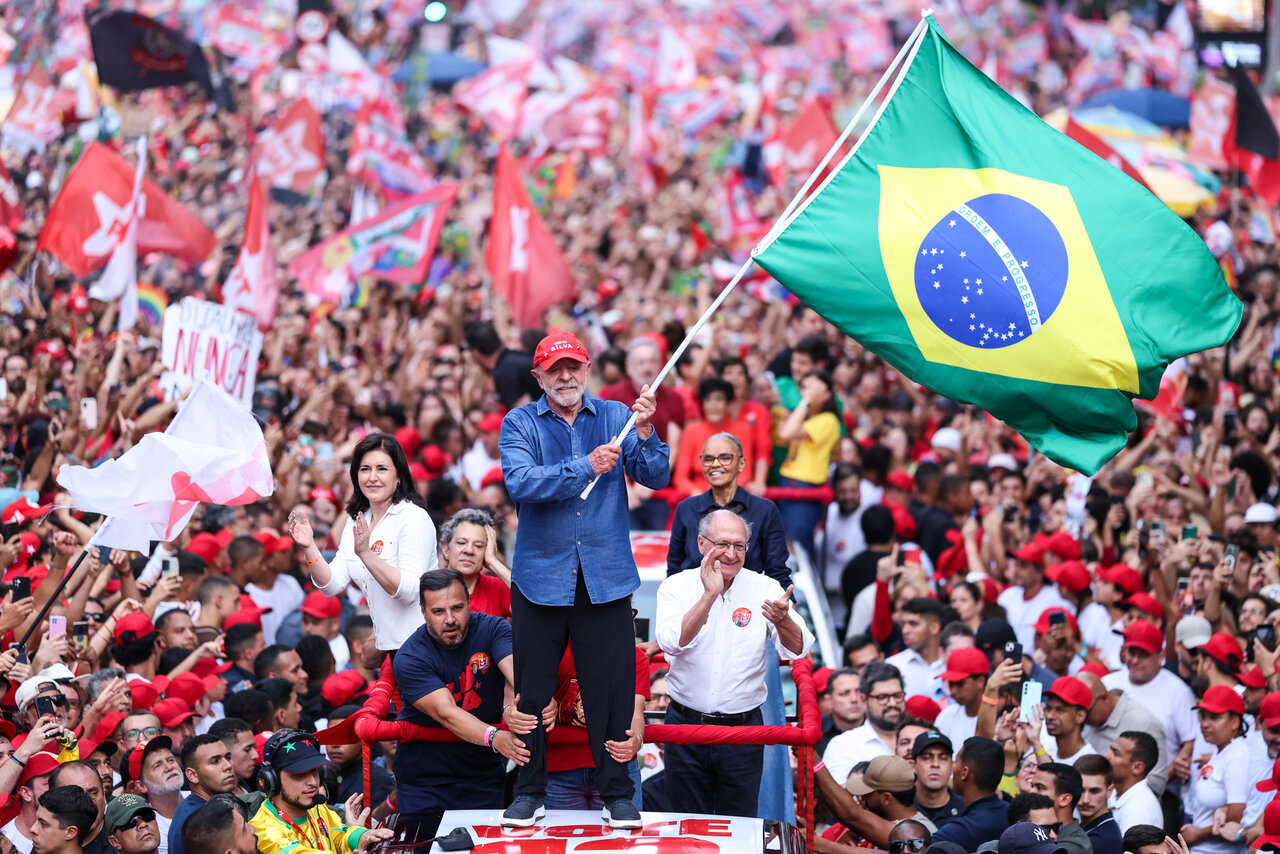
TEHRAN — History has a peculiar way of embarrassing those who believe political opponents can simply be imprisoned, exiled or erased. Nelson Mandela walked out of prison after 27 years and became South Africa’s first Black president. Juan Perón returned to Argentina after nearly two decades in exile and reclaimed the presidency.
In Brazil, Luiz Inácio Lula da Silva has written his own chapter in this tradition. A former factory worker and trade unionist who rose to the presidency, endured imprisonment and returned to power, Lula represents something that political establishments have repeatedly underestimated: the resilience of popular movements.
His political journey carries significance beyond Brazil’s borders. At a time when Washington seeks to consolidate its influence across Latin America and Israel faces growing international opposition over its treatment of Palestinians, Lula has refused to surrender Brazil’s independent political voice. His solidarity with Palestine is particularly significant.
Wearing a Palestinian keffiyeh, Lula publicly identified himself with the Palestinian people, turning a familiar symbol of resistance into a statement of political defiance. His criticism of Israel’s military campaign in Gaza has likewise challenged the Western assumption that solidarity with Palestinians must remain subordinate to Washington’s strategic preferences. For Lula, the Palestinian question is not separate from the broader struggle over sovereignty, dignity and the right of nations to determine their own future.
The October 25 presidential election demonstrated that this independence still commands substantial support at home. Brazil entered the final weeks of campaigning deeply polarized. Flávio Bolsonaro, son of former President Jair Bolsonaro, led the first round by approximately 2.22 million votes. Most electoral calculations favored the challenger. Lula faced a deficit no candidate had previously overturned in
Brazil’s modern presidential runoffs. Yet elections are not decided by opinion polls alone.
Between October 4 and October 25, Lula’s campaign transformed an apparent mathematical disadvantage into a nationwide mobilization. Workers, students, rural communities and social movements returned to the streets.
The Landless Rural Workers’ Movement (MST) helped sustain the grassroots offensive, while an energetic digital campaign challenged the right’s political narrative. The result was historic. Lula secured 51.79 percent of valid votes against Bolsonaro’s 48.21 percent, winning by more than 4.43 million ballots.
The overall electoral margin shifted by approximately 6.66 million votes between the two rounds. For the first time in Brazil’s modern presidential history, a candidate who finished second in the opening round emerged victorious in the runoff.
The victory also exposed the limitations of treating working-class voters as an electoral constituency to be courted every four years rather than an organized political force. Lula’s achievements, including Bolsa Família, minimum-wage increases, expanded university access and support for family farming, established that poverty was not an unavoidable national condition.
Public policy could change millions of lives. But Brazil’s economic contradictions remain unresolved. Wealth, land and financial power are still concentrated in relatively few hands. Conservative parliamentary forces, expensive credit and fiscal restrictions continue to constrain the government’s ability to deliver deeper reforms.
Lula’s fourth mandate will therefore demand more than preserving previous social achievements. Agrarian reform, industrial development, public investment and greater economic participation by ordinary Brazilians must become central priorities. The movements that rescued his electoral campaign must also have a meaningful role in shaping his government’s direction.
Beyond Brazil, however, the election delivered an uncomfortable message to Washington. Donald Trump had considerable political reasons to prefer a Bolsonaro presidency. A right-wing government in Brasília would have strengthened his administration’s attempt to consolidate a sympathetic regional bloc through the Shield of the Americas initiative, launched in Miami in March 2026.
Brazil is not an insignificant prize. It is Latin America’s largest economy, a founding BRICS member and a country possessing enormous agricultural, energy and mineral resources. Its strategic independence complicates Washington’s ambition to maintain the Western Hemisphere as an exclusive American sphere of influence.
Trump’s reaction to the election was revealing. Rather than welcoming Brazil’s democratic verdict, he publicly questioned the legitimacy of Lula’s victory without substantiating his allegations. Bolsonaro initially challenged the outcome before his party acknowledged the result. There is a familiar contradiction here. Washington celebrates democracy when elections produce governments compatible with American interests, yet becomes considerably less enthusiastic when voters choose an independent political direction.
For Iran, this contradiction requires little explanation. From the 1953 Anglo-American coup against Mohammad Mossadegh to decades of sanctions and coercive diplomacy, Tehran has experienced the consequences of Washington’s determination to shape other nations’ political choices. Brazil and Iran have different political systems and national priorities, but both recognize the importance of a multipolar international order in which sovereignty is not conditional upon American approval. Their participation in BRICS provides an institutional platform for strengthening South-South cooperation and reducing excessive dependence on Western dominated economic structures.
Lula’s position on Palestine gives this broader political argument an unmistakable moral dimension. In February 2026, he wore a Palestinian keffiyeh presented by Palestinian Ambassador Marwan Jebril during a diplomatic ceremony in Brasília. The image captured something that Western governments have increasingly attempted to suppress: public identification with Palestinians as a people entitled to dignity, freedom and statehood.
Lula has also challenged Israel’s conduct in Gaza, refusing to accept that Palestinians’ suffering should be treated as an unfortunate footnote to Israeli security. His position exposes the double standards of a Western political establishment that invokes international law against its adversaries while repeatedly accommodating Israeli aggression. This does not make Lula an ideological counterpart of Iran, nor does it erase differences between their governments. It demonstrates something more important: opposition to Israeli policies and American unilateralism extends far beyond West Asia. It is increasingly part of a wider international demand for political independence and equal application of international law.
Brazil’s election has not dismantled American influence in Latin America, nor has it eliminated the far right. Bolsonaro received nearly 60 million votes, demonstrating that the political forces behind his campaign remain formidable. Nevertheless, Lula’s victory has disrupted Washington’s preferred regional trajectory and given progressive movements across Latin America renewed political confidence.
Mandela’s freedom did not automatically dismantle South Africa’s economic inequalities. Perón’s return did not resolve Argentina’s political divisions. Lula’s reelection will not, by itself, transform Brazil’s entrenched economic structures. But history offers another lesson through these extraordinary political returns: powerful establishments may imprison leaders, manufacture political isolation and declare popular movements defeated. What they cannot always control is whether the people accept that verdict. On October 25, Brazil refused to accept it. And Washington was reminded, once again Latin America is not its backyard, the Strait of Hormuz is not its playground, and neither Brazil nor Iran needs America’s permission to defend their sovereignty.
Disclaimer : This story is auto aggregated by a computer programme and has not been created or edited by DOWNTHENEWS. Publisher: tehrantimes.com




