A borewell can run dry without much warning. For a farmer depending on it to irrigate crops or a family relying on it for everyday water needs, the question that follows is simple: how much water is actually left underground?
Finding an answer is not easy. Unlike rivers, lakes, or reservoirs, groundwater reserves cannot be seen. Their availability depends on several factors, from rainfall and soil conditions to the rate at which water is extracted. Without reliable estimates, planning how much to draw or where to focus conservation efforts becomes difficult.
A school student from Surat, Gujarat, is exploring how technology could make this information easier to access.
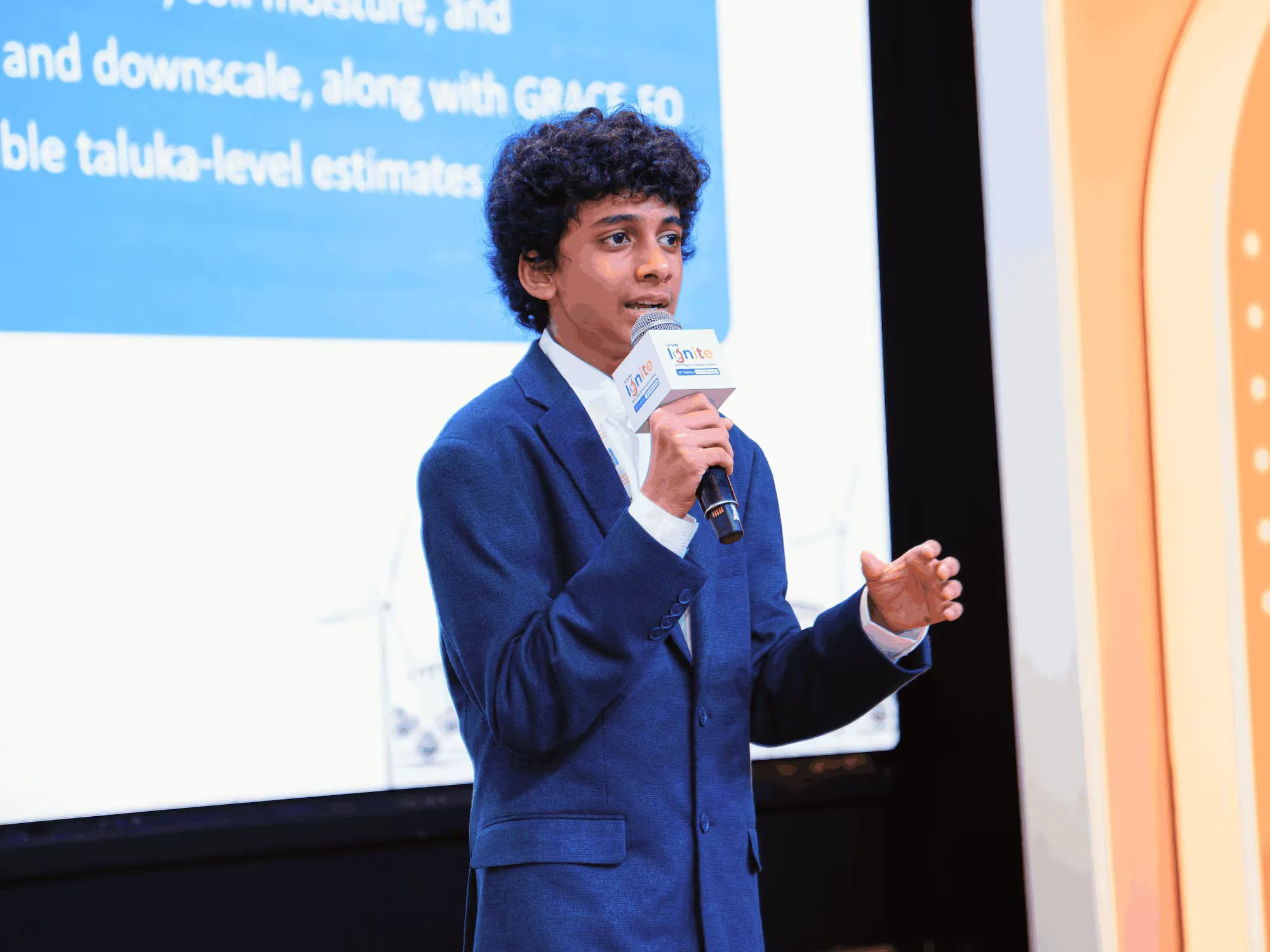
Dheyay Shah has developed JALAAKAR, a machine-learning-based tool that estimates groundwater availability across different talukas using historical records and environmental data. His innovation recently won the national title at vivo Ignite 2026, a nationwide challenge that received more than 6,100 project submissions from school students across India.
Making groundwater easier to understand
India depends heavily on groundwater for drinking water, agriculture and other everyday needs. However, excessive extraction, changing rainfall patterns and growing demand have put pressure on these underground reserves.
One of the difficulties in managing this resource is knowing how much water is available in a particular area. Groundwater levels can vary depending on local geography, the amount of rainfall received, and how much water is being extracted.
This is where Dheyay’s project comes in. Instead of relying on isolated measurements, JALAAKAR brings together different sources of information to generate estimates that help people better understand groundwater conditions.
How JALAAKAR uses machine learning
At its core, JALAAKAR uses machine learning to identify patterns in historical groundwater and environmental data.
The tool considers information such as past borewell records, rainfall patterns, and soil characteristics. Each of these offers a different piece of information about underground water reserves.
For instance, rainfall influences how much water can seep into the ground and replenish aquifers. Soil characteristics determine how readily this water can percolate, while borewell records provide insights into changes in groundwater levels over time.
JALAAKAR analyses these datasets to identify relationships and recurring patterns. It then uses what it learns from the historical information to estimate groundwater availability at the taluka level.

In simpler terms, the tool attempts to use what has happened in the past to understand what groundwater conditions might look like in a particular area.
Such estimates could eventually help local communities, farmers, and those involved in water management make more informed decisions about extraction and conservation.
However, predictive estimates are not a substitute for actual groundwater measurements. The tool’s accuracy, independent field validation, and suitability for different geographical conditions would need to be established before it can be used for wider water-management decisions.
A young innovator looking beneath the surface
Dheyay’s project was recognised at vivo Ignite 2026, where he emerged as the national winner. The competition brought together school students working on ideas that apply science and technology to real-world challenges.
With more than 6,100 projects received, the challenge evaluated innovations on parameters such as creativity, scientific application, feasibility, cost-effectiveness, and potential social impact.
What makes JALAAKAR interesting is the problem it chooses to address. Groundwater management is often discussed in terms of large-scale infrastructure and policy, but it also begins with something much simpler: understanding how much water is available before using it.

Dheyay’s work explores how data can help answer that question. While the tool would need further testing and refinement before wider application, it offers a promising starting point for making groundwater information more accessible.
For a young student, looking beneath the surface has meant looking at a problem that affects millions of people. And if developed further, JALAAKAR could contribute to a future where communities have better information to guide how they use and protect one of their most important natural resources.
Sources:
‘Dheyay Shah named winner for Vivo Ignite 2026, over 6,100 projects received’ by Economic Times, Published on 29 October 2026.
‘Surat school student uses machine learning to estimate groundwater availability; project wins national innovation challenge’ by Sanjay Sharma for The Times Of India, Published on 10 November 2026.
Disclaimer : This story is auto aggregated by a computer programme and has not been created or edited by DOWNTHENEWS. Publisher: thebetterindia.com