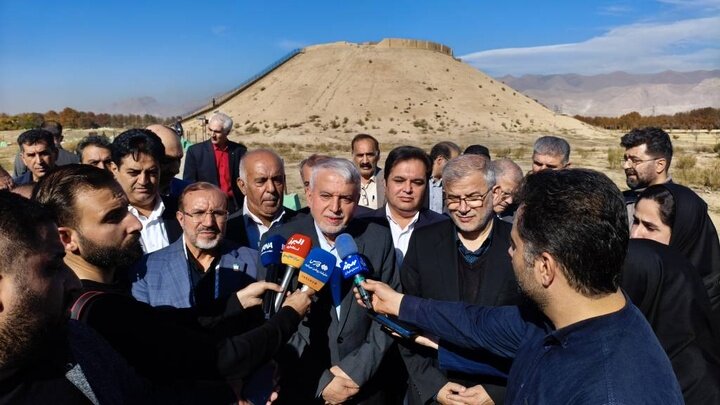
TEHRAN – Iran plans to establish a dedicated working group to prepare the archaeological site of Tepe Ozbaki in Alborz province for a possible nomination to UNESCO’s World Heritage List, Minister of Cultural Heritage, Tourism and Handicrafts Seyyed Reza Salehi-Amiri said on Tuesday.
Speaking during a visit to the site in Nazarabad county, west of Tehran, the minister said Tepe Ozbaki had the potential to become one of Iran’s prominent World Heritage nominations, citing its archaeological findings and significance in understanding the country’s ancient civilizations.
He said an organized working group would be formed with the participation of national and provincial authorities, archaeological researchers and other relevant stakeholders to coordinate the scientific, conservation and administrative preparations required for the nomination.
“Tepe Ozbaki is one of the important centers of civilization in the history of Iran,” Salehi-Amiri told reporters, adding that eight seasons of archaeological excavations at the site had produced valuable evidence of its historical and cultural significance.
He said archaeological studies had identified historical layers extending back to the Median period, while evidence associated with the Achaemenid period had also been found.
The minister stressed, however, that securing World Heritage status would require further research, conservation measures and the completion of the necessary legal and technical procedures before the site could be considered for submission to UNESCO.
Tepe Ozbaki, located near Nazarabad, about 80 kilometers west of Tehran, is an important prehistoric archaeological site. Its ruined settlements are believed to date back approximately 9,000 years, with excavated remains representing several millennia of human occupation, from the seventh millennium BC to the first millennium BC.
Archaeological discoveries at the site have also suggested connections with other ancient centers in Iran. According to senior Iranian archaeologist Yousef Majidzadeh, who has led excavations at Tepe Ozbaki and other archaeological sites, finds including tablets, statuettes and distinctive pottery point to possible commercial links between the area and Susa in southwestern Khuzestan province.
Salehi-Amiri also highlighted the role of private contributions in protecting the country’s cultural heritage, referring to a benefactor who donated the entire archaeological site to the Iranian people without seeking financial compensation.
He called for greater public recognition of such initiatives, saying that highlighting the contribution of individuals to heritage preservation could encourage wider public participation in safeguarding historical sites.
The minister also described Alborz province as an important center for tourism and handicrafts, arguing that its historical and archaeological assets deserve greater attention alongside its better-known natural and industrial attractions.
He said the provincial authorities and the Ministry of Cultural Heritage would work together to strengthen the protection and introduction of the province’s historical sites.
AM
Disclaimer : This story is auto aggregated by a computer programme and has not been created or edited by DOWNTHENEWS. Publisher: tehrantimes.com