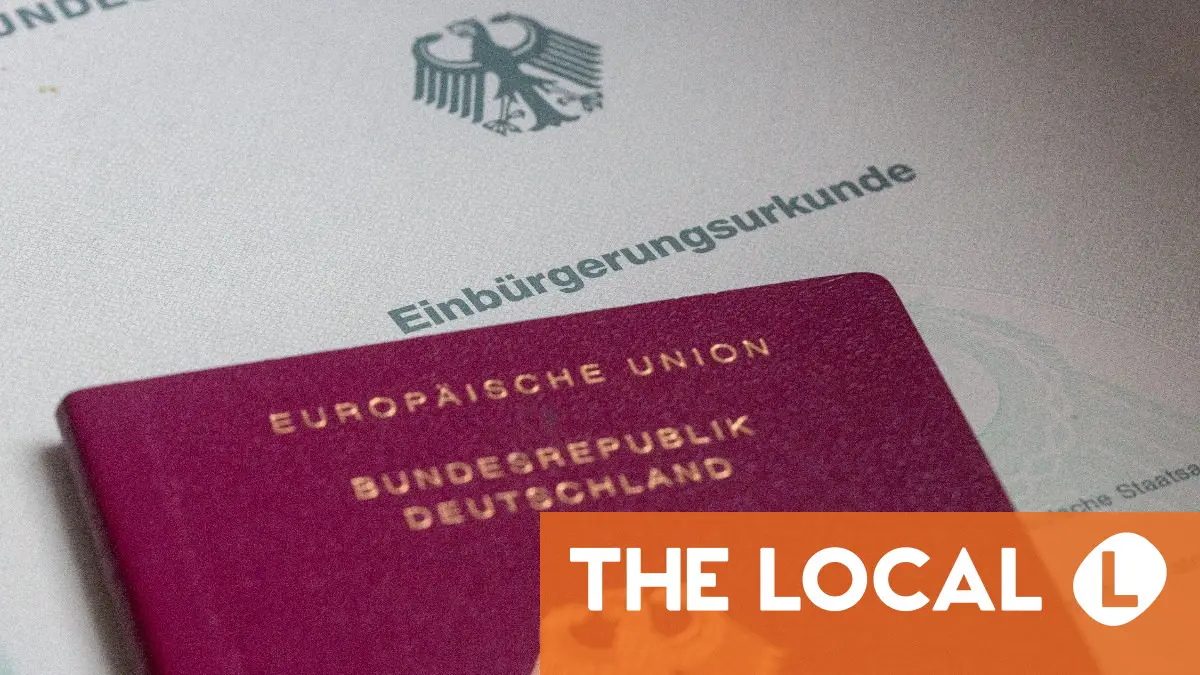
German citizenship grants linked to Nazi persecution rose by nearly 60 percent in 2025, according to official figures.
More than 170,000 applications for German citizenship have been received in recent years from people persecuted by the Nazis or their descendants, according to Federal Office of Administration (BVA) figures obtained by the KNA news agency.
The figures show particularly strong demand from Israel. Since 2023, Israelis have accounted for around 45 percent of applications involving citizenship withdrawn by the Nazis and about 80 percent of those based on persecution more broadly.
These applications fall under Wiedergutmachungseinbürgerung – special provisions intended to address German citizenship that was withdrawn, lost or denied because of Nazi persecution.
They are separate from ordinary naturalisation and can also benefit descendants.
What the figures show
The latest application figures were supplied by the BVA in response to an inquiry from KNA.
Provisional Federal Statistical Office (Destatis) data cited in reporting by Welt show that completed restitution-based naturalisations rose by nearly 60 percent in 2025 to around 11,500, including 5,924 Israeli and 2,995 US citizens.
Sociologist Lukas Fuchs of the German Centre for Integration and Migration Research described the overall trend as an “incredible surge in popularity”.
In his view, geopolitical insecurity is one explanation. Fuchs said Brexit had made an EU passport more attractive to British Jews with German roots, while Donald Trump’s election to a second term had prompted greater interest among Americans with German-Jewish ancestry.
READ ALSO: ‘My family fled the Nazis. Why did it take 18 years to reclaim German citizenship?’
Fuchs also linked the rise in Israeli interest since 2023 to the Hamas attack of October 7th and the subsequent Gaza war.
For many families, he said, German citizenship serves as a “Plan B”, while younger people may value the opportunity to study in Europe more easily.
Who may qualify?
The BVA describes two routes for restitution-based naturalisation: Article 116(2) of the Basic Law and Section 15 of the Nationality Act.
The first applies where a person held German citizenship before the Nazi authorities withdrew it for political, religious or racial reasons.
This constitutional entitlement has existed since 1949 and also extends to descendants.
The second covers other consequences of Nazi persecution, including cases in which citizenship was lost through another mechanism after flight or could never be acquired because of persecution.
This separate entitlement has been in force since August 2021 and also covers descendants.
Put simply, Article 116 may be relevant if your ancestor was formally stripped of German citizenship. Section 15 may apply if persecution prevented them from becoming German or caused citizenship to be lost in another way.
Applicants under these provisions generally do not have to prove German-language ability and are exempt from some requirements associated with ordinary naturalisation.
But reconstructing family histories across several countries and generations can still make cases time-consuming.
READ ALSO: What’s the difference between German citizenship and residency?
Disclaimer : This story is auto aggregated by a computer programme and has not been created or edited by DOWNTHENEWS. Publisher: thelocal.de