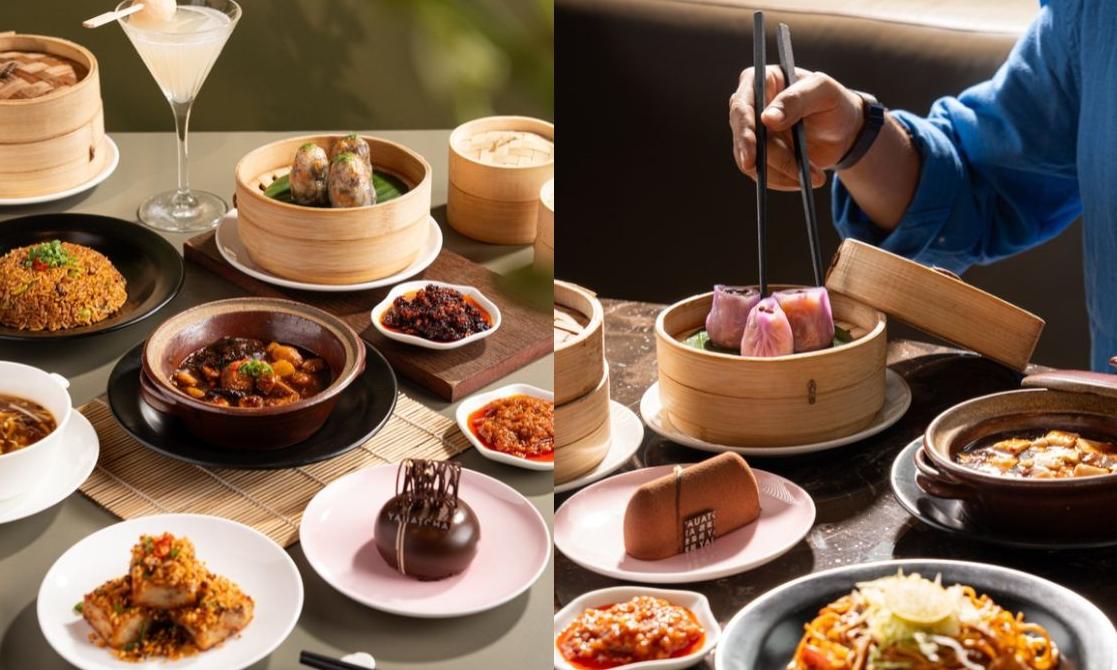
The Art of Coming Back: Why Yauatcha Continues to Hold Its Place in Mumbai’s Dining Scene Can you imagine the feeling of walking into a restaurant knowing exactly what you wanted even before you have settled into your seat? Not often does that happen, right? However, at Yauatcha situated at BKC in Mumbai, it might be the familiar truffle edamame, a plate of delicate cheung fun, the much-loved char siu bao or perhaps a cocktail to ease into the evening. The menu may offer enough temptation to make choosing difficult, but certain dishes have a way of calling out to regulars. And that, perhaps, is where the story of Yauatcha really begins. In most cities these days, restaurants open with considerable fanfare and diners are perpetually looking for the next new address. Hence staying relevant is no small feat. Yet Yauatcha has managed to build a relationship with its guests that goes beyond the occasional celebratory meal. Conceived in London by Alan Yau, whose surname joins the Cantonese word for tea, cha, to form the restaurant’s name, the concept draws from the traditional Chinese tea house, giving it a contemporary setting where dim sum, tea, patisserie and cocktails share equal billing. Ask Masterchef Raymond Wang what makes the restaurant tick and his answer circles back to one word: consistency. Having joined the kitchen in 2017, his role has been to preserve the standards that guests have come to expect while bringing his own culinary memories and ideas to the menu. “Yauatcha is a franchise of London. We don’t change certain recipes and standards,” he explains. “My job is to maintain the standard of Yauatcha and adapt my ideas.” That balance between preservation and reinvention is particularly evident in his approach to Chinese cooking. Wang is an old-school chef, trained in traditional techniques and recipes, some of which, he believes, are gradually disappearing from professional kitchens. He speaks of preparations that require considerable patience, such as boneless chicken wings stuffed with glutinous rice, coated and deep-fried, a technique he remembers from his early years in the kitchen. “Certain things are already lost recipes.
The new generation may not know them. They are still in my memory because, since I started learning, this was my usual job.” It is this understanding of culinary history that informs his more contemporary creations. His annual themed menus allow him to revisit places and periods that have shaped his relationship with Chinese food. After last year’s Shanghai-inspired offering, the current chapter turns to Kowloon, drawing on the Hong Kong of the 1960s and 1970s. For Wang, this is a particularly personal reference point. Growing up with Malaysian Chinese influences, he remains closely connected to Hong Kong’s food and popular culture. “We speak Chinese, we speak Cantonese. We watch Hong Kong movies, television, food. That’s why everything is still here,” he says. The food of that period, he recalls, was beginning to embrace new ingredients and ideas.
Truffle, avocado and Western influences were finding their way into traditional preparations. That spirit of experimentation, rather than nostalgia alone, is what interests him. The ongoing Kowloon menu revisits these changing tastes while drawing on dishes and techniques that might otherwise be forgotten. But while seasonal explorations give the kitchen room to tell new stories, the familiar favourites remain firmly in place.
Wang is particularly proud of the char siu bao, cheung fun and edamame, dishes that guests return to almost instinctively. “Cheung fun is on almost every table. Edamame is on almost every table. They automatically look for these things.” The general manager, Nafeesh Ahmed, sees the same pattern from the floor. For him, the restaurant’s longevity is closely tied to the relationships it has built over the years. Some guests have been coming in since the restaurant opened, and their preferences are so familiar that the team often knows what they are likely to order before they ask. “I think we have a good amount of regulars coming to this place, and they are well taken care of by the team members. The chef has maintained the consistency of the food, the taste has been consistent for years, and I believe that’s what makes people come back.” It is an observation that becomes interesting when you look at the way the restaurant is used. Weekday lunches draw a corporate crowd, with the set menu offering a compact introduction to the kitchen’s repertoire. Ahmed describes it as an experiential lunch, moving through soup, starters, dim sum, stir-fries, dessert and a beverage. While week days bring corporate dinners, weekends are more likely to see families and groups gathering over a leisurely meal. With 206 covers, private dining rooms and a sizeable team working across the front and back of the kitchen, the restaurant has the infrastructure to accommodate very different occasions without losing its sense of intimacy. The experience is not confined to the savoury menu, either. Patisserie is one of its defining pillars, with desserts that often conceal layers of mousse and fruit or chocolate inserts beneath their sculpted exteriors. Then there is the bar, which has developed its own following. Merwyn Alphonso, bar manager and mixologist, is super enthusiastic about the restaurant’s tea programme and the way it finds expression in the cocktails.
“Lalu is the one cocktail which people come here for,” he says, pointing to the use of oolong tea in the drink. “It’s a very refreshing and very Asian.” Tea, in fact, is not simply an accompaniment here. It becomes an ingredient, a flavour reference and a way of bringing the restaurant’s Cantonese identity into its beverage programme. The citrus martini and lychee martini remain popular choices, while the guava picante brings a livelier, fruit-forward profile. The mocktails follow the same emphasis on freshness. Merwyn describes the preparation of a passion fruit-based drink, where the fruit is opened and its pulp extracted only when the order comes in. That attention to preparation is something he believes matters as much as the choice of spirit. Asked about changing drinking preferences in Mumbai, he points to tequila’s growing popularity among younger drinkers, while predicting that spiced rum could find a stronger audience next. But trends, much like ingredients, are only part of the conversation. “Whisky is for someone who understands,” he says, reflecting on how different spirits appeal to different audiences and occasions. What emerges from these conversations is a restaurant that has found a way to accommodate change without constantly reinventing itself. The kitchen holds on to recipes and ingredients even when costs rise, the floor team remembers its regulars, and the bar finds new ways to interpret familiar Asian flavours. It is an approach that requires considerable discipline, especially in a dining market where novelty can sometimes take precedence over substance. Perhaps the most revealing thing about Yauatcha is that its appeal is not restricted to a particular kind of diner. A family might return for the char siu bao, colleagues might meet over a quick dim sum lunch, and a group of friends might make an evening of cocktails and patisserie. The reasons for visiting may differ, but the pleasure lies in the ease with which the restaurant accommodates them. As Wang puts it, “We don’t give up on the ingredients.” It is a simple statement, but one that says a great deal about the philosophy behind the food. And while the restaurant continues to explore new culinary memories through its ongoing One Night in Kowloon menu, the real draw remains much closer to home: those familiar plates, the pleasure of discovering something new together with an old favourite, and the comfort of knowing that there is always another reason to return.
Disclaimer : This story is auto aggregated by a computer programme and has not been created or edited by DOWNTHENEWS. Publisher: deccanchronicle.com