
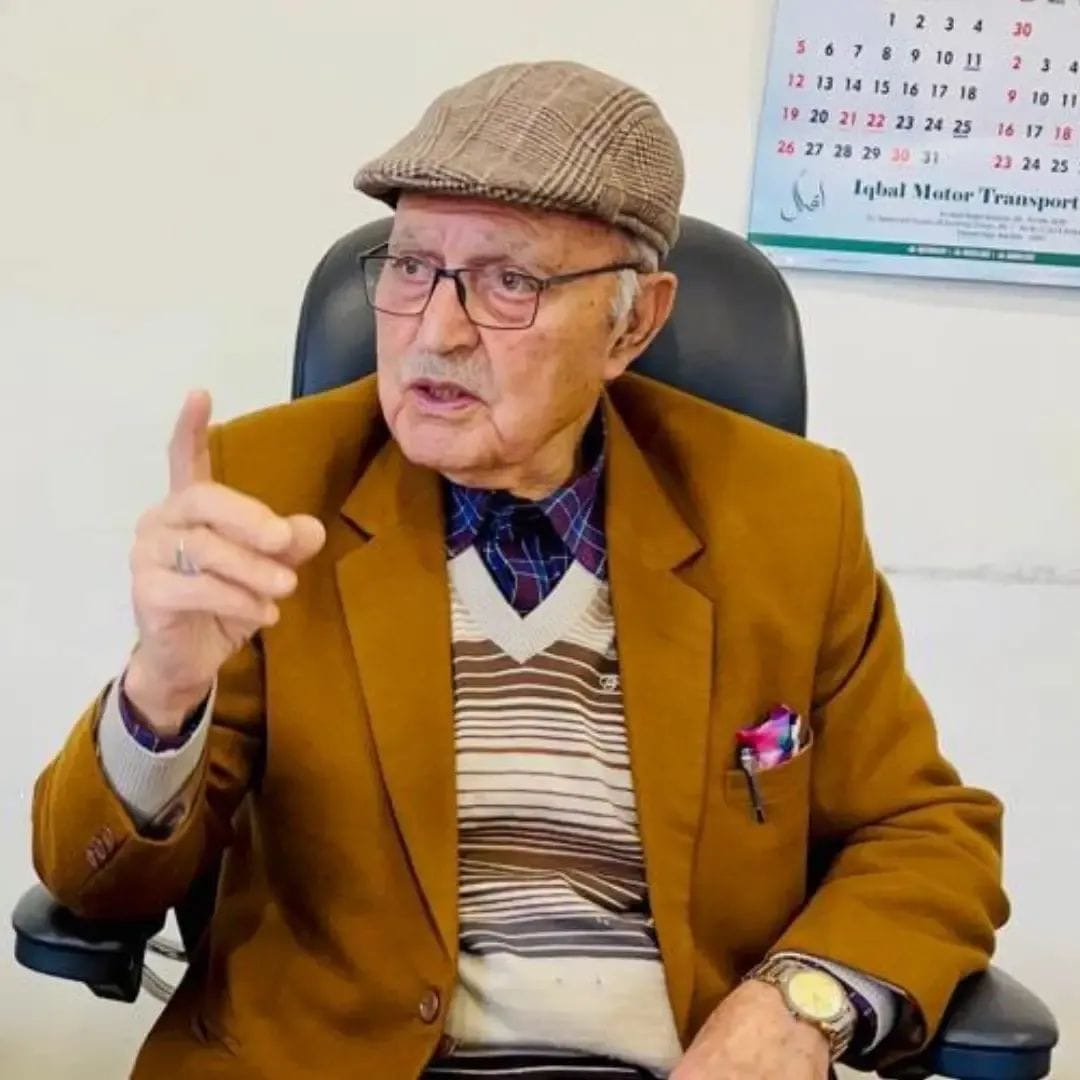
Dr. Sheikh Mustafa Kamal, Additional General Secretary of the National Conference (NC) and a former Cabinet Minister, passed away at Paras Hospital here on Tuesday Evening after a prolonged illness, leaving behind a life defined by public service, political sobriety, and an unwavering commitment to the people of Jammu and Kashmir.
He was younger brother of NC president Farooq Abdullah and uncle of Chief Minister Omar Abdullah.
His demise has been mourned widely across the political spectrum, with leaders, colleagues, adversaries, and ordinary citizens expressing profound grief and extending condolences to the bereaved family. For the NC, his passing marks the loss of a senior figure who had been deeply woven into the party’s organisational and political fabric for decades, contributing steadily and sincerely to its evolution.
Chief Minister Abdullah offered a deeply emotional tribute to his uncle and senior NC leader. In his statement, the Chief Minister said that his father’s younger brother had been battling illness for several months, and his condition deteriorated sharply four days ago.
“My father’s younger brother, Dr. Mustafa Kamal, passed away earlier this evening at Paras Hospital in Srinagar. Uncle Mustafa had been unwell for some months but took a turn for the worse four days ago. He put up a brave fight, holding on against the odds. The doctors and staff treating him were amazing, but Allah called him for his final journey. May Allah grant Uncle Mustafa the highest place in Jannat,” he said in a post on X.
NC leaders said that throughout his long association with the party, Kamal played an important role in shaping its presence in J&K’s political landscape. “He served the state both as a legislator and as a minister, carrying out his responsibilities with a calm composure that became his hallmark. Even in moments of political turbulence, he remained measured, restrained, and dignified—traits that earned him respect far beyond party lines,” said one of them. Funeral prayers and other arrangements will be announced by the family later.
Beyond his public roles, Mustafa Kamal’s personal demeanour left a lasting impression on those who interacted with him closely. He was a man of gentle presence—reserved, attentive, and almost endearingly unobtrusive. He consistently embodied humility and civility, qualities that set him apart in a field often dominated by theatrics and self-promotion. Even his staunchest political adversaries readily acknowledged that he was among the most sober, grounded, and genuinely people-friendly figures in public life.
His parallel identity as a medical doctor further deepened his connection with ordinary citizens. During the years he lived in Tangmarg, a hill town near Kashmir’s premier resort Gulmarg, he became known not only as a political leader but also as a compassionate physician—accessible, dependable, and wholeheartedly devoted to the wellbeing of the people. He treated patients with kindness and sincerity, earning a reputation that transcended political affiliations. This blend of political responsibility and humane service left an enduring imprint on the communities he served, strengthening the respect he commanded across the region.
Within the Abdullah family, Mustafa Kamal held a special place. Sources close to the family often noted that he was cherished by Sheikh Mohammad Abdullah with the same affection he reserved for his daughters. Even his name carries a story rooted in the Sheikh’s intellectual influences. Deeply inspired by Mustafa Kemal Atatürk—the founder of modern Türkiye and a towering figure in anti-imperialist thought—Sheikh Abdullah named his youngest son in admiration of the Turkish statesman. Atatürk’s modernising zeal and reformist courage had shaped the Sheikh’s early political worldview, even though Atatürk’s legacy remains debated in parts of the Muslim world due to his abolition of the Caliphate and sweeping secular reforms.
In his autobiography Aatish-e-Chinar, Sheikh Abdullah explains that he named his children not according to familial tradition but in honour of figures of immense Islamic and progressive significance. Farooq was named after Umar al-Farooq, the second Caliph known for justice and righteousness. Mustafa Kamaal was named after Mustafa Kemal Atatürk, whose anti-imperialist ideas influenced the Sheikh’s political thinking. Tariq was named after Tariq ibn Ziyad, the legendary general who led the Islamic conquest of Iberia. End it
Disclaimer : This story is auto aggregated by a computer programme and has not been created or edited by DOWNTHENEWS. Publisher: deccanchronicle.com







