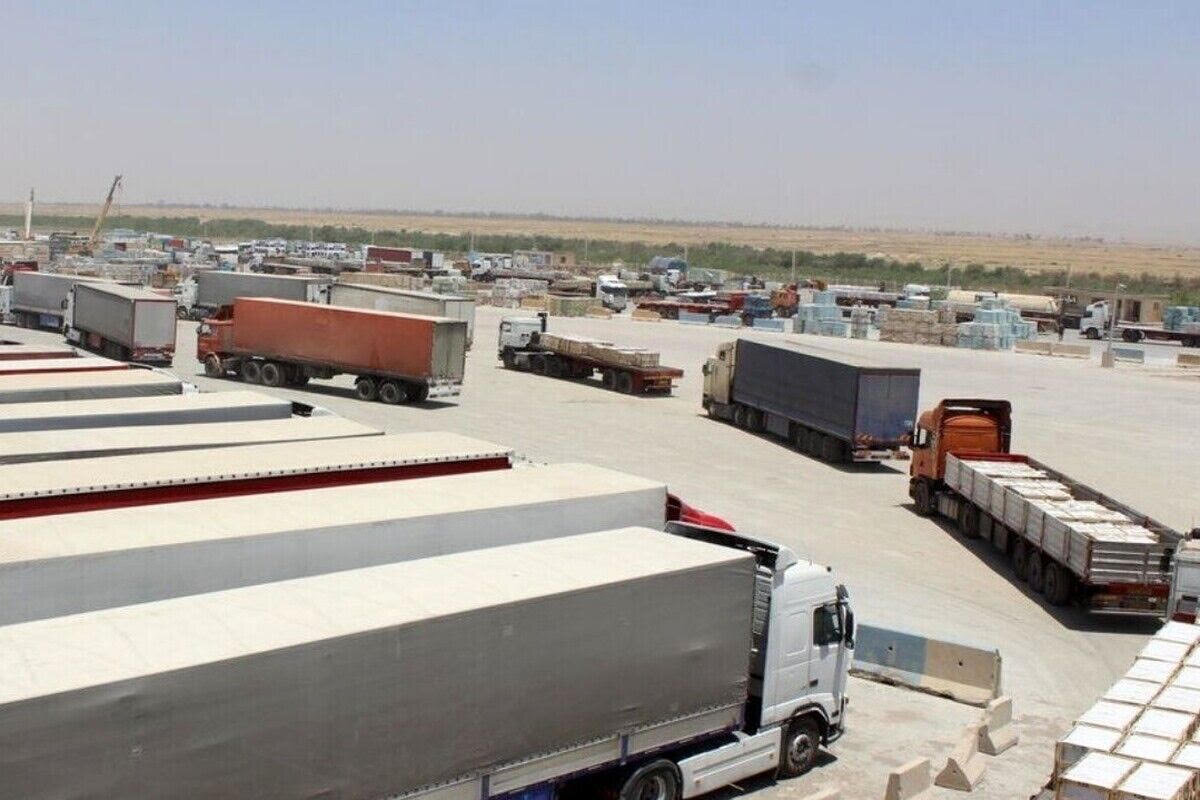
TEHRAN- The Head of Iran Customs Administration announced the drafting of an executive instruction for customs facilitations aimed at speeding up goods clearance, reducing duplicate procedures, and smoothing truck movement at the country’s borders.
According to Mehr News Agency, Foroud Asgari, Head of Iran Customs Administration, speaking on the sidelines of a meeting at the Iran Chamber of Commerce, referred to the issues raised there regarding smoothing the entry and exit of goods, truck traffic at borders, goods valuation, guarantees, and percentage-based clearance of goods. He stated: “During the war period, we obtained a set of customs facilitations from authorized authorities, took them to the government, and had them approved. The President signed these approvals on 16 Mehr, and we are now preparing their executive instruction so that the provisions of the approval are implemented uniformly in customs offices across the country.”
Stating that the main focus of this instruction is preventing goods from stopping at the country’s entry and exit points, he added: “In the export area, we are seeking to have goods assessed using the capacity of inland customs offices so that shipments, after going through assessment procedures, are not stopped again at the borders.”
The Head of Iran Customs Administration, explaining the mechanism envisaged for controlling shipments at borders, said: “Risk management is applied at border entry points, and shipments that require further control based on risk assessment will be directed to the docks for necessary checks; but other goods should pass through the green lane based on mutual trust and the seal affixed by the customs of origin, in order to prevent duplicate controls and unnecessary stoppage.”
Asgari emphasized: “The goal is for customs controls to be carried out in proportion to the risk level of each shipment, and for goods that do not need re-examination to cross the border without imposing extra procedures and stoppage.”
Referring to the envisaged timing mechanism in the import area, he stated: “A specific time has been considered for the various agencies involved in the import process, and the agencies responsible for issuing permits must issue the relevant permits within the set deadline.”
The Head of Iran Customs Administration continued: “The responsible agencies must decide on imported goods and related processes within a specified timetable. If an agency does not act within the stipulated deadline, it must be accountable to the relevant authorities.”
Asgari added: “Customs will also extract information on the timing of processes and permit issuance and will provide performance reports on the agencies to the country’s authorities so that obstacles in the path of goods clearance are identified and followed up.”
Referring to the problems existing in the order registration and goods sampling processes, he said: “In drafting this approval, attention was paid to issues related to order registration, repeated sampling, and measures that were unnecessary but caused rework and increased process time, and we tried to envisage the necessary solutions to resolve these problems.”
The Head of Iran Customs Administration expressed hope that with the implementation of the new instruction, a significant change will occur in the process of goods entering and exiting the country’s customs points, and economic actors will be able to clear their goods more quickly and easily.
Asgari, in response to the issue of truck stoppage and traffic at the country’s borders and the measures taken to resolve this problem, stated: “Part of the existing issues must be followed up by Customs itself. In this regard, we have held border meetings with the heads of customs administrations of neighboring countries to achieve greater coordination for removing obstacles and increasing truck transit capacity.”
He added: “Meetings have been held with the heads of customs administrations of Armenia and the Republic of Azerbaijan, and this week the head of Turkmenistan’s customs administration was present on the soil of the Islamic Republic of Iran and negotiations were held in this regard. The other sides have also announced readiness to cooperate and increase truck transit capacity.”
The Head of Iran Customs Administration, referring to operational visits to important border customs offices of the country, said: “In these visits, problems related to various agencies and obstacles in the process of transit and goods clearance were examined. A significant part of these issues was raised in last week’s meeting with the Minister of Economic Affairs and Finance, many of which were solvable, and a number have also been resolved.”
EF/MA
Disclaimer : This story is auto aggregated by a computer programme and has not been created or edited by DOWNTHENEWS. Publisher: tehrantimes.com