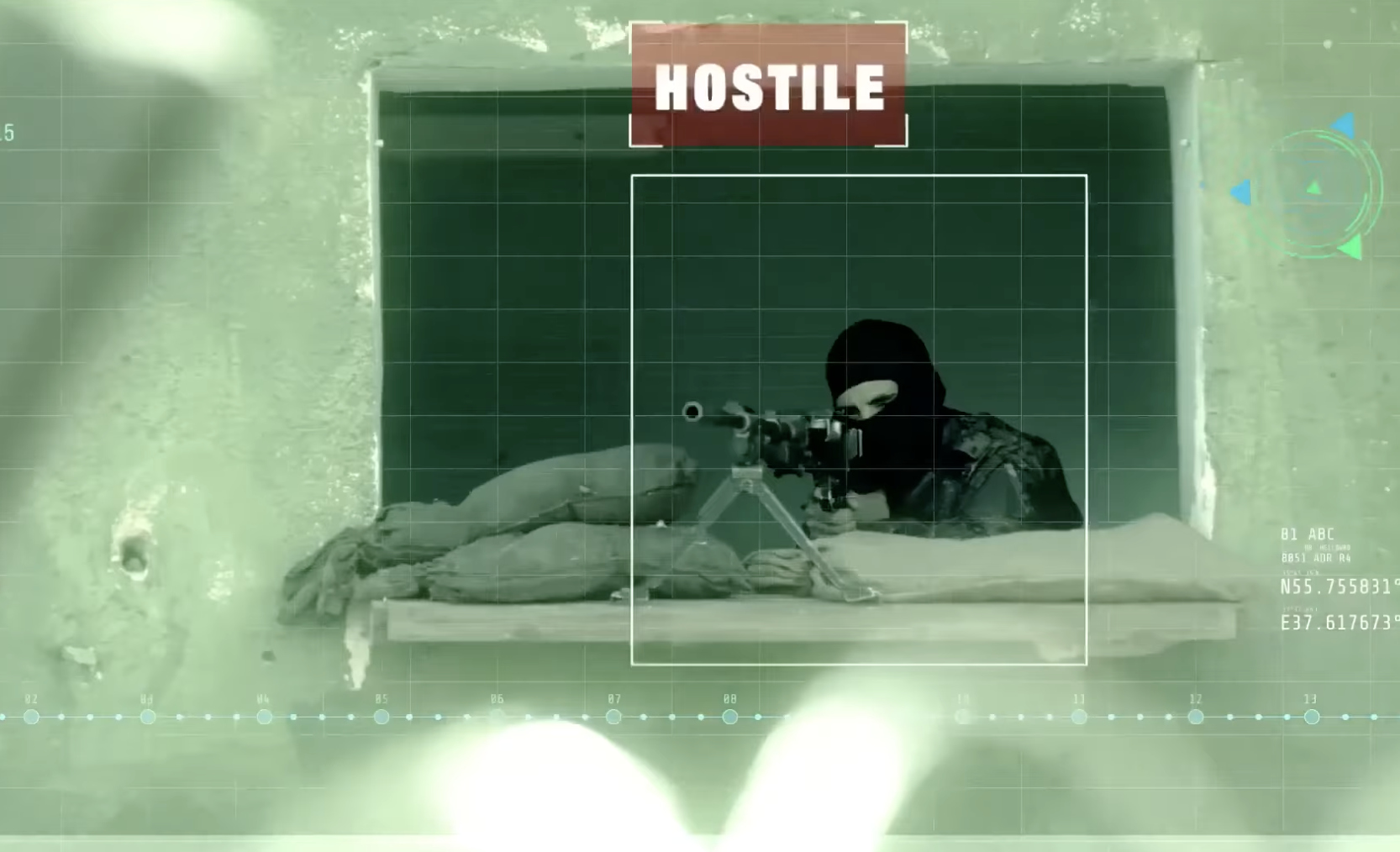
The battlefield of tomorrow and the future of warfare will be defined not by massed firepower or brute strength, but by intelligence embedded in every munition, from high-velocity projectiles to swarms of tiny autonomous machines. We are already seeing the beginnings of this type of warfare in the conflict in Ukraine, with FPV drones seeking out Russian invader soldiers with cold, calculated precision. The FPV drones in Ukraine are, however, piloted by remote human operatives, and although some of them utilise smart AI systems, they are not fully autonomous.
Advances in guidance systems, artificial intelligence, miniaturisation, and mass production are converging to create a world where concealment becomes nearly impossible, traditional cover offers limited protection, and precision dominates at every scale.
The evolution from smart bullets to loitering munitions and, ultimately, to fist-sized micro-drone swarms that can be manufactured and deployed by the millions are in the near future now, to be deployed in swarms and tactical proliferation.
Precision at the Speed of Sound: Smart Bullets
The foundation begins with guided small arms. Programmes like DARPA’s EXACTO have already demonstrated 50-calibre bullets capable of real-time in-flight corrections for wind, target movement, and shooter error. Using optical sensors and tiny control surfaces, these rounds can hit moving or evading targets even when fired by inexperienced shooters.
Complementary efforts, such as Sandia National Laboratories’ laser-designated guided projectiles, push effective range and accuracy dramatically further.
In the near future, onboard AI will enhance these systems with multimodal sensors (optical, infrared, and radar) and adaptive algorithms. A soldier or autonomous platform could designate targets, after which the munition handles the rest, optimising trajectory, adjusting for evasion, and striking with minimal collateral damage.
While challenges remain in miniaturisation, power, and cost, smart bullets represent the first layer of a “nowhere to hide” environment: long-range engagements become far more lethal, even against partially concealed or moving threats.
Persistent and Agile: Loitering Munitions
Speed isn’t everything. Slower, propeller or hybrid-powered systems add persistence and manoeuvrability that ballistic rounds cannot match. Loitering munitions, sometimes called kamikaze or suicide drones, can patrol for minutes to hours, hover, turn corners, navigate urban canyons, and fly indoors through doorways or corridors.
Systems like the AeroVironment Switchblade series, Elbit’s Lanius, and various Israeli Hero-family munitions already demonstrate these capabilities. Equipped with electro-optical/infrared sensors and AI for target recognition and collision avoidance, they excel in complex terrain. They can loiter above an area, wait for targets to emerge from cover, and then dive with shaped-charge or fragmentation payloads capable of neutralising personnel or light vehicles.
These munitions shift warfare from instantaneous shots to patient, intelligent hunting. GPS-denied navigation, visual-inertial odometry, and real-time obstacle avoidance make them exceptionally difficult to evade in cities, forests, or buildings.
The Swarm Era: Micro-Drones by the Millions
The apex of this evolution is the micro-drone swarm, a system smaller than a human fist, producible at massive scale, and designed for saturation attacks.
Prototypes like the U.S. Perdix micro-drone (roughly palm-sized) have already been demonstrated in coordinated swarms dropped from aircraft.
Modern FPV-style kamikaze designs and urban-focused munitions fit comfortably in this size class. Powered by compact batteries, efficient motors, and smartphone-derived electronics, they achieve useful endurance (15–60+ minutes) while carrying enough explosive payload for anti-personnel or anti-material effects.
Mass manufacturability has been proven in recent conflicts, with production scaling into the millions per year using commercial-off-the-shelf components, 3D printing, and distributed assembly. Costs have plummeted to levels that make them truly attainable.
Specialist launchers, vehicle-mounted canisters, aircraft dispensers, or containerised systems can release dozens or hundreds simultaneously. Once airborne, AI takes over: distributed intelligence enables collective behaviours, self-healing formations, dynamic task allocation (some scout, others strike), and leaderless coordination.
These swarms are engineered to be practically unavoidable. Their small radar cross-section, low acoustic signature, terrain-hugging flight, and sheer numbers overwhelm traditional defences.
Jammers, guns, nets, or directed-energy weapons may neutralise some, but hundreds more can adapt, reroute, and penetrate. Onboard computer vision and edge AI allow autonomous target classification and engagement, even in contested electromagnetic environments.
Tactical and Strategic Transformation
Together, these technologies create layered, overlapping threats:
- Smart bullets handle long-range precision.
- Loitering munitions provide persistent overwatch and indoor/urban dominance.
- Micro-swarms deliver overwhelming volume and adaptability.
Concealment in buildings, trenches, forests, or behind hills loses much of its value. Movement becomes risky as sensors and AI detect heat, motion, or patterns. Logistics nodes, command posts, and massed formations become highly vulnerable to rapid, low-cost saturation attacks. Infantry and armoured units will rely more heavily on electronic warfare, decoys, active protection systems, and their own counter-swarms for survival.
This is already visible in ongoing conflicts, where cheap drones have forced adaptations in tactics, vehicle design, and force dispersion. The future accelerates this trend dramatically.
Challenges and Broader Implications
Naturally, technical hurdles remain: battery density, reliability in adverse weather, miniaturisation limits, and the cost-effectiveness curve.
Ethical and legal questions around increasingly autonomous lethal systems are profound: human oversight versus speed and scale in high-intensity warfare. In a complete World War 3 scenarion where survival is paramount, ethics and International law would be put aside, because survival is the only objective.
Proliferation risks are real, as the underlying technologies (AI chips, batteries, 3D printing) are increasingly accessible.
Yet the trajectory is clear. Warfare is becoming smarter, cheaper at the margin, and far more lethal to anyone caught in the sensor-saturated battlespace. One only has to view some of the Ukraine conflict videos on the internet to see Russian soldiers running with nowhere to hide just before they are ripped apart by an FPV drone.
Traditional advantages in numbers or heavy armour will matter less than the ability to generate, coordinate, and counter intelligent munitions.
In this future, the side that best integrates human operators with autonomous systems, while maintaining resilience against enemy swarms, will hold a decisive advantage.
The age of “nowhere to hide” is not science fiction. Its building blocks exist today, and they are evolving rapidly.
Victory will belong to those who master the swarm, the smart round, and the persistent hunter in the skies. The battlefield has already changed, and it is going to get a lot more intense in the future.
Disclaimer : This story is auto aggregated by a computer programme and has not been created or edited by DOWNTHENEWS. Publisher: dailysquib.co.uk