- Decentralized production spreads economic benefits across numerous districts statewide.
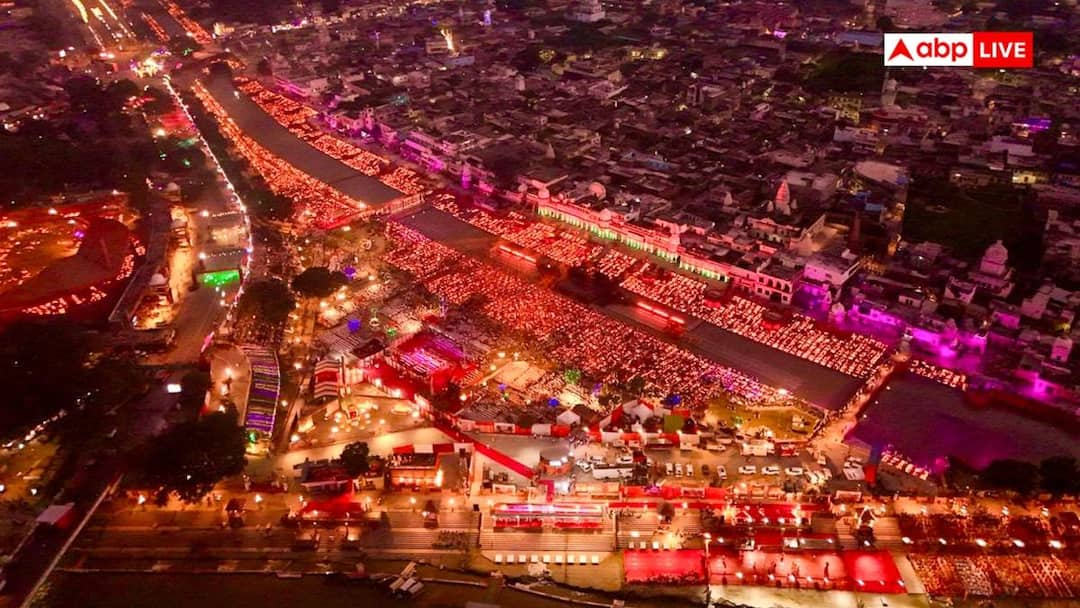
‘Tamaso Ma Jyotirgamaya’. This Vedic prayer, which calls for leading from darkness to light, is the fundamental voice of Sanatan thought. When this light enters the courtyard of someone with limited means as the radiance of self-reliance, its glow increases manifold. When 30 lakh diyas illuminate the banks of the Saryu in Ayodhya this year, it will not merely be a celebration of Treta Yuga memories.
It will also honor the hands that shaped the clay and made this light possible.
The order for 33 lakh diyas for this event indicates that Deepotsav has moved beyond religious tradition. It has become a vast horizon of opportunities for the ‘Maati Ke pujari’, whose potter’s wheels had begun to slow down in the race towards modernity. Under Chief Minister Yogi Adityanath, a model has emerged at the confluence of cultural pride and good governance, connecting faith with employment.
At the same time, the rays of development reach the last person in society.
The essence of Pandit Deendayal Upadhyaya’s concept of Antyodaya is that the yardstick for economic schemes should not be the prosperity of the person at the top of society, but the condition of the person standing at the lowest rung. Ayodhya’s Deepotsav seems to be turning this idea into reality. A small earthen diya is not merely a combination of water, clay, and fire.
It carries the potter’s sweat, his family’s hopes, and the pulse of an ancestral craft. Until a decade ago, this craft appeared to be breathing its last. The governments of that time did not even bother to think about these artisans. The hands with the skill to turn clay into gold were forced to leave for metropolitan cities in search of work. Devotees of clay began appearing on the streets as unskilled laborers.
As soon as Chief Minister Yogi Adityanath took office, he focused on traditional skills. He took the first step through the One District, One Product initiative, and the expansive scale of Deepotsav helped stem this migration. Most of the young people who had left their villages and their clay behind have now returned to their roots.
The demand for lakhs of diyas every year has given fresh momentum to potter’s wheels that had stalled. Calling this merely job creation would be incomplete. It is a humane initiative to prevent families from being torn apart, ensure dignity for labor, and allow an entire generation to take pride in its skills.
When a son sits at the potter’s wheel alongside his father and both their earnings return to the same courtyard, the distance between culture and the economy disappears.
A major feature of Deepotsav is its decentralization. Potters from a single district could not have made so many diyas, which is why the benefits of Ayodhya’s Deepotsav have spread from Awadh and Purvanchal to numerous districts across the state. Clay from Gonda, Basti, Gorakhpur and Azamgarh, extending all the way to Bundelkhand, has begun making its way towards Ayodhya.
Potters from different districts have been shaping and sending diyas weeks in advance.
This is a living example of the resolve of ‘Local for Vocal’ and ‘Atmanirbhar Bharat’, where a local product appears on the world stage through the support of a major cultural event. When economic opportunities are distributed in this manner, their benefits do not remain confined to a handful of people.
They reach the grassroots, and the artisan who shapes clay through his labor receives a direct share. This is the realized form of Antyodaya under the Yogi government.
It is a matter of pride that Ayodhya’s Deepotsav has been entered into the Guinness Book of World Records. This achievement belongs not only to the government, administration, or tourism department. The most genuine stakeholder in this record is the anonymous potter whose diyas illuminate the ghats of the Saryu.
Also Read: OPINION | A Decade Of Deepotsav: An Exceptional Confluence Of Efficiency And Management
It acknowledges the respect these devotees of clay have earned over generations. At one time, potters were viewed as being on the margins of the social structure. Today, they are direct participants in an international event that sets world records. When they see the ghats adorned with their diyas on television screens or in newspaper pages, the pride that awakens within them cannot be measured by any economic yardstick.
This very self-respect is the foundation of the state’s new social and cultural consciousness.
The distinctive feature of Chief Minister Yogi Adityanath’s vision is that he has not confined religion and culture to rituals alone, but has turned them into means of employment and entrepreneurship. When policies are framed with the right intent, they reach every section of society.
The formation of the Mati Kala Board and the provision of modern facilities such as electric potter’s wheels to potters have infused new energy into this traditional profession.
The order for 33 lakh diyas has given potters an assured market, reduced the role of middlemen, and opened the way for fair remuneration for their labor. This is creating a cycle in which faith boosts tourism, tourism gives momentum to local trade, and trade improves the standard of living of the person at the very bottom.
For the potters and clay artisans of the state, this is a time when those good days are returning. Their skills are no longer confined to earthen diyas. Other clay artifacts, idols, and showpieces are reaching international markets. They are becoming part of trade shows and, most importantly, the present generation is bringing artifacts made from its own clay into homes with a sense of pride.
Modern youth are reconnecting with their roots. This aspect may not be directly visible, but its impact can be felt. In many cities, tea served in kulhads has become young people’s first choice, and this preference translates into economic benefits for those associated with the craft of clay.
Ayodhya’s Deepotsav is, in essence, a great yajna. The oil burning in it may be material, but the light spreading from its flame shows the way toward Uttar Pradesh’s self-reliant, inclusive, and prosperous future. This is a festival of clay, of the people connected with clay, and of their indomitable will to live.
This Diwali, when the ghats of the Saryu shine with lakhs of diyas, remember the clay-smeared hands turning the potter’s wheel behind that radiance as well, for without them, this light would not have been possible.
Also Read: OPINION | Why China Is Disturbing Peace On LAC
Sudhir J Kumar is the Editor of Wildlife Today.
Disclaimer : This story is auto aggregated by a computer programme and has not been created or edited by DOWNTHENEWS. Publisher: abplive.com