Case 137 investigates the crimes committed by those who were sent to quell France’s 2018 riots.
The most striking of all the images of street riots that form a rapid-fire prologue to Dominik Moll’s new film, Case 137, isn’t one of the many clashes between protesters and heavily armed police, but a pile of furniture the width of a Paris street. People have built barricades. This may not be a revolution, but it still smells like 1789. Police have been pulled in from all over the country, armed with riot guns and grenades. Their targets are easy to spot: they’re the ones in yellow vests.
Eleven people died in the protests of 2018; thousands were injured on both sides, with many protesters losing hands and eyes to plastic shrapnel. There were also hundreds of official complaints about police tactics, which were turned over to the internal investigations units and bitterly defended by the police unions.
Case 137 follows just one case – based on a real incident – in which five police officers pursued a couple of boys up a side street. Two of the officers opened fire, shooting one of the boys in the head. They left him bleeding on the cobblestones.
The so-called yellow vests, or gilets jaunes, were members of a roughly coordinated rural protest movement with a roster of grievances ranging from cuts in farming subsidies to the closure of post offices. Anti-immigration and extreme Right politics were an eye-catching part of the mix.
“The image of them presented through the media was ‘OK, they only want cheaper gasoline and they are populist and super violent’,” says Moll, who co-wrote the film with Gilles Marchand. “But there were so many of them, from different backgrounds, and different motivations. I started to get more interested and found that it was mainly people who just wanted to be seen.”
His film centres on the Girard family, who come from a small town called Saint-Dizier. Guillaume is just a kid, excited to go to Paris for the first time; his sister’s boyfriend is an apprentice electrician, while his mother is a home carer. None of them is paid enough; their town is in decline. They are all cock-a-hoop on the way to the city, however, singing for their phone cameras. They certainly don’t imagine that funny, sparky Guillaume would end up in hospital with brain damage, unable to speak.
Moll’s films have veered between the quirky (Lemming; With a Friend Like Harry…) and the meticulous dissection of crimes committed in strange French backwaters (The Night of the 12th; Only the Animals). One of the strengths of his crime stories is his attention to procedure, which comes to the fore in Case 137; wound between the thriller tropes is the welter of emails, phone calls and interviews that are the real stuff of detective work.

“I didn’t tell myself I wanted to make a Kafkaesque film but, of course, as soon as you set a story within an administration with all its problems and pressures, there is something that can remind you of Kafka,” says Moll. “And then in the way you try to film it, where they are always in boxy offices or long corridors, enhances that. Everything is important.”
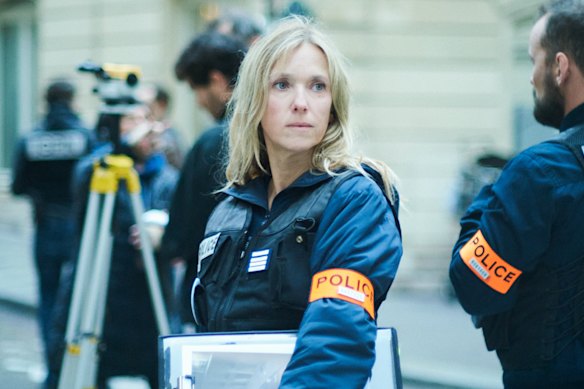
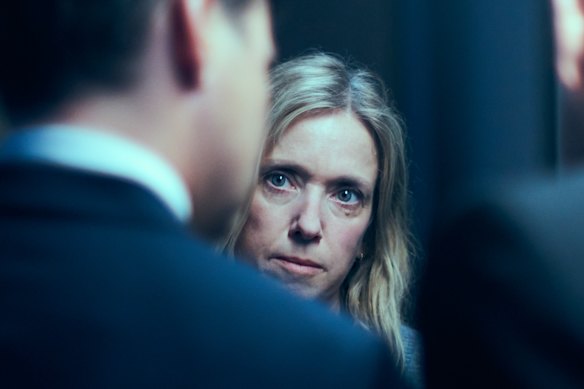
Most important of all is Lea Drucker as the quietly steely investigator, Stephanie; she won the Cesar (a French Oscar) for her performance. Emotion is not part of Stephanie’s brief. She never raises her voice as the accused brazenly lie to her; she sheds no tears at the videos she has to watch; she stays calm when Guillaume’s mother attacks her in the supermarket, and when her son asks her why everyone hates the police. That is her strength. It is a role that could easily be robotic.
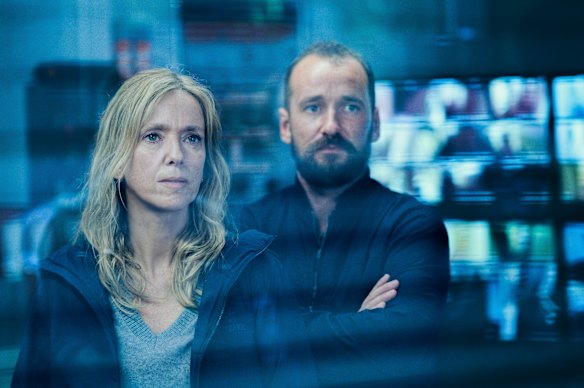
“Lea has that capacity to show humanity without showing it,” Moll agrees. “When she is attacked by another police officer, she must keep it within her, but we have to feel that it’s there.” Moll and Drucker worked with internal investigations officers to learn how they dealt with daily hostility from their erstwhile comrades, who see them as traitors. “Of course they are human beings; they have feelings,” says Moll. “But the only time Stephanie has a real outburst is with her mother.” It’s her mother’s addiction to cat videos that breaks her.
The most curious thing about the 2018 riots, says Moll, is how quickly they were swept away and forgotten. “The coronavirus lockdown was like a sponge that erased everything. There was this movement that shook the government – that shook the whole country – and it’s like it never happened. But this is part now of French history, so how can we talk about that? And how can we talk also about the relationship between the police and the people, which in France – and in other countries as well – is very problematic?”
Instead, he says, the country lives with the riots’ legacy. “After 2018, the police became more and more militarised and heavily armed and looked more like RoboCop.” Demonstrators of every political stripe are routinely demonised as terrorists out to threaten the Republic; as far as the police are concerned, they’re all killers. The gilets jaunes themselves, however, faded back into the countryside. “But the fractures, you know, they are still present. Nothing has changed, really.” Sooner or later, the barricades will go up again.
Case 137 opens on August 13.
Want more movies?
Disclaimer : This story is auto aggregated by a computer programme and has not been created or edited by DOWNTHENEWS. Publisher: www.smh.com.au