
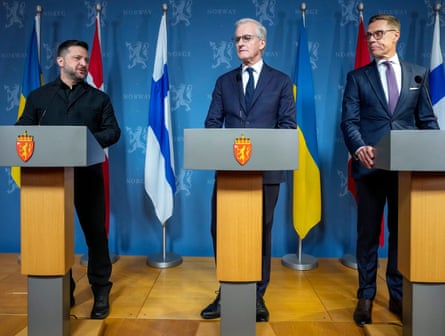
The Nordic countries rarely fall out in public over foreign policy, least of all over Russia.
But a 90-minute phone call this week to Vladimir Putin by the leaders of Finland and Norway drew an unusual rebuke from their Danish and Swedish neighbours.
On Tuesday, Finland’s president, Alexander Stubb, and Norway’s prime minister, Jonas Gahr Støre, spoke with Putin, in a rare high-level conversation between the Russian leader and Ukraine’s European allies. The two Nordic leaders stressed that the call had been conducted on Ukraine’s behalf and that allies had been informed in advance.
Their neighbours were not convinced.
“I am very sceptical about this independent initiative by Norway and Finland,” said Denmark’s prime minister, Mette Frederiksen, who complained that the call had not been coordinated with Copenhagen. “I honestly don’t know what they think they can achieve by this.”
Sweden’s prime minister, Ulf Kristersson, also criticised the initiative, saying he had not been informed beforehand.
The friction offered a glimpse of the divisions threatening to complicate Europe’s attempts to establish its own channel to Moscow, as governments struggle to agree not only on whether to engage Putin but also on who should speak on their behalf.
“Instead of looking like a firmly united, homogeneous group, we see a rift,” said Arkady Moshes, director of the Russia programme at the Finnish Institute of International Affairs. “By the standards of the Nordic world, it’s pretty serious.”
Since the summer, European leaders have been discussing, without much progress, whether to appoint a representative to negotiate directly with Moscow on ending the war in Ukraine. The debate has grown more urgent as Donald Trump has moved closer to Moscow in recent weeks at Ukraine’s expense.
A new round of peace talks is expected to take place in Abu Dhabi next month, leaving European governments anxious about being sidelined in negotiations that could shape the continent’s security for decades.
“There is an agreement overall that we need to talk to Putin, but the outreach is starting to feel like a free-for-all,” said a senior European diplomat, speaking on condition of anonymity. “Too many leaders believe they can be the one to get Putin to negotiate.”
Mixed messages
This year, British, French and German ambassadors have held talks with Russian officials, Emmanuel Macron’s senior diplomatic adviser has travelled to Moscow, and the office of the European Council president, António Costa, has pursued its own engagement with the Kremlin.
It is a far cry from the diplomatic isolation imposed on Putin after Russia’s full-scale invasion of Ukraine in 2022, when most European leaders largely shunned direct contact with the Kremlin. Stubb himself said during his 2024 presidential campaign that he would not pick up the phone if Putin called.
Analysts this week blamed some of the fallout from the Stubb/Støre call on mixed messages about what it was actually for. Initially framed as an effort to convey Ukrainian messages to Putin, the call appeared to have broader aims.
Støre later defended Norway’s decision to engage directly with Putin, citing the need to manage shared fish stocks in the Barents Sea and maintain security along the countries’ common border. Stubb, meanwhile, said the conversation was also intended to prevent misunderstandings between Russia and its Nordic neighbours.
“Stubb and Støre can’t seem to get their message straight on whether this was about Ukraine or also about their own security concerns,” said Joel Linnainmäki, a former Finnish diplomat and analyst in Helsinki.
“If it looks messy, it probably is.”
The confusion reflects a wider disagreement across Europe over how to approach Putin, even as governments remain broadly united in their support for Ukraine.
“On substance there is actually quite a good level of unity in Europe, but then there are different views on how to approach Russia, when is the right time to reopen dialogue at the highest level and who should be doing it,” said Kristi Raik, director of ICDS, a leading Estonian thinktank.
France has long advocated keeping a channel to Putin open, while Germany and Britain have been more cautious. The Baltic states and Kaja Kallas, the EU’s foreign policy chief, fear that renewed high-level engagement could ease pressure on Moscow without securing concessions.
The question of who should lead any European outreach has proved contentious.
Xavier Bettel, Luxembourg’s foreign minister and one of the few European leaders to have maintained telephone contact with Putin after the full-scale invasion, recalled facing criticism from European colleagues for taking the initiative.
“Some colleagues told me: who is the Luxembourgish prime minister to speak to the president of Russia and the president of Ukraine? You are such a small country,” he said at a conference in Prague in May.
“That’s also a problem of the state of mind of some countries who think only France, Germany or the USA can lead discussions.”
No single EU representative
For now, no single figure has a clear mandate to negotiate on behalf of the EU’s 27 member states.
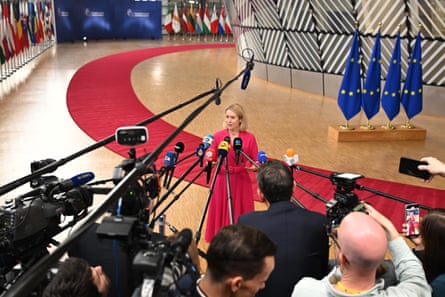
In theory, the task of speaking to Moscow could fall to Kallas. But she lacks the independent authority to negotiate on behalf of the bloc without a mandate from its member states, and there has been growing frustration in European capitals over the EU’s diplomatic service, which she leads.
Kallas, a former Estonian prime minister and one of the EU’s most vehement Kremlin critics, is also seen by many as an unlikely interlocutor for Putin. Moscow has placed her on a wanted list, while Russian officials have made clear they have little appetite for engaging with her.
Reinier van Lanschot, a Dutch member of the European parliament, has called on EU leaders to convene a summit and agree on a single representative to engage with Putin.
He said: “The EU must speak with one voice, and Ukraine must always be involved. If you take those two things into account, then I think it makes perfect sense for Europe to engage in talks.”
But he acknowledged that reaching a unanimous agreement would be difficult, with any proposed appointment potentially vulnerable to a veto by a single member state.
In the meantime, this week’s Nordic initiative could encourage more European politicians to establish their own channels to Moscow, said Linnainmäki.
“It’s inevitable that politicians around Europe will now raise the question: if the Finns and Norwegians are calling Putin, why should our country not do it?” he said.
‘Putin’s plan A’
Beyond the question of who should speak to Putin lies a more basic question: whether there is any point in Europe talking to him at all.
Raik warned that Putin might interpret Europe’s sudden interest in reopening dialogue as a sign that Ukraine and its allies were growing desperate, with Kyiv facing a difficult winter.
“My concern is that the way the Kremlin is reading this step now is that the Europeans are in trouble, the Ukrainians are in trouble,” she said. “Knowing how Putin looks at Europe, I think he’s always keen to try to use opportunities to create divisions, or at least appearances of division,.”
The Kremlin’s account of Tuesday’s conversation offered little indication of any change in Putin’s maximalist demands for ending the war.
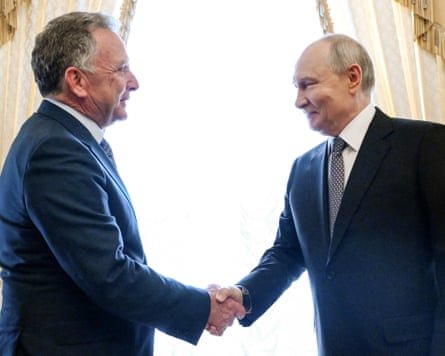
According to the Financial Times, Putin spent part of the conversation lecturing the Nordic leaders on medieval Slavic history, repeating pseudo-historical arguments that have long been used to question Ukraine’s right to exist as an independent state.
Still, Moscow has appeared more willing to entertain European involvement in diplomacy since US special envoy Steve Witkoff met Putin in St Petersburg last week.
Moshes suggested that Moscow was tiring of Trump’s unpredictability and looking to Europe as an alternative, calculating that the US midterms could leave the president politically weakened.
But Putin’s willingness to take the call should not be mistaken for a readiness to compromise, Moshes cautioned.
“It doesn’t mean we are moving anywhere towards a ceasefire, let alone peace, because it’s clear that Putin’s plan A is a military defeat of Ukraine.”
Shaun Walker contributed reporting
Disclaimer : This story is auto aggregated by a computer programme and has not been created or edited by DOWNTHENEWS. Publisher: theguardian.com




