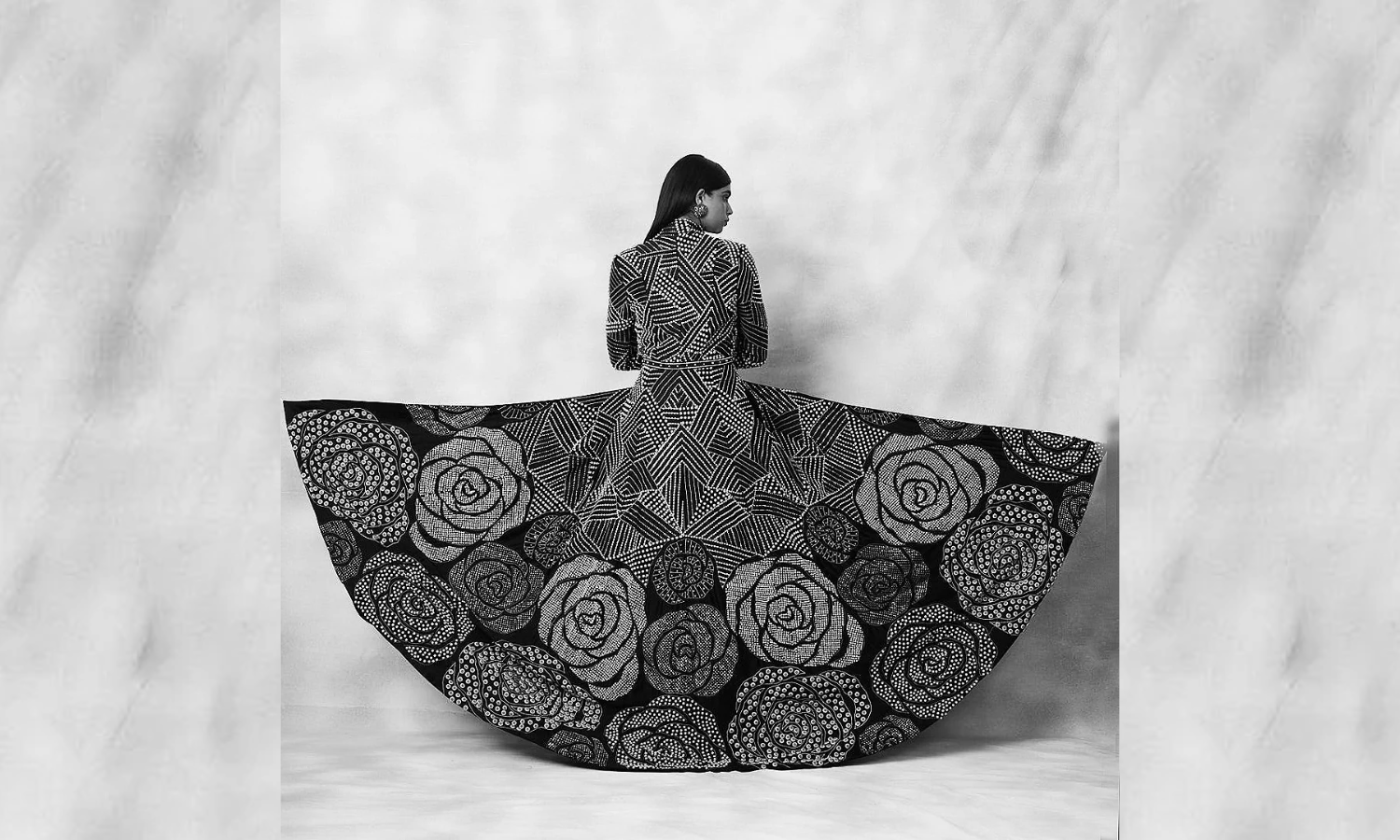
For fashion designer Nachiket Barve, one of the contradictions of India’s relationship with its own design heritage is that the country has spent decades producing embroidery, leatherwork and other crafts for international luxury brands, yet often waits for recognition from the West before valuing these skills at home.
“Unfortunately, I think we still somewhere have a large colonial hangover. Even now, for us to appreciate, sometimes it takes a Western opinion for us to celebrate our own,” he notes.
Whether it is an Indian craft, a film winning an Oscar, a designer presenting a collection on an international platform or a celebrity wearing a particular label, Nachiket believes that external approval continues to influence how Indians perceive their own cultural and creative achievements.
The problem, he says, is not a lack of skill or craftsmanship. India has long supplied these to some of the world’s leading fashion houses. What is changing now is the recognition of the people and processes behind the finished product, as a new generation of Indian designers brings traditional techniques into contemporary design.
“That gap is closing now with design education in India being so prevalent,” he says. Designers are increasingly able to look at traditional crafts through a global lens while retaining their essence and adding refinement.
Nachiket hopes this dependence on international approval will diminish as India’s economic confidence grows. But he believes the change must also come from consumers, who need to recognise the value of Indian design beyond occasional gestures of support.
“If you have the aspirational value to spend three lakhs on a handbag, why are you hesitating to spend 50,000 on a hand-woven saree or 30,000 on a beautiful hand-woven silk kurta?” he asks. These are products that can last for years, he points out, and the money spent on them can help sustain the craftspeople whose livelihoods depend on these skills.
For Nachiket, this relationship with Indian craft began long before he entered the fashion industry. Growing up in a middle-class Maharashtrian family with doctors in the medical fraternity, he was expected to consider the conventional career choices of his time. Design was hardly seen as a viable profession, particularly for a child who was also good at academics.
Yet he was drawn to beauty in its many forms, from clothing and flowers to the colours of the sky. He also remembers being fascinated as a child by a cobbler working at a street corner. He wanted to become one because he was intrigued by the act of making something with one’s hands.
His mother did not dismiss the idea. “She didn’t even blink before saying, ‘okay, become a cobbler, but become the best cobbler that there is’,” he recalls.
That encouragement gave him the confidence to pursue a creative career even when the decision surprised people around him. His education at the National Institute of Design in Ahmedabad became another turning point, opening his eyes to the richness of Indian crafts and textiles that were often taken for granted.
He began to see craft not merely as something inherited from the past, but as a living practice that could inform contemporary design. A flower seller making gajras on a street corner, he says, is also part of India’s larger craft tradition.
A scholarship to study at École des Arts Décoratifs in Paris and an internship at Celine subsequently exposed him to the international fashion industry. It was a world of major fashion editors, supermodels and luxury products, but also of rigorous quality checks, production protocols and attention to detail.
The experience showed him how a global fashion business operated, from the writing of press notes to the making of products across different countries. It also made him more conscious of the cultural distance between how India saw itself and how it was perceived abroad.
During a discussion about Madras checks at Celine, he remembers colleagues talking about the fabric as something their grandmothers had worn to the beach. His own grandmother, he says, wore a saree. Some of his colleagues’ perceptions of India were still shaped by images of zamindars, maharajahs and grandeur, rather than the contemporary country he knew.
“I knew I didn’t belong to the India of Rajas and Maharajas and Zamindars and all of that. Nor did I belong entirely to a European ecosystem,” he says.
Instead, he found himself drawn to the space between the two, where Indian traditions could be interpreted through a global design vocabulary without losing their identity. That approach became central to his own creative journey.
Nachiket’s work in costume design, including the historical film Tanhaji, also reinforced his understanding of the responsibility that comes with interpreting India’s past. He spent nearly two years in pre-production for the film, consulting museums, examining historical references and working with traditional jewellery moulds to recreate period details.
For him, costume design is not simply about making an actor look convincing. It involves understanding the script, the director’s vision, the actor and the designer’s own contribution. The choices made can influence how audiences imagine historical figures for decades.
“It’s a big responsibility in that sense,” he says, pointing out that historical costume often has to be reconstructed from paintings, oral accounts and surviving objects rather than photographs.
His approach to design is similarly informed by the belief that inspiration cannot be reduced to a single source. It might come from a Raja Ravi Varma painting, a flower seen while travelling or a basket carried by a woman going to buy vegetables. The important thing, he says, is how a creative person sees and interprets the world.
“Inspiration is not what you see, it’s how you see it,” he says.
He is wary of reproducing references too literally. A flower, bird or tree need not appear directly on a garment to inform its design. The influence, he believes, should be more abstract and layered, inviting closer attention rather than announcing itself immediately.
That philosophy also informs his concerns about the fashion industry’s current direction. Nachiket believes the industry, both in India and internationally, is in a state of flux, with social media and celebrity culture creating an incessant demand for newness.
“There is so much happening. And I feel sometimes the approach there too is kind of take a backseat and whisper. And somebody who gets your frequency gets your frequency,” he says.
He questions a system that encourages excessive production, with designers expected to produce multiple collections each year and brands offering endless options to consumers. He recalls walking into a fast-fashion store in London about 15 years ago and seeing a handbag priced at three pounds, while a sandwich across the street cost four pounds.
“It was such a bizarre world where something which is made to last costs less than something we will consume in five minutes,” he says.
For him, such pricing raises questions about the people making the products, the materials being sourced and the conditions under which goods are manufactured. Sustainability, therefore, cannot be limited to a superficial change in how a product is presented. It requires addressing the system at its roots.
Nachiket does not believe fast fashion will disappear entirely. Instead, he argues that it needs to become slower, with better regulation and a more measured approach to production. Expecting consumers and companies to regulate themselves, he says, is not always realistic.
Individual choices matter too. He believes consumers can develop personal style instead of repeatedly buying into trends, mixing older pieces with new ones and wearing garments more often rather than treating them as disposable.
“Fashion, I look at, is only a rule book,” he says. “It’s like a buffet table at a wedding. You choose what works for you.”
At his own label, Nachiket says the team works almost exclusively with Indian fabrics and embellishment techniques. He sees promoting Indian craft as a responsibility, particularly at a time when younger generations of craftspeople are moving towards other occupations and the cost of sustaining traditional livelihoods is rising.
He argues that consumers need to move beyond occasional purchases made out of a sense of cultural duty and begin supporting Indian craftsmanship as a regular choice. That requires both greater awareness of the labour involved and a willingness to pay for it.
He also believes that transparent certification and clearer distinctions between handloom and powerloom products, or silk and artificial alternatives, would help consumers understand what they are buying.
For the phrase “Made in India” to carry the same assurance of quality associated with established international manufacturing centres, the country needs to build that reputation through consistency, transparency and pride in its own work.
The same should apply to design, he says. “When something is designed in India and something is made in India, they will stand as emblems…it’s almost like a trademark stamp that you put saying this is certified.”
For Nachiket, the challenge is not simply to persuade Indians to buy Indian products. It is to build a culture in which the value of those products is understood without waiting for an international endorsement.
That shift, he believes, must come from genuine conviction rather than fashion or cultural posturing. Otherwise, India risks losing the very traditions it celebrates when they receive attention abroad.
“The point is where we genuinely, that comes from a place internally which is not posturing or positioning or patronage for patronage sake but from a true sense of belief,” he says. “And when that comes in is when that hesitation of spending on Indian products will go away.”
Disclaimer : This story is auto aggregated by a computer programme and has not been created or edited by DOWNTHENEWS. Publisher: deccanchronicle.com