Long before Pandit Jasraj became one of India’s most celebrated Hindustani classical vocalists and received the Padma Shri, Padma Bhushan and Padma Vibhushan, he was a young boy in Hyderabad who would skip school to listen to the same ghazal at a tea stall every morning.
Pandit Jasraj and his daughter Durga Jasraj
His family’s association with the city, however, began with tragedy when his father, Pandit Motiram, died on November 30, 1934, just before he was to be appointed the Nizam’s court musician.
That connection has endured through the Pt Motiram Pt Maniram Sangeet Samaroha, which returns to Hyderabad for its 54th edition from November 24 to 30, organised by the Pandit Jasraj Cultural Foundation. The festival will feature more than 150 artists over seven days.
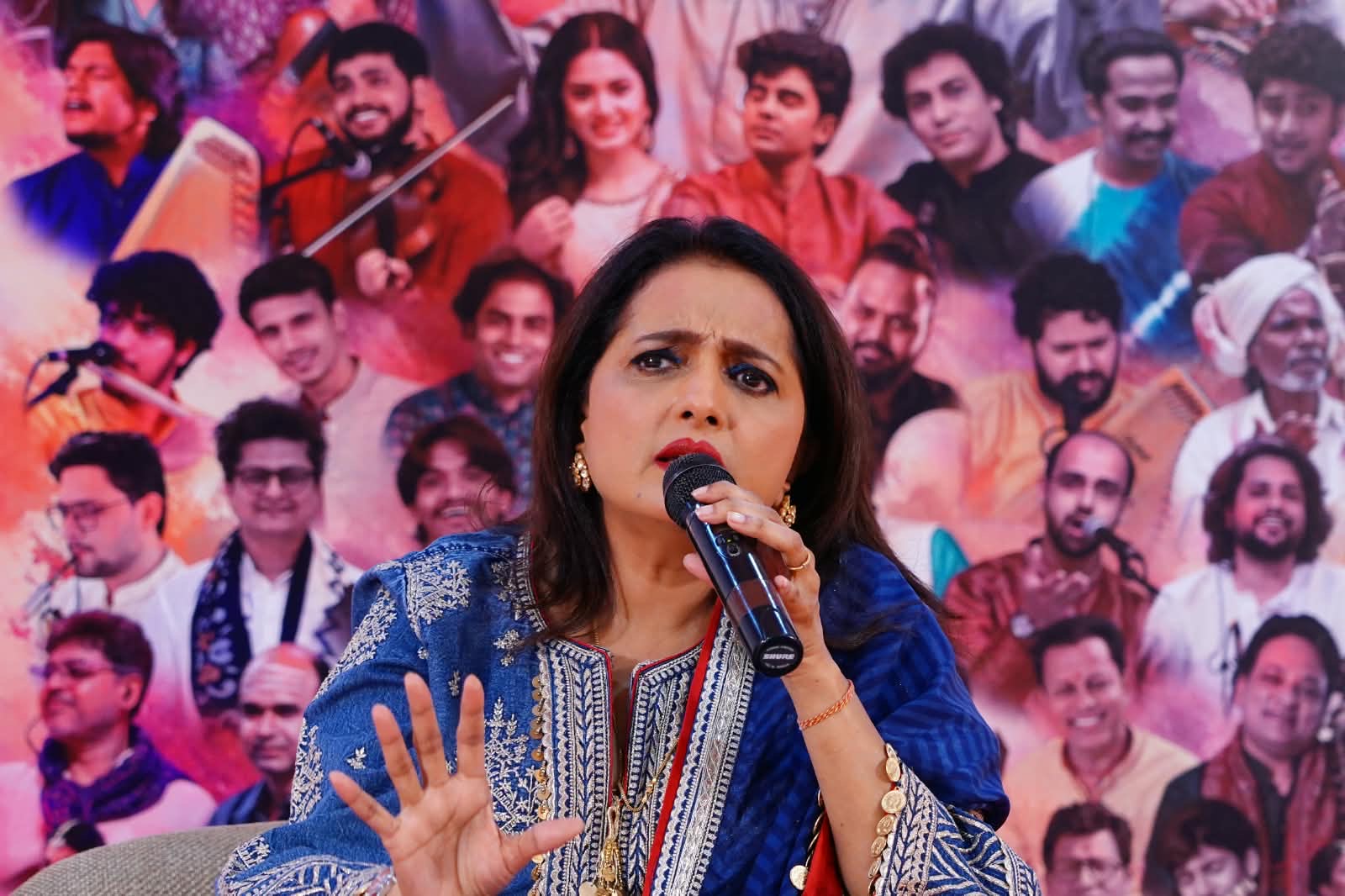
“My father went to Vivek Vardhini School, but every morning he would leave home and go to the Yakubia tea stall to listen to a gramophone record. He would listen to the same ghazal, ‘Deewana Banana Hai To Deewana Bana De’, and return home just as school was getting over. His mother believed he was attending school regularly,” said Durga Jasraj, daughter of Pandit Jasraj, speaking at a press conference at CCRT.
The family’s arrival in Hyderabad followed an invitation from the Nizam to Pandit Motiram, who had previously served as a court musician in Kashmir. His sudden death left the family struggling financially.
Durga recalled how her grandmother encouraged the young Jasraj to learn the tabla so that he could contribute to the household income. He began learning the instrument from his elder brother at the age of six and was accompanying other musicians before he turned seven.
He performed at the Salar Jung Museum and before the Nizam and eventually received invitations from across India. His earnings helped support the family, and he continued as a tabla player until the age of 14.
The festival, which organisers describe as Hyderabad’s oldest music festival, will take place at the CCRT Amphitheatre on Madhapur-Kondapur Road. The programme covers Hindustani and Carnatic classical music alongside semi-classical performances, Sufi-Qawwali, ghazals, folk, devotional music, Haveli sangeet and classical dance. Established performers and younger artists will participate over the seven days.
This year’s programme also introduces a session on music and mental wellness by Dr Vijay Sathe, a disciple of Pandit Jasraj who has worked with hospitals and patients through music therapy for more than 35 years. He will discuss the possible role of music in recovery and general well-being. The Telangana department of culture is supporting the festival, and performances will be livestreamed on YouTube.
The concluding evening on November 30 will feature a special presentation based on the eight prahars, the traditional divisions of the day and night in Indian classical music, during which more than 45 musicians will perform ragas associated with different hours of a 24-hour cycle, accompanied by a live orchestral arrangement.
The programme is intended to recreate Pandit Jasraj’s annual musical offering on the anniversary of his father’s death.
3 attachment
• Scanned by Gmail
Disclaimer : This story is auto aggregated by a computer programme and has not been created or edited by DOWNTHENEWS. Publisher: deccanchronicle.com