
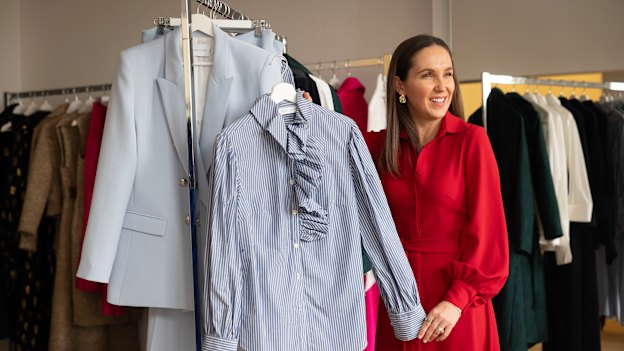
Caitlin Stewart has been a personal stylist for more than 20 years. Most of her clientele are professional women looking to fill their wardrobe with versatile, polished pieces that work just as well in a boardroom meeting as they do on the weekend with a pair of slick jeans.
Lately, she’s been hearing many of them say the same thing: “I used to know exactly where to shop, but now I don’t know where to go.”
“There is a significant group of established professional women who feel caught between very youthful fashion, activewear, generic casual clothing and expensive designer labels,” says Stewart. “To me, this is a real gap.”
Shoppers have never had better access to a diverse universe of options across which to spread their attention and their dollars. At any hour of the day, from bed, on the train, or at work, we are buying things from all around the world.
Even as the nation buys $11.6 billion of fashion and apparel online, according to Australia Post’s latest e-commerce report, stiff competition has delivered a changing of the guard in our shopping strips as stalwarts pull up stumps, leaving many shoppers adrift.
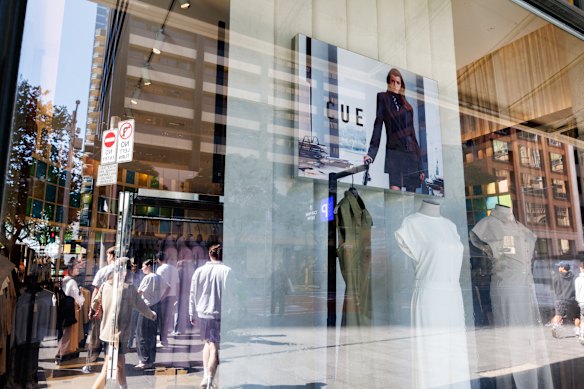
Cue and Veronika Maine’s descent into administration and receivership last month signalled that two titans of corporate womenswear had passed their heyday, joining a burgeoning list of well-known fashion retailers or brands that no longer exist in their original form.
Every end of the market has been bruised, from runway designers Alice McCall and Dion Lee to Mosaic Brands, which operated budget retailers Katies, Rivers, Noni B, Millers and others before collapsing, resulting in nearly 3000 jobs lost and over 700 stores shut.
Other brands (Alannah Hill, Gorman) have suffered after founders divorced their businesses. And private equity hasn’t always been a saviour either; Seafolly, once Australia’s most successful swimwear brand, collapsed soon after COVID struck. It was then rescued by LVMH-backed private equity firm L Catterton, but subsequently sold in 2023 to a private investment group.
Boho label Tigerlily collapsed twice, first in 2020, and then a second time before it was acquired by rival Seafolly in 2024. Jeanswest, which opened in Perth in 1972 and had nearly 150 stores at one point, was sold to a Hong Kong company in 2020, shut all stores in early 2025, and has been caught posting ‘AI slop’ ads.
Strained household budgets have shifted people towards affordable alternatives or splurging on investment pieces. Even the luxury market, usually fairly resilient to economic downturns, has not been immune; luxury department store Harrolds collapsed in 2024 with debts of more than $16 million. “Big logo” brands Chanel, Tiffany & Co and Giorgio Armani’s sales have declined in Australia, as younger, aspirational shoppers find and flaunt street cred by scouring vintage marketplaces and second-hand resellers like Depop and Vinted.
Pushing customers towards the ultra-budget end of the spectrum are overseas juggernauts Shein and Temu, which have captured a combined 8 million Australian shoppers by generating thousands of new outfits a day through artificial intelligence-powered, trend-identifying algorithms.
For designer labels, boutique chain Incu has become a destination for younger shoppers hunting the latest drops from the likes of A.P.C., Maison Kitsune and Maison Margiela.
Is the middle market really dead?
It’s a common refrain in the retail industry to hear “the middle market is dead”, but some industry experts don’t think this take is nuanced enough.
Holding up mid-market fashion are major chains Zara, Cotton On, Kmart and Uniqlo, which has become a wardrobe staple for its high-quality but affordable minimalist everyday essentials.
“The generic middle is in trouble,” says Stewart. “It has become a much harder place to be undifferentiated,” says fashion consultant and strategist Elizabeth Formosa.
The evolution of Australia’s fashion industry isn’t about old versus new brands, she argues; it’s about brands that have and haven’t kept up. Formosa points to Zimmermann and Scanlan Theodore as examples of brands that have been around for decades and are still building a global reputation.
Fashion businesses, inherently transient and linked to trends, can be remarkably adept at projecting an image of success while masking a very different reality.
“Revenue, visibility and desirability don’t necessarily equal a healthy business. You still need the fundamentals underneath it – margin, inventory productivity, cash flow, channel profitability, disciplined buying, effective marketing investment and a clear strategy for profitable growth,” Formosa says.
Operating costs (fuel and transport, electricity, wages, manufacturing) have soared. Retailers, old and new, tied to expensive store leases – 134-year-old shoe brand Betts and luxury activewear brand Stax among them – can find those overheads to be a noose around their necks.
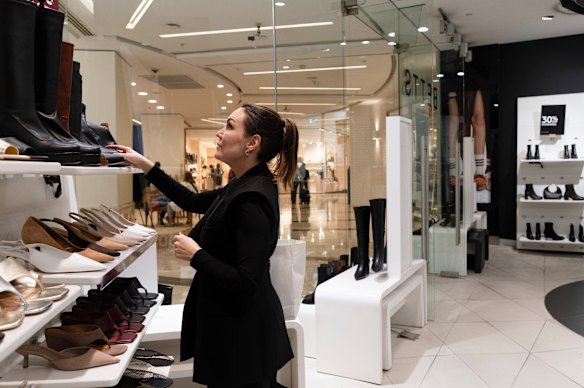
“With leasing costs, you’re committed for a period of time. It’s not easy just to turn off that fixed-cost element of retail, particularly when you’ve opened a lot of stores,” says KPMG restructuring and insolvency leader Gayle Dickerson.
And having a brilliant designer at the helm doesn’t necessarily translate to a commercially sound business.
“You’ve got to be really, really tight on discipline and spend controls and have that capability. And I think that’s harder in some of those smaller fashion businesses,” Dickerson says. “I do generally think that it is really important that you have someone there to challenge the amazing creative-led founder who wants to do all these at once.”
Owning the brand
While mounting overheads create the financial pressure, says Stewart, it’s losing sight of your customer that can force a business to buckle. There is a line from a university lecturer from Stewart’s time studying styling in Milan that has stuck with her: fashion comes from the streets and from the people.
“The brands that connect with customers pay attention to how people actually want to dress, and listen to their customers while staying true to their own point of view,” she says.
“The Australian woman hasn’t lost interest in fashion. She has become less loyal to brands that no longer understand her, and she now has far more places to go when they don’t.”
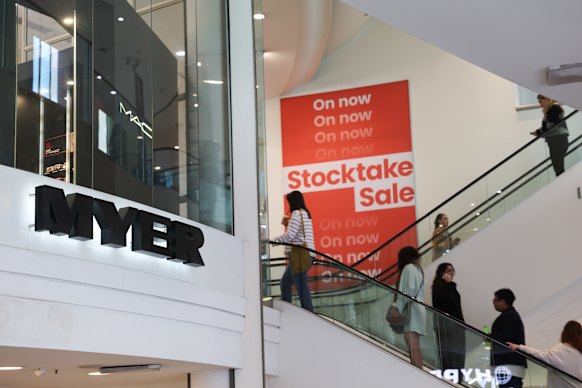
Department stores around the globe are being forced to rethink their business models, while facing greater pressure to reinvest in the store and customer experience. David Jones and Myer, both unprofitable businesses, have each reduced store footprints over the years and are fighting over the best brands to bring customers through the door.
The financial struggles of once-prevalent youth streetwear retailers General Pants and Glue Store have been existential. General Pants’ losses are in the tens of millions, and it is relying on cash injections to stay afloat, while Glue, which permanently closed its stores and online operation in June, is plotting a comeback under new ownership.
“Multi-brand retailers in the middle are absolutely copping it from both sides,” says retail consultant Trent Rigby. “The only way to win is to own your brands.”
Marcs, David Lawrence and Sass & Bide are among some labels Myer has collected but struggled to turn around, shutting dozens of underperforming stores at recently acquired mid-range labels Portmans and Jacqui E, where sales are rapidly declining.
Brands that once needed retailers to stock their products are now bypassing bricks and mortar altogether to sell directly to consumers online. Since joining Myer, chief executive Olivia Wirth has been vocal about her vision of being a house of brands coveted by younger shoppers, to some early signs of success: sales in the women’s youth category nearly doubled in the 2026 financial year, with Wirth calling out Topshop, Gap and Lioness as top performers in this category.
Lioness, founded in Sydney in 2009, began as an online store, and now wholesales to major domestic and international e-commerce platforms.
“We have a very strong brand, but it’s the commercial discipline behind it that has allowed us to sustain that growth and scale,” says managing director Wendy Lin.
Rather than growing for growth’s sake, Lin has learnt to stay focused on the quality of sales. “You can grow revenue while losing margin, carry too much inventory or make wholesale sales on bad terms,” she says. “Maintaining margin as we scale is more important than growing the top line.”
Following every trend and trying to be everything to everyone is a sure-fire way to erode a brand’s identity. Having a team that can respond to the market quickly without being locked into decisions made months prior is crucial, says Lin.
Sometimes, Lioness is ahead of the trends; other times, it gets it wrong. “We’re not precious about our planning.”
Selling to ‘digital natives’
Global trend cycles are moving faster than they ever have before, and department store executives are at pains to stock in-demand labels at the forefront of those trends.
“It takes a much shorter period of time for a trend to be on the runway, including high-end fashion, and then to make it to the high street,” says Wirth.
Social media and e-commerce have rewired how retailers need to reach customers. Digital natives (Gen Alpha, Gen Z, Millennials) are much more willing to try new brands and products – but often don’t stick around.
“It’s very easy to get them through the door. The problem is, they’re just not loyal,” says Rigby. Speed is also of the essence, with Amazon and The Iconic setting expectations for delivery times that are now same-day or one-hour windows. Personality-driven marketing is also shifting away from A-list celebrities to micro-influencers.
The reverse tends to be true for older generations, or “digital immigrants”, who are more difficult to coax into trying a new brand, but are harder to lose, Rigby adds.
But Baby Boomers are the generation with the money to spend on higher-quality and more sustainable clothing.
“Because they’re one of the hardest-hit around cost of living, Gen Z are openly seeking and even flaunting fashion dupes. We find [with] Baby Boomers there’s more stigma around not buying the real thing,” says Rigby.
Renewal, reinvention, and ascension
Resetting brand direction is fraught with risk, and executed to varying degrees of success. Witchery, which has more than 100 stores and is facing the same slowdown in workwear as Cue, unveiled its youthful rebranding in mid-2024 featuring trend-driven designs – bubble skirts, oversized jackets – that alienated many existing customers.
“The problem was that this established woman had been Witchery’s main customer, and the brand appeared to stop designing for her. It was targeting one woman aesthetically and another woman financially,” says Stewart.
“Reinvention is important, but it should bring your loyal customer forward with you, not make her feel that she has been replaced.”
On the other hand, heritage leather goods label Oroton has enjoyed a revival. Since being rescued by billionaire fund manager Will Vicars after collapsing in 2017, it has been held up as a successful case study in how to successfully pivot to contemporary tastes without losing its identity.
The 88-year-old brand grew sales by 9.4 per cent and lifted profits by 69 per cent to $12 million in the 2025 financial year by reimagining classic handbags in different materials, expanding its clothing and gifting ranges, and revamping stores.
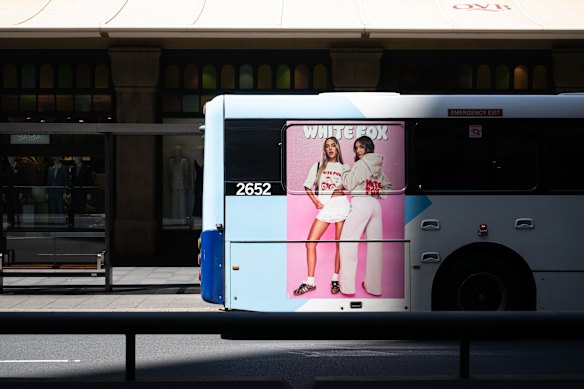
Today, some of the country’s fastest-growing fashion retailers aren’t ones you can visit on the high street. White Fox – emblazoned on buses, billboards, and countless hoodies – has dominated the tween market coveting the “It girl” aesthetic. In the year to June 2025, sales hit $542 million, all without setting up a single permanent physical store. Online fashion business Meshki is a similar success story, growing sales by a remarkable 51.3 per cent to $182.6 million.
“What I’m seeing now is the brands that are winning started online. They built a community and then earned their way into physical retail,” says Rigby.
“A lot of the ones struggling did it the other way around; big store networks and long leases first, then trying to bolt on online and social later.”
The new and emerging generation of shoppers wants to dress for the moment and the camera, says costume designer and University of Technology Sydney honorary research fellow Dr Emily Brayshaw.
But “traditionally safe” brands won’t help them do that. “Many younger consumers also are now looking for something that gives them an edge and helps them to stand out, particularly on social media,” she says.
“Mixing cheaper fast fashion pieces with a thrifted find can help them stand out, however, and develop their own personal style, and younger people are increasingly doing that.”
The Business Briefing newsletter delivers major stories, exclusive coverage and expert opinion. Sign up to get it every weekday morning.
Disclaimer : This story is auto aggregated by a computer programme and has not been created or edited by DOWNTHENEWS. Publisher: www.smh.com.au






