GARDEN CITY, N.Y. — Some years ago, an editor from a travel magazine called with an irresistible offer: Go anywhere in the world you like and write-up the golf scene there. I offered Suffolk County, the eastern half of Long Island. I was born and raised in Suffolk County, on its brackish South Shore, about 30 miles from Shinnecock Hills, and the golf there is my golf. My wife Christine was less than thrilled, with her proffered jump seat on this proffered gig and Australia and Japan on her to-do list. I get it. I realize now I should have said all of Long Island.
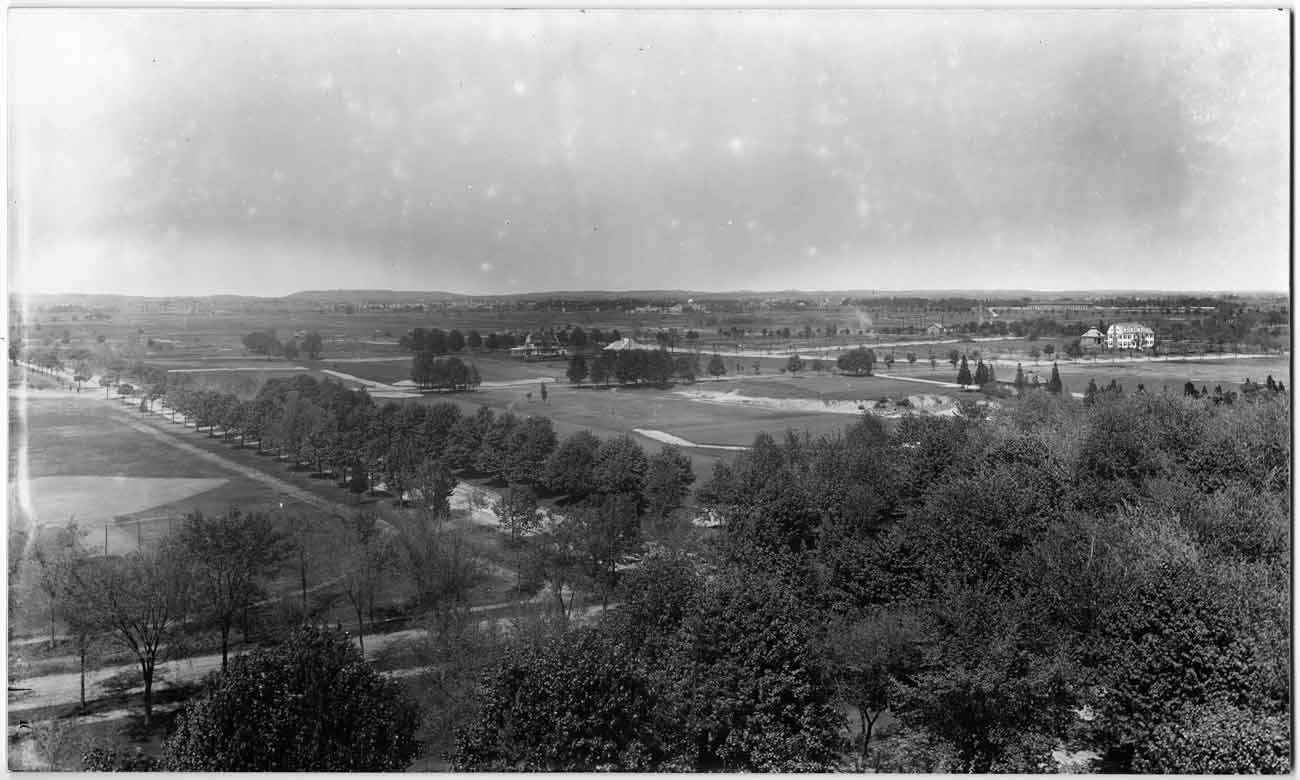
On Tuesday, I went around the old, almost invisible, Walter Travis course here, at the Garden City Golf Club, in Nassau County, Long Island’s western county, abutting New York City. I had never been there before, not even past it. The day and the weather, the round and the course, the competition and the camaraderie — you could say this little golf event was centuries in the making, but you could also say it just kind of came together on short notice and out of nothing. Both statements are true. We were a 50-something golfer and a 70-something golfer (our host) playing a 60-something golfer and an 80-something golfer. The match was even on the 17th tee with a short par-5 and a longish par-3 remaining. Everything about the day — the afternoon into suppertime — was outstanding. It was real golf. You likely can tell already.
I know you. You’re here because you’re in this green club of ours, just as Jack Nicklaus, speaking honestly about this game, is; just as Madelene Sagstrom, pregnant and playing in the U.S. Open, is; just as Bob Charles, newly 90 and still walking courses and golfing his golf ball, is. Three inspirations.
Here’s Nicklaus, Tuesday at his Memorial Tournament, talking to the press corps (that is, what’s left of us):
“I think most of these golfers out here, they play the round of golf, they finish the round, they take their hat off, they shake each other’s hand, and they say, ‘Well done.’ Or they say, ‘Oh, you played like crap today.’ I don’t know what they’re going to say. But it’s always a nice salutation.”
He doesn’t know because you can’t know. You’re not the guy on the 18th green and you don’t know how the day has gone. One day to the next, this game is never exactly the same, just as we are never exactly the same. That’s why Bob Charles is still at it. What lovely comments — Big Jack, still looming large.
A few days ago, I was hitting balls on a range next to a tall, lanky teenager, still in high school, hitting tall, lanky iron shots.
“What can you shoot on a good day?” I asked. I know no better way to pose that question. I stole the phrasing, years ago, from an on-the-ground touring pro.
“Four or five,” the kid said.
“Wow,” I said. “Mid-70s.”
“Four or five under,” the kid said.
I like his future. But I like mine, too. I did shoot 103 last week, and it was a newspaper 103. But I can play better. At 66, there are some things about your game you really do know, in addition to it being different, one day to the next. For most of us, our mood and our golf are inextricably linked. That’s true for the pros, but less so. They’re better at burying their moods and getting on with it.
For most of us, our mood and our golf are inextricably linked. That’s true for the pros, but less so.
This is from a letter I recently received from a course owner:
I credit LIV Golf and the PGA Tour for doing more for the recreational game than even COVID because the golfing public is sick of watching a bunch of money-grabbing, whining pros. People would rather play than watch a sport with declining star power.
Thirty years ago, we knew that David Duval had graduated from “Tier 2” to “Tier 1” (not that those terms existed) by winning twice on the Nike tour. Suddenly, he had a PGA Tour card. It wasn’t a complicated progression.
Duval already was a star golfer, but not yet a British Open winner, when he made himself available to the Sports Illustrated writer Gary Smith. Smith went deep with Duval and forever afterward Duval was known not just for being a star golfer but an interesting, complex person, too. The American golf tour was built on such circumstances, on big things like Ben Hogan winning the U.S. Open at Merion after that Greyhound bus practically flattened him, and more intimate things, like Nick Faldo and Greg Norman, not at all friends, hugging at the end of the 1996 Masters, after Norman’s painful collapse. We all fell into the Tour at some point.
Maybe it doesn’t particularly matter, that’s what the course owner is saying. We will always have our game, what my pal and correspondent calls the “recreational game.” That’s what the four of us were doing at Garden City on Tuesday afternoon. We were recreating with intent. We were playing recreational golf and we were playing for keeps.
The turf here, on this Walter Travis course here in Nassau County, could have been shipped by boat from the East Coast of Scotland, back when crossing the Atlantic could take a half-month. Our divots were about the width and length of wee bacon strips. Not even. The earth beneath our feet was firm and sandy. On our better greenside pitches, we were hearing a dull tah-poomp upon ball landings. The bunkers were walled and filled with coarse beach sand and the only thing missing from them was some sleeping sheep. The green-to-tee walks were (and are) short and the whole playing field was a sort of pale green, not the fluorescent green that makes you queasy, it’s so unnatural. The alignment sticks for sale in the pro shop are made of wood. The on-course refreshments come of the back of a work cart. The metal flagsticks on the large and two-puttable greens are so heavy they could be exercise tools in some new workout craze.
The clubhouse here is a bunch of books on shelves and trophies denoting various national competitions. You wear a coat, no tie, at lunch and (to borrow a phrase) through the clubhouse, here at Garden City Golf. That is, Garden City Men’s. (Yes, one of the last of those.) The course is well over a century old no matter what starting date, what incarnation of the course, you choose to use. I could look up where it falls on the various course rankings, but I really don’t care. I know what I like as we all know what we like. It brings to mind Elie, on Scotland’s East Coast.
getty images
The course is flat and short with beautiful shape and is loaded with visual tricks in its modest elevation changes. The course is alive and the round moves. Without a hint of racing, you get around in well under four hours. The caddies caddie. They’re not in a cart. Almost nobody is. The course is a celebration of scruffiness as a traditional golfing value, of walking, of beauty-there! camaraderie. The clubhouse is a celebration of lived-in comfort that does not have or want even the hint of a nod toward show and showy. The whole place is a celebration of golf. We played through a warm afternoon wind. Don’t try to impress the valet guy with anything, your clubs or your coat or your car or what have you. The valet guy is not impressed.
Mark, in his mid-80s and flushing a long series of draw shots in Tuesday afternoon’s warm wind, was (uncharacteristically) in his pocket on 17 but I made 4 there the old-fashioned way (three shots right on the face shots and a knock-back). We went 1 up. I was in my pocket on 18 but Mulvoy — my partner has famously traveled the world of golf for 60 years on his surname and stories alone — hit some kind of gorgeous drawing hybrid hole high and to 10 or 15 feet and that was enough for the win. A Tuesday with Mulvoy.
We followed our host to the library-bar and a plate of room-temperature cheese you could cut with a butter knife. Somebody in a member’s coat was telling stories about the welts on his shoulder blades from the old Burton bags he once carried at Merion, in his caddie youth in the last days of persimmon, packing doubles for $7 a sack.
Nobody on this Tuesday at Garden City was talking about Tier 2, relegation, Tier 1, Signature events, blah-blah-blah. Nobody was talking about a hundred dollar “Nass” with automatics (a game invented down the road, at the Nassau Country Club). In our better-ball play on Tuesday, we were playing for way more than that, and Nassau was a proud two-syllable name and game. Mulvoy keeps a tidy card.
As I type this up a day later, I’m still floating in the joy of it all. Our host, a retired banker who publishes obscure golf books because he can, had us there because he likes the company of people who like golf and for no other reason. The kid in our foursome, Don’s partner, was Mulvoy’s very tall son-in-law, with so much swing speed (in his late 50s) and so much height in every way he brings to mind Scottie Scheffler, not that Scheffler’s name came up at all on Tuesday because it did not, not with us. These golf names did: Ben Crenshaw, Tom Doak, Bob Jones, Walter Travis, John Updike. Updike’s home course, Myopia Hunt outside Boston, celebrates scruffiness, too. Myopia had four U.S. Opens. Garden City had it once, in 1902. The courses and clubs share a vibe.
Shortly after the editor of that travel magazine called, inviting me to go anywhere, his glossy went out of business. Businesses are funny that way, though not funny ha-ha. It’s easy to start a business but hard to start a business that makes money. I don’t know why the PGA Tour is suddenly in the business of making money for its owners. Who even said it was even for sale? The best courses, in my accounting of them, don’t have or want a profit incentive. Garden City Golf Club does not have a profit incentive. It’s not a business, except for being in the have-at-it business. Anyway, in the years since that editor called, Christine has made it to Australia and Japan. I’m still working my way through Long Island. The five courses at Bethpage are just down the road from here and anybody can play them.
Michael Bamberger welcomes your comments at Michael.Bamberger@Golf.com.
Disclaimer : This story is auto aggregated by a computer programme and has not been created or edited by DOWNTHENEWS. Publisher: golf.com