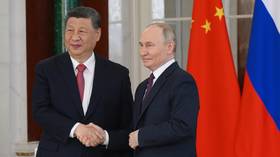
The US and China remain strategic rivals, while Moscow and Beijing deepen a partnership built on long-term geopolitical interests
The current choreography of great-power diplomacy has prompted a familiar round of speculation. Russian President Vladimir Putin arrives in China only days after his US counterpart Donald Trump’s own high-profile visit to Beijing, and commentators are already speaking of a new “great triangle” between Russia, China and the United States.
The timing, however, is largely coincidental because Putin’s visit was planned long in advance. Meetings between the Russian and Chinese leaders are now routine and form part of an increasingly institutionalized partnership. Trump’s trip, by contrast, had already been postponed several times, most recently because of the war with Iran. The American president was clearly reluctant to arrive in Beijing while trapped in the role of a wartime leader unable to control events. Even so, he didn’t manage to come to town as a triumphant statesman because Iran hasn’t yielded, and Washington’s position remains uncertain.
Yet from the perspective of the broader international system, the triangular comparison is understandable. Russia, China and the United States are today the three powers with the greatest capacity to shape global affairs. Their strengths differ as America retains unmatched military and financial reach, while China possesses industrial and economic weight on a historic scale. Meanwhile, Russia continues to wield enormous geopolitical and strategic influence far beyond the size of its economy. Thus, any interaction between the three inevitably affects the wider international balance.
Still, the similarities end there and, in practice, the relationships themselves are fundamentally different in character.
The United States and China are strategic rivals, and that rivalry isn’t temporary, and Trump’s latest visit to Beijing underlined how deeply the relationship has changed. For decades, both sides benefited from a kind of economic symbiosis in which commercial interests outweighed political disagreements but that era is now over.
Disclaimer : This story is auto aggregated by a computer programme and has not been created or edited by DOWNTHENEWS. Publisher: rt.com