Russian warship carried out firing exercise off Plymouth coast
To play this video you need to enable JavaScript in your browser.
This video can not be played
-
Published
A Russian warship, shadowed by a Royal Navy vessel, carried out a live-fire artillery exercise just 46 miles (74km) south of Plymouth on Monday.
The Royal Navy monitored the exercise and is tracking “the vessel’s activity closely”, a Ministry of Defence spokesperson said.
The BBC has been told that, prior to opening fire, Russian frigate Neustrashimy (English: Dauntless) had informed the Royal Navy Offshore Patrol Vessel, HMS Tyne, of its intention to conduct gunnery activity.
Newly appointed Defence Secretary Wes Streeting called the exercise “performative and irresponsible”. The Kremlin has signalled there was no link between the exercise and Andy Burnham taking office as prime minister.
To play this video you need to enable JavaScript in your browser.
This video can not be played
“All [military] exercises and all actions undertaken by our warships are carried out in strict compliance with international and maritime law,” Kremlin spokesman Dmitry Peskov told BBC News.
“Therefore, there is no need to see any signals in this,” he said.
However, Peskov added that Burnham had sent signals to Russia, saying: “One of the first things the new British prime minister did as he took office was to declare his unconditional support for Ukraine and, accordingly, declare the UK’s intention to continue doing everything it possibly can to continue the war.”
Streeting said Russia “should be in no doubt about the resolve” of the new government and prime minister.
UK defence sources would not comment on whether the incident might have been timed to coincide with the start of Andy Burnham’s premiership.
The live-fire exercise took place in international waters and lasted for 30 minutes.
The Russian warship requested that the Royal Navy’s HMS Tyne reposition to a safer distance, which it did.
The Russian frigate was also being monitored by a French military aircraft which made radio contact with the warship asking it to clarify its intentions, the BBC has been told.
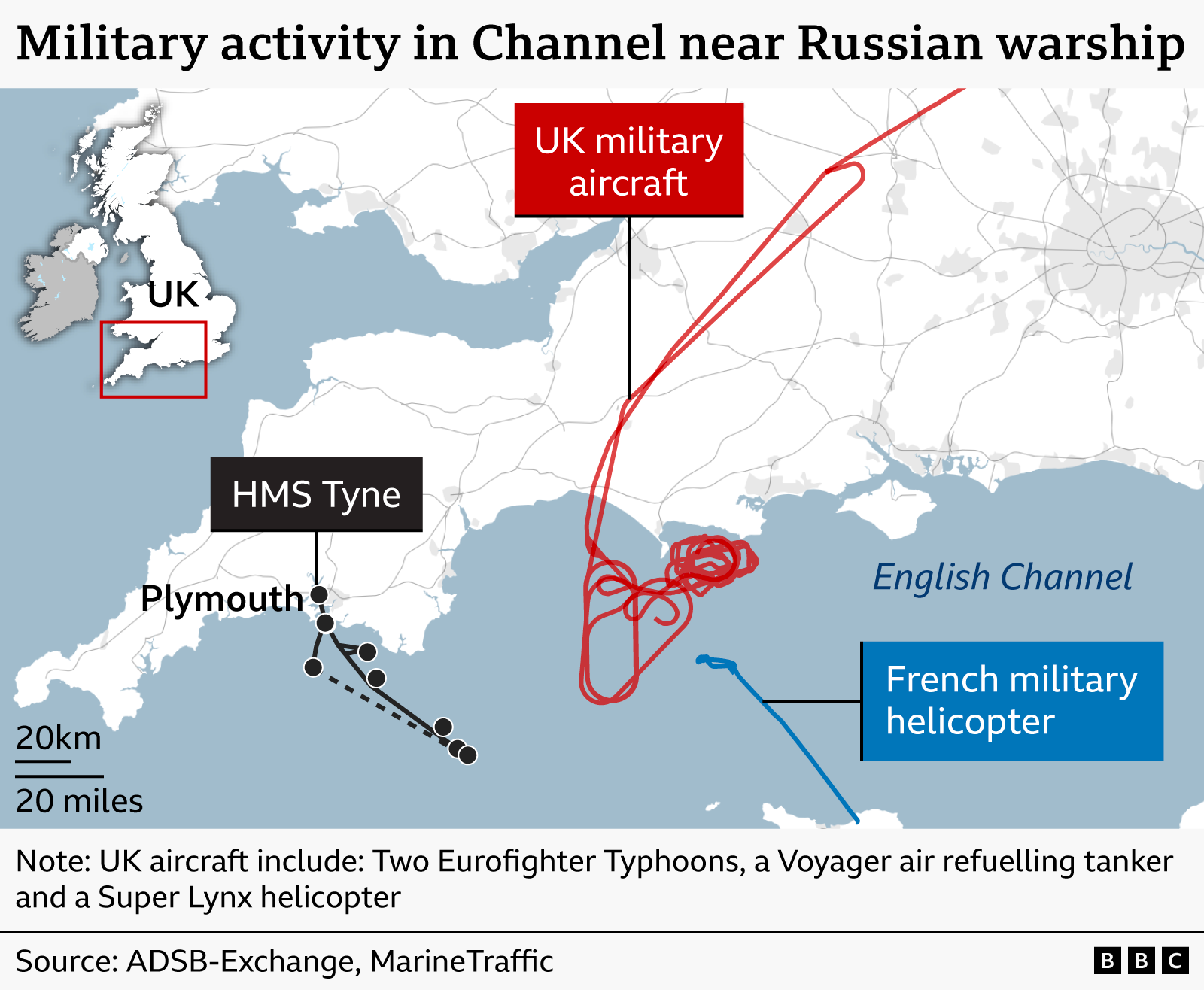
BBC Verify has analysed flight and ship-tracking data which shows the position of HMS Tyne and several British military aircraft operating in and around the Channel near Plymouth on Monday.
Flight data on ADS-B Exchange indicates at least four Royal Air Force and Royal Navy aircraft were flying off the coast of Dorset mostly above the UK’s territorial waters, including two Eurofighter Typhoons, a Voyager air refuelling tanker and a Super Lynx helicopter.
A French military H160M Guépard helicopter also flew out and over the Channel during the afternoon. It is not clear if this is the aircraft which made contact with the Russian warship.
Data on ship-tracking service MarineTraffic shows HMS Tyne began to broadcast its location about 40 miles off Plymouth at 13:57 BST on Monday. It remained in that location for around two hours before departing at 15:56 to return to Plymouth.
HMS Tyne has been tracking Neustrashimy since at least 16 July when both vessels were also captured in the North Sea about 36 miles miles from the port of Felixstowe in Suffolk on a satellite image.
The incident will be a reminder for the new prime minister of increased Russian naval activity near UK waters in recent months.
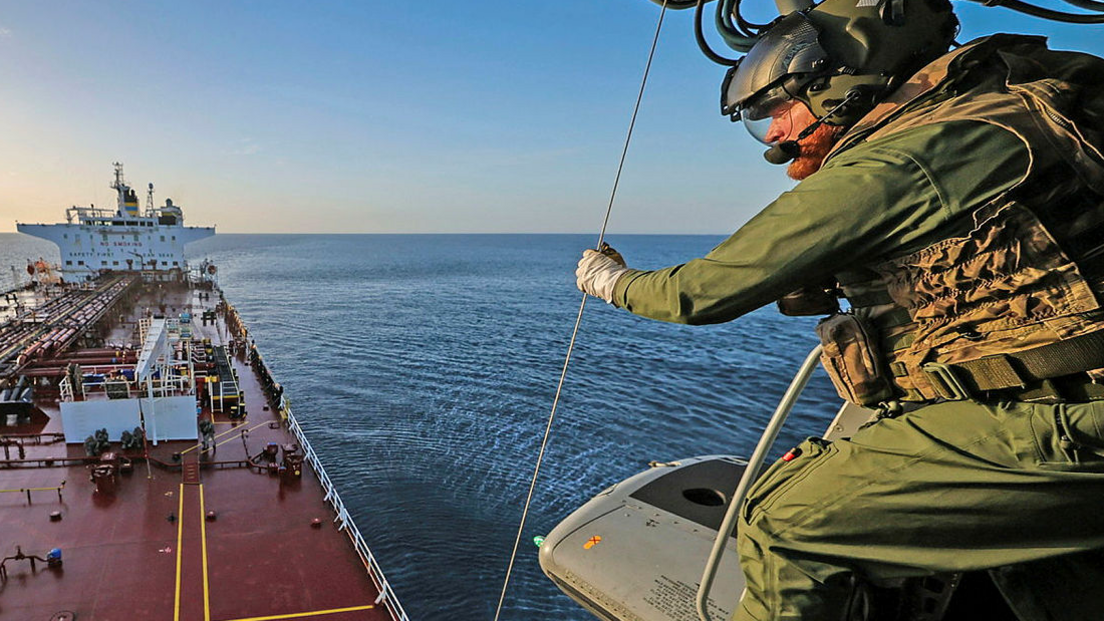
Last month, Royal Marine Commandos boarded a Russian “shadow fleet” oil tanker in the English Channel in a six-hour operation which was the first of its kind by UK armed forces.
Also in June, a British couple in international waters in the English Channel came across a Russian warship – Admiral Grigorovich – 23 miles off the Isle of Wight.
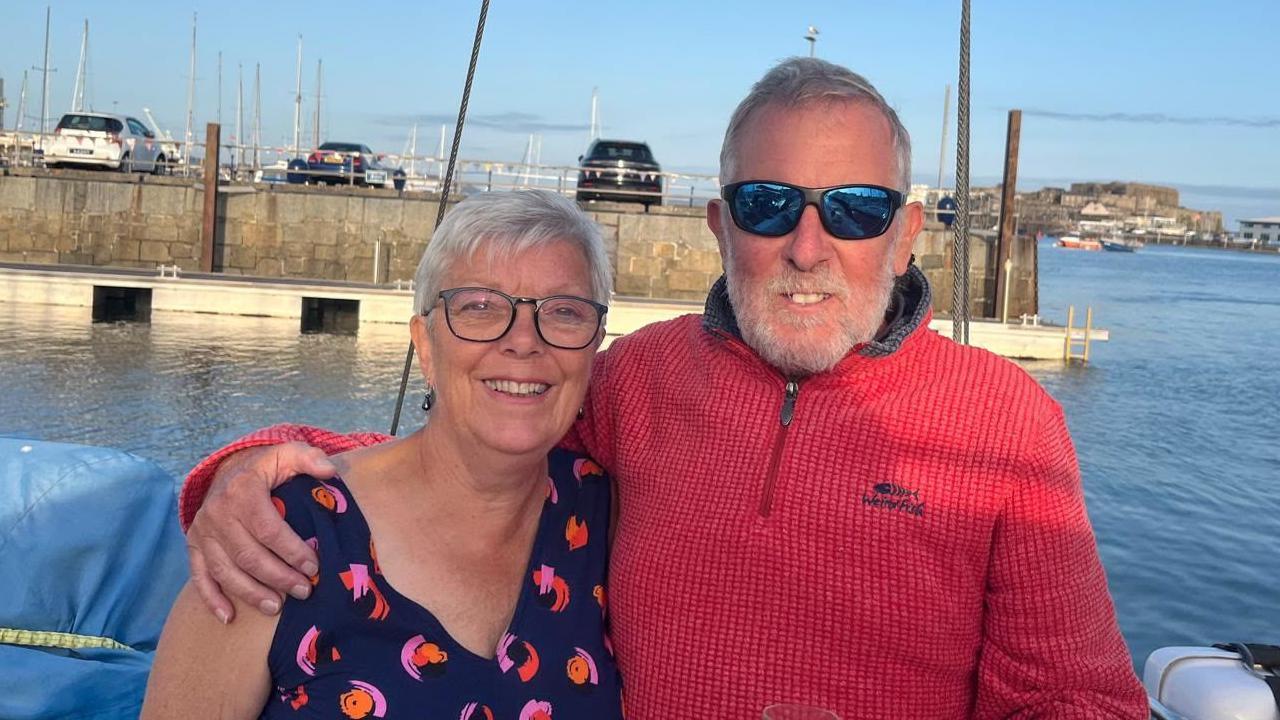
The frigate fired warning shots as Jane and Alan Kelvey sailed their yacht on what Russia’s defence ministry said had been a “dangerous approach”. However, the couple said they had not been on a “collision course”.
Russian warships regularly pass through international waters in the Channel, which are separate from UK and French territorial waters.
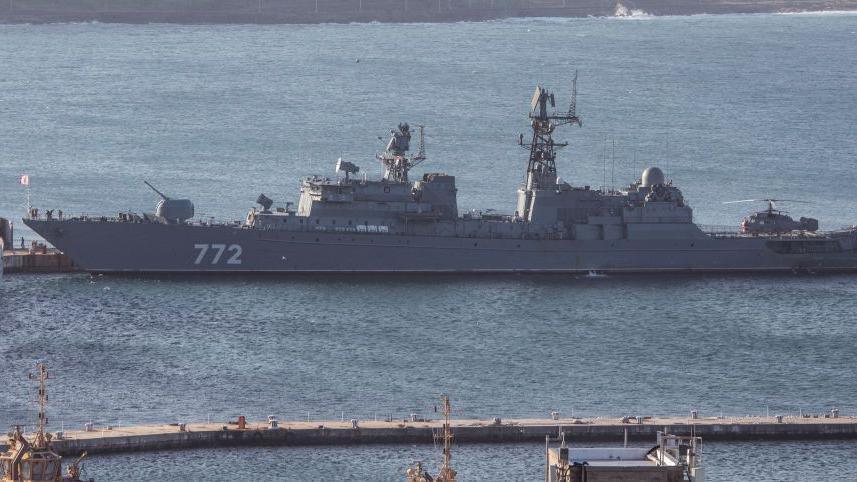 Image source, Getty Images
Tom Sharpe, a retired Royal Navy commander, told BBC Radio 4’s World At One programme it was “very unusual” to conduct a gunnery exercise so close to the south coast.
“It is entirely allowable but in my mind it is a signal,” he said.
Apart from the warning to HMS Tyne, the Russian vessel did not put any safety measures in place before firing a 100mm cannon, he said.
“One of the issues with firing a weapon of that calibre is that it can ricochet for miles, perhaps over ten miles beyond its intended landing point,” Sharpe added.
“You are in the busiest shipping lane in the world and who knows where it is going?”
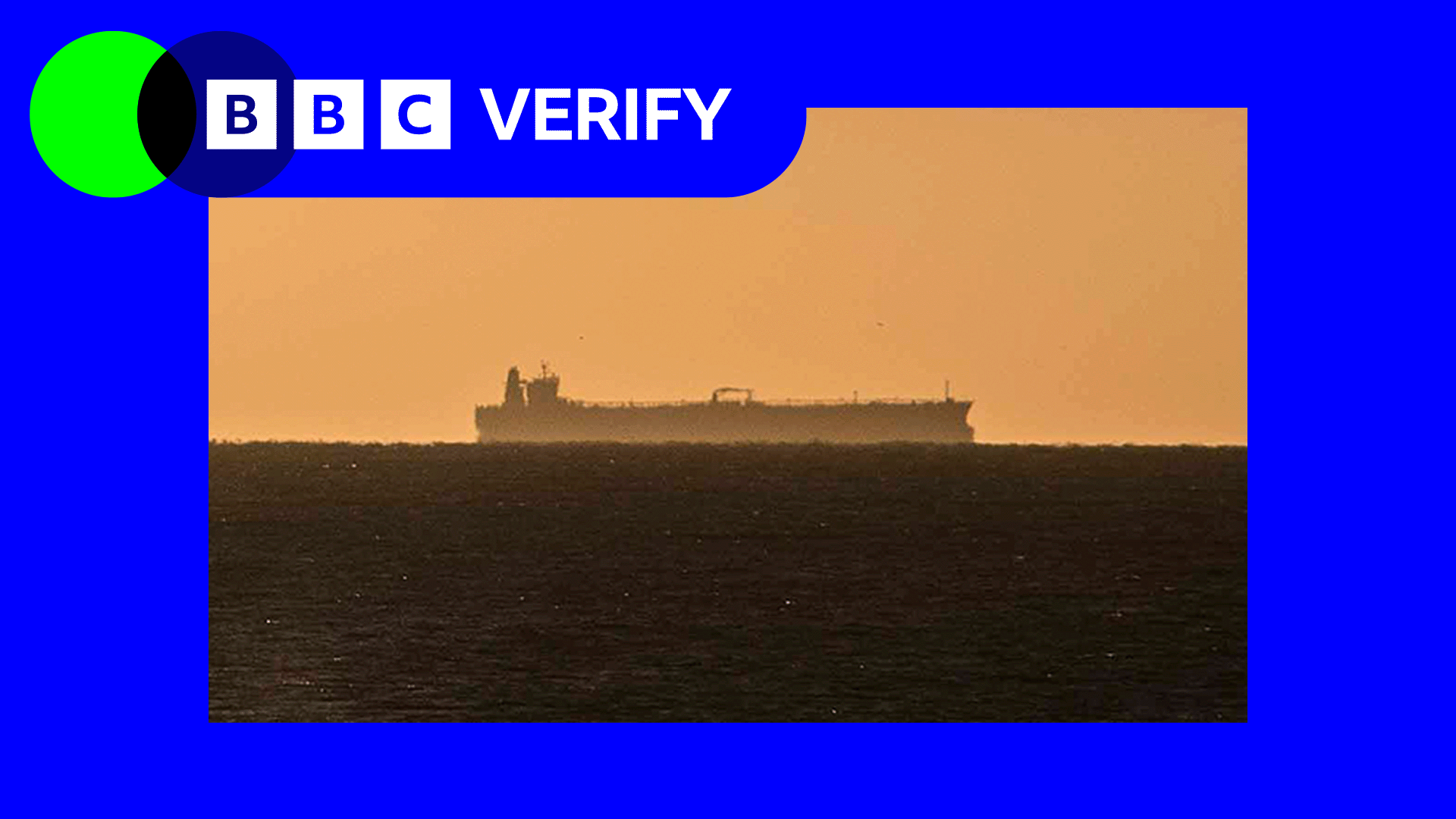
Asked how the UK should respond, the retired commander said: “You could argue that this was them responding to us because we’ve upped the ante in the Channel, we boarded the [MV] Smyrtos, one of their dark fleet ships, which is now at anchor off the south coast.
“So we are in this tit-for-tat, which is kind of Cold War normality. We’ve just forgotten that this sort of stuff used to happen all the time but we need to acknowledge that it is getting closer and closer to the UK.”
Additional reporting by Ella Kipling, Barbara Metzler, Thomas Spencer and Patrick Jackson
-
-
Published15 June
-
Disclaimer : This story is auto aggregated by a computer programme and has not been created or edited by DOWNTHENEWS. Publisher: BBC