

If there is a resolution to the Iran war, travellers are betting on big discounts to lure them back onto planes. And if not, they are booking fully refundable back-up trips on top of existing flights they’ve already purchased.
The Gulf carriers, too, Emirates, Qatar and Etihad, are betting on a hoped for recovery in June. Before the war, they serviced one of the most popular routes to Europe, now they plan to increase flights from next month.
All that’s missing is a durable peace in the Middle East.
Some travel-hungry Australians are tiptoeing back through the Mideast despite the risk of disruption or cancellations following a dramatic run-up in fares to Europe through Asia. Others are holding out.
The Gulf is a key transfer zone between Asia and Europe. The average number of daily flights between Australia and the Middle East fell 77 per cent in March 2026 compared to a year ago, according to Airservices Australia data.
The lowest economy fare from London to Melbourne jumped 76 per cent in June year-on-year to around $US1200 ($1685) one-way. For now, reduced capacity at Emirates, Qatar Airways and Etihad has helped keep a lid on big discounts.
Prices on forward bookings air travel are currently 24 per cent higher than last year, according to management consulting firm Teneo, a rise driven by Europe to Asia travel.
Kylee Ellerton, managing director of Frank Ford Travel in Ballarat, Victoria said travellers aren’t taking chances. If they’re booked on a Gulf carrier and uncertain about the trip, they are buying another ticket “as a back-up” on Qantas or Asian carriers.
“So they’re paying out the money twice. And the second amount they’re paying out is a lot more than what they paid in the first place,” said Ellerton.
In one example, a Melbourne-Amsterdam ticket return originally purchased in October on Qatar Airways via Doha for travel in late March cost $2288.
By mid-March, back up tickets on United (via Los Angeles and Washington) ran to $4973, while Finnair (via Tokyo and Helsinki) cost $4856.
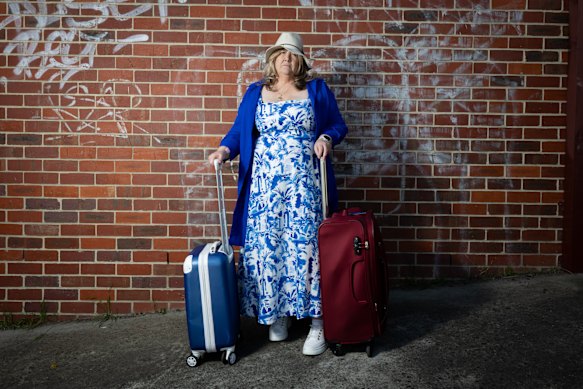
Ballarat-based Kay Jackson booked a cruise from Athens departing in October, just before the fighting kicked off. “Normally, we fly with Emirates – and would normally go through Dubai.”
Instead, she has considered flying through Singapore, but has not booked because the prices “get dearer and dearer”. If she doesn’t get to Europe, Jackson risks losing her $7000 deposit on the cruise.
Emirates and Qatar Airways (wet lease partner of Virgin) have signalled plans to restore their full operations to Australia in phases from May to June.
Ellerton has seen “a few people now that are starting to go through the Middle East”. A friend who travelled with Etihad to London said: “It was fine,” with the plane full and the service good.
But the traveller was concerned insurance wouldn’t cover any delays or disruptions while transiting through the Middle East.
Travel to Europe through the Persian Gulf has been under a cloud since February 28 when the US and Israel attacked Iran.
Council of Australian Tour Operators chair Dennis Bunnik said: “Pricing has remained steady with no signs of massive discounting at this stage. Availability for second half of the year with Gulf carriers is still tight. Most travellers are waiting for the travel advisory to be reduced before they recommit to Gulf carriers.”
Bunnik expects the Gulf carriers to recover later in the year. The Department of Foreign Affairs and Trade has a level 4 “do not travel” warning on trips to the Middle East, even for transit.
Many travellers remain unsure. “Even if the conflict eases quickly, I will be worried in the future because the conflict happened out of the blue, so quickly,” Jackson said, noting that the footage of strikes happening at Dubai Airport was “really alarming”.
Travel insurance typically does not cover regions under such a warning.
Helloworld executive director Cinzia Burnes has seen the odd business class seat priced low enough for some passengers to accept the risk of lingering aviation safety near a combat zone and unanticipated disruption.
“Our agents are presenting the options, being very clear what they involve,” said Burnes. “Some people are travelling, assessing a low risk. Some are not prepared to take even small risk and they go with other carriers.”
The Market Recap newsletter is a wrap of the day’s trading. Get it each weekday afternoon.
 Chris Zappone is a senior reporter covering aviation and business. He is former digital foreign editor.Connect via X, Facebook or email.
From our partners
Disclaimer : This story is auto aggregated by a computer programme and has not been created or edited by DOWNTHENEWS. Publisher: www.smh.com.au


