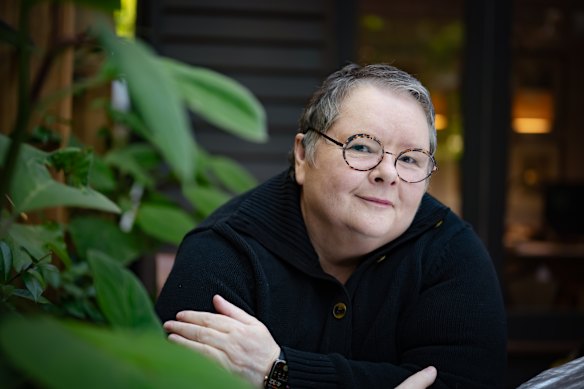
For four decades, Magda Szubanski has made us laugh. She’s as much a public figure, whose various comedic facets range from the purse-lipped Chenille, the chain-smoking Lynne Postlethwaite or the forlorn Sharon Strzelecki, as she is a familiar and beloved extension of our collective family.
But the very funny world of Magda Szubanski became very serious on May 5, 2025. “I remember the date, I’ll never forget it,” Szubanski says. “I know this sounds bizarre, but I felt relief because I had been so unwell. I think I was in a state of shock for about two months. I cried, also. I was just all over the place emotionally.”
Less than a month later, she went public with her diagnosis of a rare, aggressive blood cancer. “I won’t sugar-coat it: it’s rough,” she wrote at the time. “But I’m hopeful. I’m being lovingly cared for by friends and family, my medical team is brilliant, and I’ve never felt more held by the people around me.”
Flash forward to the present and Szubanski, 65, is in “deep remission”, has a new book, I Can’t Tell You But I Will, coming out and sits down to speak to Good Weekend with an enthusiasm and ebullience which is familiar to us all. She’s here and pulling no punches.
The public response to the diagnosis was, in many ways, testament to the significance of the contribution she has made to our cultural lives. There was genuine affection for her, and genuine shock to see a woman synonymous with laughter face the quiet gravity of mortality.
“I am so touched by it,” Szubanski says of the reaction. “It’s such a precious, beautiful thing. I don’t understand it fully. I don’t know why. Why me? I don’t really know. I don’t think you can ever. No one’s ever managed to figure out what that thing is. Part of it is just hanging around long enough.
“And it’s strange in a lot of ways because, really, I wasn’t born here. Look at my name. But that is so Australian, isn’t it? And it moves me really deeply. The response was like this tsunami of love. And I swear to god, I think that helped me. I really do. People were so lovely.
“After I had completed the chemo and I was up in Sydney, this tradie guy comes up, and says, ‘Just checking, you all right?’ Yep. ‘Good, good.’ Things like that give me goosebumps now, that people would care. And it makes me want to cry. It does make me cry, doesn’t it, clearly?
“How do you explain it,” she says, wiping away tears. “It’s such an extraordinary feeling to be on the receiving end of that. It really is. And I’m very grateful. I don’t know why. I don’t know why me. I don’t know what it is I do. But boy, am I thankful for it.”
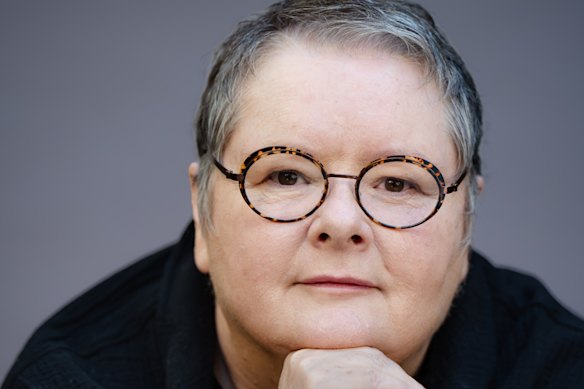
In part, perhaps, our shared adoration stems from exactly that: that Szubanski is neither prophet nor politician. In her novel Middlemarch, author George Eliot wrote that the world was “partly dependent on unhistoric acts”, a literary genuflection to the quiet labours of those whose efforts, or sometimes mere presence, makes it easier for the rest of us.
Szubanski leaned into the same idea in the foreword of her new book, with a dedication to her mother Margaret, whom she describes as “an unhistoric woman”. But in truth, the same could apply to Szubanski herself, a woman whose contribution to the national sense of humour has kept many of us smiling for most of our lives.
“Our lives are a bit easier because of all those unhistoric men and women,” Szubanski says. “Mum was one of them, just a simple but extremely complex Scottish working-class lassie. She’d be 102 now if she was alive. I love to be able to acknowledge those people who don’t normally get credited, but who really shape so much of life.”
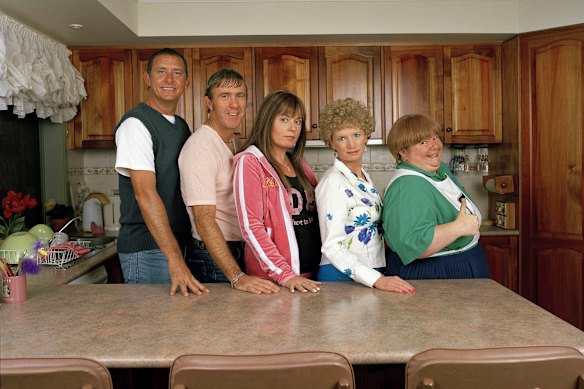
In a way, too, Szubanski’s most famous fictitious avatar – Sharon Strzelecki, the deeply put-upon, almost cripplingly lonely second-best friend to spoilt princess Kim Craig (née Day) in Kath & Kim – is the greatest expression of that idea. Her enthusiasm is boundless and she yearns to belong, but belonging seems to elude her. She’s all of us, in the myriad ways we try and never quite feel like we fit.
“She’s the spirit of thankless volunteerism,” Szubanski says, of the character, created when she was playing baseball and realised so many people who kept the machinery going – umpires, coaches, captains and field workers – were unpaid. “They keep the wheels turning, these people; they’re so important for society and for community,” she says.
The story of Magdalene Mary Therese Szubanski seems quintessentially Australian. Like many of us, her family came from somewhere else (she was born in Liverpool, England). And she grew up in the suburbs of Melbourne at a dinner table with a World War II Polish resistance fighter and an Irish and Scottish stoic. Family meal times? Complicated, she says, smiling.
Both of Szubanski’s parents were affected by war: her mother’s father “was a very funny, extremely traumatised man, horrendously so. By the time he was 16, he’d lost 10 brothers and sisters to poverty, and his father. And then he ended up at the Somme and Passchendaele in the First World War, where a lot of Australians were.”
As an adult, Szubanski came to understand her parents’ often hidden frailties. “Between [Mum’s] father, my father, and her own traumas, I think she tried to transcend her damage,” Szubanski says of Margaret. “She had that courage that she could look at her faults and flaws in a way with an honesty that I really admire, that not many people can, but she just couldn’t get the trajectory to get out of it because they didn’t have the tools.
“So growing up was a combination of fighting and hilarity and warmth and some cruelty thrown in there, too, and harshness and a lot of love, but just all of that. It was not straightforward. People parent very, very differently now. But also, poor bloody Mum, she got here and not a year later, my father was diagnosed with a very, very serious cancer. So she had a lot to deal with – they both did.”
At the tender age of 11, the future echo of Sharon Strzelecki was already emerging. Szubanski was a talented junior tennis player and competed in the Victorian School Boys and School Girls Championships at Kooyong. It was there that she met another competitor, Margaret Cecilia Louise – or Marg – Downey. “We met and we just clicked, we absolutely clicked,” Szubanski says.
They drifted in and out of contact and then reconnected at the University of Melbourne. “But by then, I was a radical lesbian feminist working in a women’s refuge, and she was at the Catholic college [and wearing] Laura Ashley.” Still, the foundation stones were laid for a friendship that has carried them throughout their lives. The gift with purchase for the rest of us: a string of critically acclaimed, fan-adored comedy masterpiece collaborations, including The D-Generation, Fast Forward, Big Girl’s Blouse and Kath & Kim.
I met Szubanski and Downey for the first time – along with their future Kath & Kim co-stars Jane Turner and Gina Riley – on the set of Fast Forward in the 1990s. That show was artistically significant not only because it popularised a number of Szubanski’s most memorable characters, including serial complainer Lynne Postlethwaite (imported from The D-Generation), ditzy sports reporter Pixie-Anne Wheatley and, with Downey, Chenille and Janelle, the hosts of an over-the-top morning TV advertorial show.
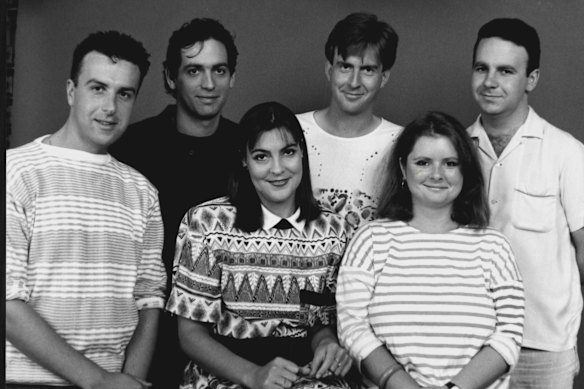
“She was a star in the making,” Downey says of Szubanski in that period, when Australian comedy was undergoing a bold transformation. The D-Generation itself paved a path for everyone from Rob Sitch, Santo Cilauro, Tom Gleisner, Michael Veitch and, later on radio, Jane Kennedy. And as part of the group drifted into Fast Forward, the others evolved into The Late Show, the production company Working Dog, and a range of projects from Frontline to the film The Dish.
“We just got each other’s humour,” says Downey of her friendship with Szubanski. “We could bounce off one another and we just started writing a lot of sketches together and performing them. We were from very different worlds, to be honest. In a funny kind of way, we were an odd couple, and to this day we’re a bit of an odd couple.”
In 2006, Szubanski ventured onto the stage as William Barfée in the Melbourne Theatre Company production of the hit Broadway musical, The 25th Annual Putnam County Spelling Bee. The production starred Marina Prior, Tyler Coppin and David Campbell. Szubanski’s casting was bold – the role had always been played by men. The production also introduced Szubanski to Campbell, a pop and jazz recording artist who cut a swathe through musical theatre on his way to becoming a television host. Szubanski had expected him to be a “rock ‘n’ roll kind of guy”, but was immediately charmed by his easy manner. “He’s also soulful and funny and warm and loving, and he’s just a great guy,” she says.
Later, when Szubanski saw Campbell talking to British stage actor Lisa Hewitt, she decided to play matchmaker. “She was completely involved in making this happen,” Lisa – now Lisa Campbell – says. “When I returned to the UK, and said [a long-term relationship] is unrealistic, she said, ‘This is special, you need to fight for it.’ ”
Campbell and Hewitt married in 2008 – Szubanski was a bridesmaid – and the couple have three children, Leo, now 16, and twins Billy and Betty, now 11. Szubanski is Betty’s godmother; a very powerful relationship, the couple say.
Magda has “a beautiful, maternal” response whenever kids talk about an achievement, Lisa says. “Magda will always say how proud she is of that achievement but reminds them that she loves them without it.”
It is also the heart of why Szubanski is so universally beloved. “Magda makes us laugh at ourselves and her at the same time,” David Campbell says. “It was never that she was the butt of a joke. We were all the joke. And that’s a very Australian way of doing comedy. Then, after a while, the caricatures, like Kath and Kim, become real. And now there’s a generation of people who speak like that.”
At about the same time, Szubanski shifted into the realm of soft politics, becoming the face of the campaign for same-sex marriage. A 2017 national postal survey gauging support returned a result of 61.6 per cent of voters in favour of marriage equality and in December the same year, the Marriage Act was amended to allow it. But the campaign was divisive. And, at times, it seemed like Szubanski shouldered more than her fair share of the effort. “You become like an avatar,” she says. “You’re speaking on behalf of a group of people who don’t have a voice, or aren’t heard, or they can’t express themselves. So it was nerve-wracking.
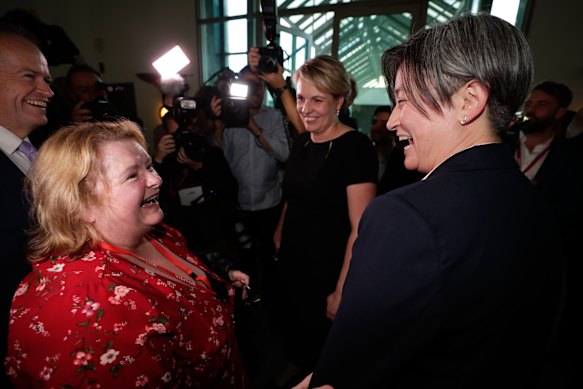
“But you have to be a unifying person. I wanted to bring people along. I wanted to message it in a way that wasn’t polarising. It wasn’t politicised. It wasn’t allied particularly to a political party. It felt owned by a lot of people. When the announcement came, all I felt was relief – joy, of course, but the primary emotion was relief, [that] we hadn’t f—ed it up.”
In 2025, before Szubanski faced that life-changing diagnosis, she dealt with crippling pain and disturbing, vivid dreams that repeatedly pulled her out of sleep. “They kept waking me up in the middle of the night going, ‘There’s something really wrong.’ My body was obviously on alert,” she says. “And then a few months before [the diagnosis], the dream started saying, ‘You’re dying, you’re dying.’ ”
Szubanski pushed her doctors for more tests. When the results came in, the conversation was short and to the point. She was on her own. “There were a number of people I could have taken with me, but I don’t know, sometimes I’m quite independent,” she says. “I went in and she said, ‘Well, there is something there.’ I said, ‘Is it cancer?’ She said, ‘Yes, it’s cancer.’ ”
As Szubanski began to grasp the seriousness of her particular cancer – an incurable, relapsing lymphoma – “that it might be just a matter of … if it wasn’t going to be months, but maybe years, not that long. I went into shock,” she says. “I immediately started texting and she’s telling me the thing and I’m texting my friends.”
And then she did what she always does in a challenging situation: she called Marg. “I just remember saying, ‘Oh no, no.’ She was just incredibly open
about it,” Downey says, “and she said, ‘Look, Marg, it’s not one of the good ones.’ And she didn’t know how long she would have or whether the treatment was going to work. I think she had to do a deep dive into how she was going to handle it and what treatment she would go with.”
Such experiences profoundly reframe a friendship. They also reshape your sense of what really matters in life. “We talk about death, we talk about dying, we talk about our thoughts about what might be beyond this life,” Downey says. “Going through something like Magda is going through has really made us discuss issues that we wouldn’t have even dreamt about when we were young or when we were at university, having to confront all sorts of pretty heavy stuff.”
Has Downey contemplated her life without Szubanski’s friendship in it? “I have,” she says. “That would be an incredibly sad time because I think Magda knows me better than most people – not every single secret, but she’s across most things – and to have that shared history since childhood is pretty special.” She would also miss the laughter. “There aren’t many people, I don’t know whether you feel this – but where you have a sort of shorthand with one another and one word can trigger hysterical laughter or a ‘remember that?’. We have so many shared memories.”
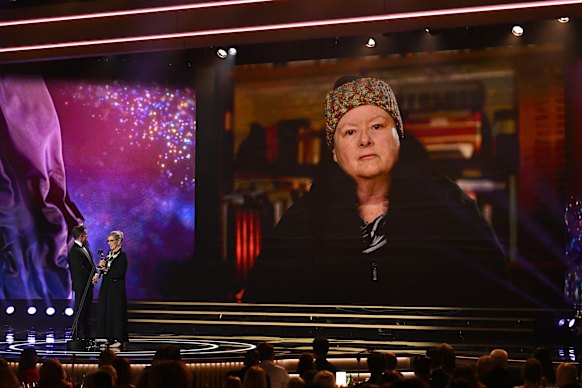
When Szubanski told the Campbells, the trio made the decision not to conceal anything from the children. “[We’ve] always been as honest as possible,” Lisa says. “The way that she’s been able to describe [the diagnosis and the treatment] to us has been so helpful for us to understand. And that clarity has been great for our kids to understand, too.”
Szubanski found her own understanding by pouring her thoughts and emotions into her manuscript. A line in the foreword notes: “writing the book will force me to look at things I don’t want to see and remember things.”
“It’s not a biography, it’s a memoir, but it’s about the sort of feelings of things,” she says. “And so there’s some stuff that I talk about, especially towards the end, that’s extremely painful. A little bit of me is like, ‘Jesus, girl, you got cancer, do you really need to make yourself feel those feelings?’ But my natural instinct is just to blab the truth, and I say that from the get-go.”
So, I ask Szubanski, where are we today? We have friends in common and I have followed, at least indirectly, her health journey in some detail. For a time, there was chemotherapy and crushing fatigue. Now, as we are talking, the sparkling, instinctively hilarious Magda we know and love is very much in the room. The same week as our interview, she is in the studio recording the audiobook. And I’m aware she’s only just fighting fit and will need to rest at some point.
The short answer is this: the median rate for relapse is four years, depending on potential treatments, and the median survival rate is about eight or nine years. “But that’s improving [and] honestly, it can change at any time. It’s definitely going to shorten my life. It could shorten it quite significantly. I don’t know. If I get to 75, I’ll be bloody thrilled, but if I get to 70, I’ll also be thrilled. But for the moment, touch wood, achieved deep remission.”
And the laughter isn’t going to stop. As we talk, our conversation shifts into my quoting old D-Generation and Fast Forward sketches, the lines of which have never left me. One sketch – about a stressed mother and daughter fighting in the kitchen during a family dinner – sends Szubanski into fits of giggles. It’s a 40-year-old sketch, and still as funny as it was back then. She wrote it, she reveals. Unsurprisingly, perhaps, tense family meals are in her wheelhouse.
One interesting effect of Szubanski’s public health journey is that people have perhaps finally met the real woman behind the punchlines, says Downey. “She has a lot of depth. She’s incredibly intelligent, but she can laugh at herself. She’s self-deprecating, but she’s a very strong person.
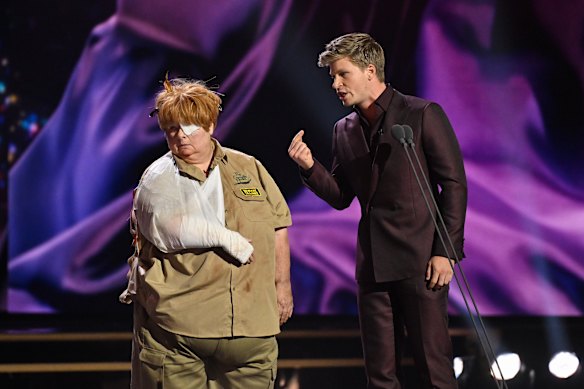
“She’s coming at this illness with great intelligence and great integrity and great poise and great bravery, actually. Once upon a time, people probably thought, ‘She’s hilarious, she’s funny.’ But now I feel as though the tide is turning a bit and people are beginning to realise that she’s far more than just a funny person.”
And in her inner world, Szubanski says she is happy. Single, but very happy. Which begs the question: would she like to fall in love again? “At the moment, I’m not probably quite in that headspace, but never say never,” Szubanski says, with a smile.
“I’m completely open to it, but I’m also really happy. I have a great life, which I appreciate incredibly now in the most complete and comprehensive way. I have terrific friends and family. I have a lot of love in my life, so I’m having a good time.”
I Can’t Tell You But I Will by Magda Szubanski (Text Publishing) is out September 29.
Get the best of Good Weekend delivered to your inbox every Saturday morning. Sign up for our newsletter.
Read more from Good Weekend:
Disclaimer : This story is auto aggregated by a computer programme and has not been created or edited by DOWNTHENEWS. Publisher: www.smh.com.au