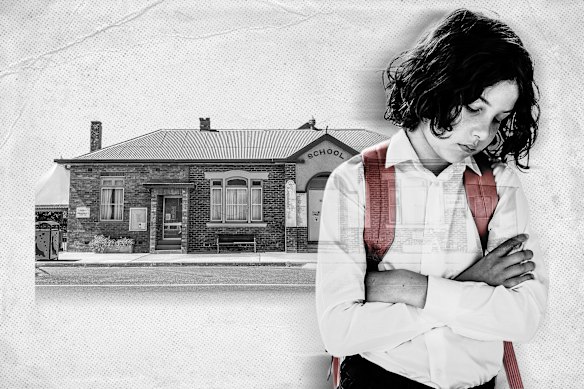

Michelle Neverson-Smith thought she was doing the right thing. If an assembly felt overwhelming, the principal let her students sit out. If school camp seemed daunting, they stayed home.
At Cudgegong Valley Public School in NSW’s central west, as across the country, well-meaning adults had been removing obstacles in children’s path.
“We were blissfully unaware of the negative impact that keeping them safe and removing barriers was having,” she said. “Their ability to cope with failure – both in learning and socially – had really dropped off.”
Australian school leaders are witnessing rising childhood anxiety. The average age for first diagnosis has fallen to 11 years old, according to the National Mental Health Commission, and a survey of 700 primary school principals found 81 per cent thought children’s anxiety was a significant issue within their schools.
But experts warn the instinct to shield children is inadvertently fuelling the problem. When adults “jump in to fix it”, says psychologist Michael Hawton, they rob kids of the opportunity to solve problems for themselves.
Hawton is founder of The Anxiety Project. Created alongside the NSW Primary Principals’ Association, the program is currently used at 144 schools, reaching more than 50,000 students. It seeks to educate not only students but also their parents and teachers.
Unlike traditional support models, the program specifically challenges “unhelpful accommodations”: the practice of letting a child avoid the very things that make them nervous, such as public speaking or playground conflicts.
“We’ve got to expose [children] to an acceptable level of risk,” said leading psychiatrist and former Australian of the Year, Professor Patrick McGorry. “That will strengthen them.”
At the heart of the program is teaching children the biology of their fear. Students from kindergarten to year 6 learn about the amygdala – their “lizard brain”, responsible for the body’s fight-or-flight response.
By identifying anxiety as a physical emotion rather than a permanent character flaw, students, teachers and parents learn to use Cognitive Behaviour Therapy techniques to manage it.
Eight-year-old Henry, a student at a participating school, said he now knows how to calm his amygdala using rhythmic belly breathing or simply taking a walk.
His mum, Kate Ephraums, said the program provided her family with a common language to navigate distressing feelings.
“It wasn’t a Band-Aid,” Ephraums said. “These are lifelong skills, and as parents we have to help them practise.”
At the Australian Primary Principals’ Association’s student anxiety summit in February, educators and mental health experts gathered to discuss what Australia’s schools can do to decrease the rate of child and teen anxiety disorders by 25 per cent by 2030.
Attendees issued a formal call to state education ministers for a standardised anxiety prevention program that involves the whole school community – including parents.
They argued the window between kindergarten and year 6 is the most critical – and cost-effective – time to intervene. Waiting until secondary school or adulthood to act was both “clinically ineffective and economically irrational”.
Experts warned that well-meaning “accommodation” strategies – where adults allow children to avoid stressful situations like assessments or public speaking – were entrenching the problem. This “cycle of avoidance” teaches the child’s brain that running away is the only effective strategy.
“We’ve failed to give these kids opportunities to fall over and hurt themselves because we’ve cocooned them away,” said the Australian Catholic University’s Paul Kidson.
The summit’s statement also called for child and adolescent anxiety management to be mandatory in all initial teacher education programs and teacher induction frameworks across NSW.
The push for a standardised approach across schools comes as mental health experts warn of the high stakes of inaction. The National Mental Health Commission believes 50 per cent of mental health issues emerge before age 14.
Left untreated, childhood anxiety acts as a gateway to more severe conditions, including depression, substance abuse and eating disorders.
A world-first Lancet Psychiatry commission on youth mental health, led by McGorry, found youth mental health had entered “a dangerous phase” and right now could be society’s last chance to act.
Suicide is now the leading cause of death for young people in several countries, including Australia.
Eighty-five per cent of depressed adolescents have a history of childhood anxiety, while the academic impact is immediate: highly anxious year 1 students are 10 times more likely to be in the bottom third of their class by year 5, according to an Australian study.
McGorry attributes the rise in anxiety to a more “fragile and precarious” world, citing the high cost of living and social inequality. However, he emphasises that anxiety can be “unlearned” if caught early.
“This trajectory, if unchanged, will define the wellbeing and productivity of a generation,” McGorry said.
NSW Education Minister Prue Car said all public schools have access to high-quality, evidence-based wellbeing programs to support schools in delivering best-practice mental health support for students.
 Emily Kowal is an education reporter for The Sydney Morning Herald.Connect via email.
From our partners
Disclaimer : This story is auto aggregated by a computer programme and has not been created or edited by DOWNTHENEWS. Publisher: www.smh.com.au