The recent turbulence in India-US relations has triggered a debate on whether close relations with US are a boon or a bane for India’s national interest. A review of all the facets of bilateral engagement since India’s independence reveal a complex journey on two separate tracks — one official and the other based on knowledge and technology transfer.
On the official track, several key actions of the US since 1950s ran counter to India’s core strategic and security concerns. These include military alliances with and arms transfers to a hostile Pakistan, economic sanctions and pressure on geopolitical issues during and after the Cold War.
Since 1948, the US delegation to the UN Security Council consistently took a position on the Kashmir issue against India’s principled stand. In 1961, the US opposed the liberation of Goa and supported Portugal where action in the Security Council unfavourable to India could be staved off only by the Soviet veto. After the 1965 Indo-Pak War, President Lyndon Johnson sought to arm-twist India to come to an unfavourable agreement with Pakistan on Kashmir by restricting the much-needed supply of wheat under PL-480 leading to a situation of “Ship-to-Mouth” feeding of our hungry millions.
Since 1954, the US armed Pakistan knowing fully well that those weapons would be deployed against India and not to fight Communism. During the 1971 Bangladesh Liberation War, the tilt of President Richard Nixon and Henry Kissinger towards the genocidal Pakistani military regime is well known.
After India conducted nuclear tests in 1974 and 1998, Washington imposed sweeping economic, technological and military sanctions. It is well-known that in the 1990s, the US pressured Russia to cancel a cryogenic rocket engine technology transfer deal with India’s space research organisation.
The only period when the US establishment actively advanced India’s strategic interests was when it put its weight behind the approval for exemption to India in the “Nuclear Suppliers’ Group” in the administration of President George W. Bush during 2003-08.
However, there is another positive track of India’s deep engagement with the US through universities, scientists, aid programmes and technology transfer which triggered transformational developments in India during the same period.
American contribution to India’s “Green Revolution” focused on scientific innovation, high-yielding crop genetics, institution building and philanthropic support. US partnership to Pant University of Agriculture & Technology laid the institutional foundation of India’s first agricultural university modelled after the American land-grant university system to integrate teaching, research and extension work to transfer new seeds and modern agricultural practices to the farmer. The University of Illinois played a primary role through a 1959 contract to prepare the campus blueprint and initially providing American agricultural scientists. Significant funding came from the Rockefeller Foundation, Ford Foundation and USAID under the Public Law 480. PL-480 channelised the rupee reserves of the US in India for US wheat and cereals towards development projects in India.
The American agronomist Norman Borlaug had developed semi-dwarf, disease resistant and high yielding wheat varieties in Mexico. In 1963, Dr M.S. Swaminathan invited Dr Borlaug to India leading to import and adaptation of the Mexican semi-dwarf wheat seeds that dramatically multiplied wheat production per acre in northern India.
Before the Green Revolution, the US provided massive grain shipments under PL-480 programme in the 1950s and 60s to help India bridge its critical food deficits. Under this programme, the US supplied nearly 50 million tons of wheat on very concessional terms.
The Father of the White Revolution, Dr Verghese Kurien, received his dairy engineering education in the US through a Government of India sponsored programme at the Michigan State University — recognised as a premier global center for dairy research. Dr Kurien brought back to India the knowhow to establish large-scale processing, pasteurisation and co-operatives of farmers and successfully implemented at Anand, Gujarat. Dr Kurien planted the seed and nurtured the plant of American dairy experience in India leading to the National Dairy Development Board and built a self-sustaining national dairy grid.
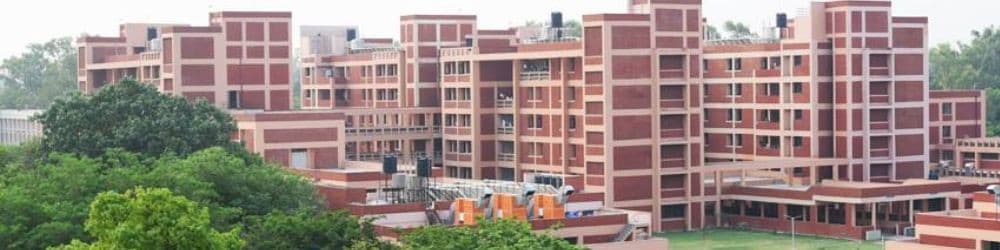
The establishment of the Indian Institute of Technology, Kanpur, was a landmark educational partnership with the US funded under the “Kanpur Indo-American Program” (1962-72) by the US Agency for International Development. A consortium of nine premier US Universities including MIT and UC Berkeley assisted directly in building IIT Kanpur’s academic and research framework. The US guidance led to the introduction of several key innovations in India’s technical education — a science-based engineering curriculum, a three-year core curriculum common to all streams of engineering and integrating humanities and social sciences as a core component of technical education. The guidance of US academics also led to modernising the academic system by introducing the semester system and grading by the course teacher. The structural and pedagogical reforms tested at IIT Kanpur influenced the design and modernisation of technical education across all IITs and engineering colleges nationwide.
This education under a modern curriculum opened the doors for Indian engineers to emigrate in large numbers to US universities and companies starting from late 1960s and gradually established the Indian diaspora as a rich and influential group in the US.
The growing number of NRIs in the newly emerging IT industry in the US acted as a bridge for the rapid rise of the software industry in India. This deep engagement between Indian and American IT industry, financial services and consulting profession has led to employment, hope and prosperity to millions of middle class households in India.
The gentle trajectory of Indo-US collaboration and close strategic worldview continued from about 2000 to 2024 and has been jolted by the unpredictable decisions of President Donald Trump in his second term. The India-US relations would continue to evolve on this two-track path. One with a bumpy ride on the diplomatic route and the other around technical, intellectual and commercial engagement.
At present, India and the US have more than 30 bilateral dialogues and working groups spanning defence, energy, technology, space and so on. The dialogue on ‘Critical and Emerging Technologies’ has immense potential for the future.
Post-WW2, the rapid growth of any major economy has been rooted in deep engagement with the US economy-West Europe under Marshall Plan, Japan and Asian Tigers 1950-80 and China and Vietnam after 1980s. For India’s GDP to grow more than eight per cent annually, it will have to engage deeply with the US economy — and also with the Chinese economy — and fashion the terms of this engagement in a manner which boosts India’s growth.
Disclaimer : This story is auto aggregated by a computer programme and has not been created or edited by DOWNTHENEWS. Publisher: deccanchronicle.com