Forget the glitz and glamour of Las Vegas, Abu Dhabi, Singapore or Miami. Formula 1 is back in Europe for what many consider the pinnacle of all F1 races: the Monaco Grand Prix.
After opening the season with trips to Oceania, Asia and North America, Formula 1 has finally returned to Europe, the traditional heartland of the championship. This weekend marks the 83rd running of the Monaco Grand Prix, an event that has been held on the same streets of Monte Carlo since 1929 – making it one of the oldest motorsport events still in existence.
Here are 10 facts about the legendary race through the narrow streets of the principality.
Don’t underestimate its historic significance
The Monaco Grand Prix is approaching its centenary and has been part of the Formula 1 World Championship since the inaugural season in 1950, alongside Britain, Italy and Belgium. The race was absent from the championship calendar between 1951 and 1955, and again in 2020, which means Monaco ranks third on the list of most frequently held world championship grands prix.
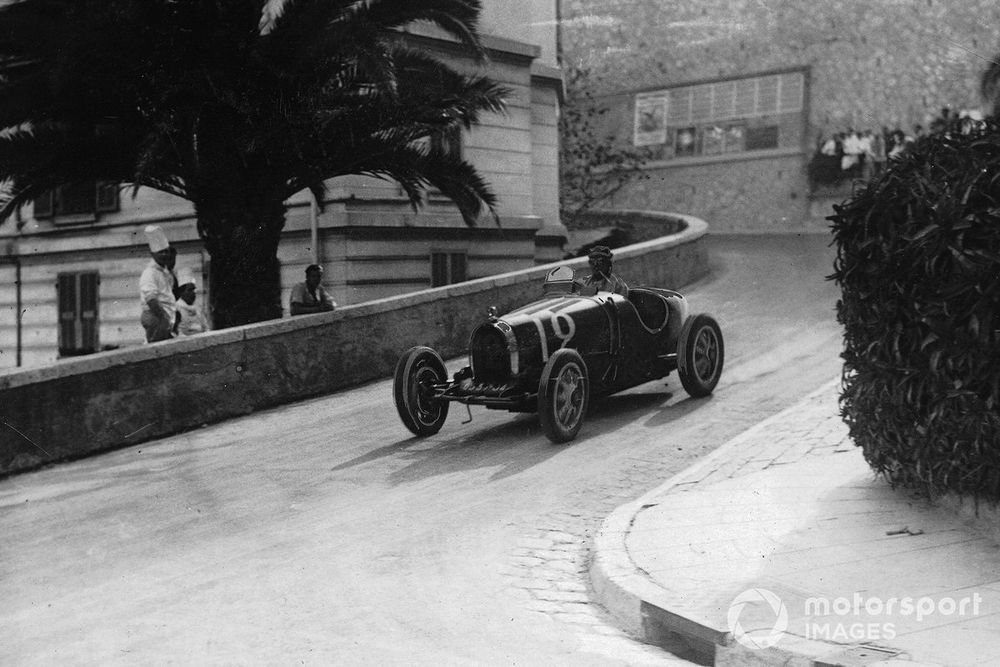
William Grover-Williams won the first Monaco Grand Prix in 1929 in a Bugatti T35B.
Photo by: Motorsport Images
An almost-unchanged circuit
Unsurprisingly, the Monaco circuit has changed very little over the decades that it has been hosting F1 races. The street layout leaves little room for major modifications, although a few metres have been added here and there over the years.
The original Formula 1 layout used in 1950 measured 3.180 kilometres. Changes around the tunnel exit, the Swimming Pool section and Tabac have gradually increased the circuit length to 3.337km in 2026.
It’s the shortest circuit and shortest race distance on the F1 calendar
Monaco is the shortest circuit on the Formula 1 calendar. At approximately 260km, it is also the shortest race distance of the season and the only grand prix exempt from the standard rule requiring races to cover at least 305km.
Despite this, no other race on the calendar features as many laps. The Monaco Grand Prix consists of 78 laps, the highest tally in Formula 1 history – apart from the one-off Sakhir Grand Prix in 2020, which ran for 87 laps.
The record winners on the streets of Monaco
Graham Hill was the original “Mr Monaco”. The British world champion won the race five times and held the record for many years.
In 1993, Ayrton Senna surpassed him by claiming his sixth Monaco victory.
Lewis Hamilton won Monaco three times, Fernando Alonso and Max Verstappen both managed the feat twice.
It’s part of the Triple Crown debate
The Triple Crown of Motorsport remains a topic of fierce debate. The Indianapolis 500 and the 24 Hours of Le Mans are universally accepted as two of its components, but opinions differ on whether the third achievement should be a Monaco Grand Prix victory or a Formula 1 world championship. Either way, only one driver has completed the traditional Triple Crown: Graham Hill.
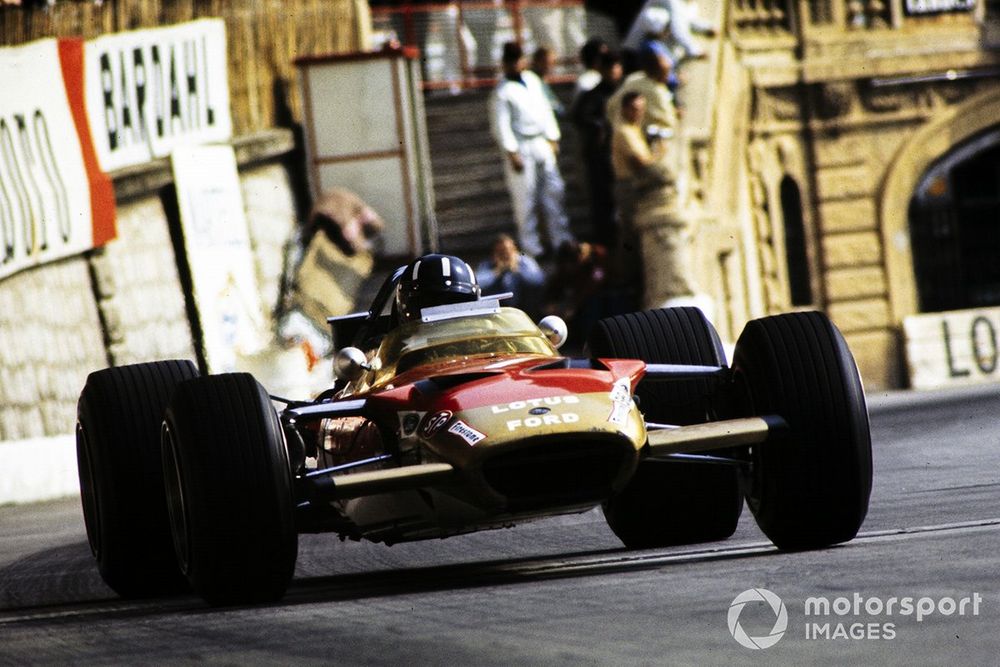
Mr. Monaco Graham Hill.
Photo by: Rainer W. Schlegelmilch / Motorsport Images
The race with only three finishers
The 1996 Monaco Grand Prix holds the record for the fewest classified finishers in Formula 1 history. Just three drivers reached the finish in a race marred by chaos and attrition. Olivier Panis took a famous victory ahead of David Coulthard and Johnny Herbert, who were the only drivers classified at the chequered flag.
The risk of the famous Monaco harbour
Monaco’s harbour-side setting hardly needs an introduction. From the Nouvelle Chicane to Rascasse, the circuit runs alongside the water. Today the entire section is protected by barriers and fencing, but until the 1960s only straw bales separated the track from the harbour. Two drivers ended up in the water during races: Alberto Ascari in 1955 and Paul Hawkins in 1965. Both survived their aquatic adventures.

Paul Hawkins’ Lotus 33 is being hoisted out of the harbor.
Photo by: Grand Prix Photo/Getty Images
Monaco has its home heroes
Only two drivers from Monaco have won the Monaco Grand Prix. Louis Chiron achieved the feat in 1931, before the Formula 1 world championship existed. Charles Leclerc became the first Monegasque driver to win his home race in the Formula 1 era when he triumphed in 2024.
Friday used to be a day off
Today, Formula 1 action in Monaco begins on Friday, but for many years the first practice sessions were held on Thursday. Friday was reserved as a rest day before activity resumed on Saturday.
The reason was linked to the Christian calendar. Monaco traditionally took place on the weekend following Ascension Day, which falls on a Thursday. Closing the streets on a public holiday made traffic management easier. On Friday, the circuit reopened to the public, allowing shops and restaurants to restock before the grand prix weekend continued.
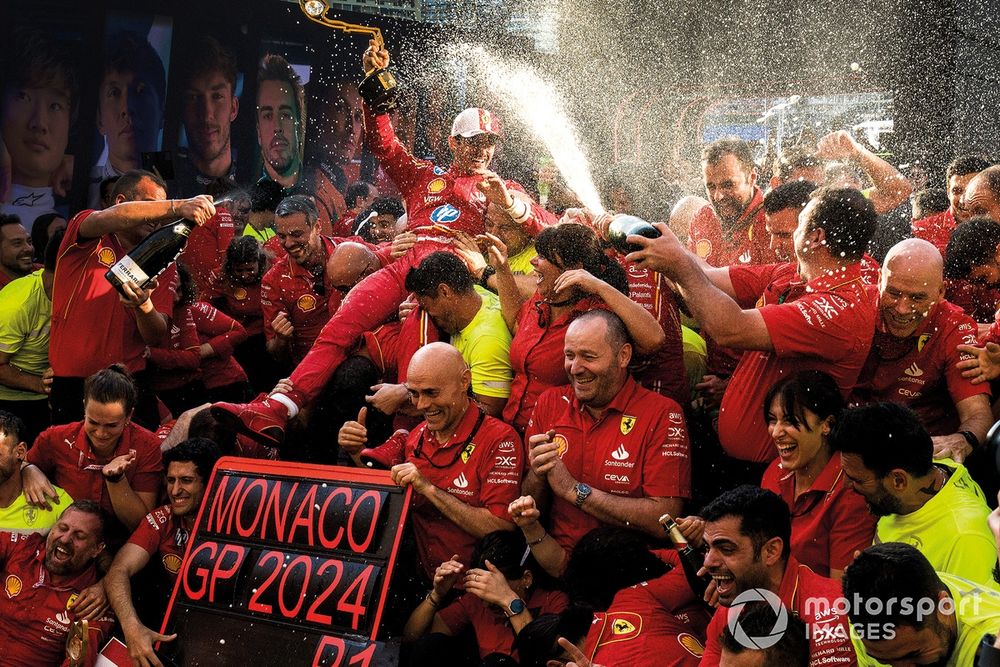
Charles Leclerc wins his home race in 2024.
Photo by: Steve Etherington / Motorsport Images
In Monaco, qualifying is king
Overtaking has always been notoriously difficult in Monaco, but the 2025 edition highlighted the problem more than ever. There were only four on-track overtakes during the entire race, despite a controversial mandatory two-stop rule being implemented to spice up the action.
It is therefore no surprise that teams and drivers place a huge emphasis on qualifying performance, knowing that grid position often determines the outcome of the grand prix.
We want your opinion!
What would you like to see on Motorsport.com?
– The Motorsport.com Team
Disclaimer : This story is auto aggregated by a computer programme and has not been created or edited by DOWNTHENEWS. Publisher: motorsport.com