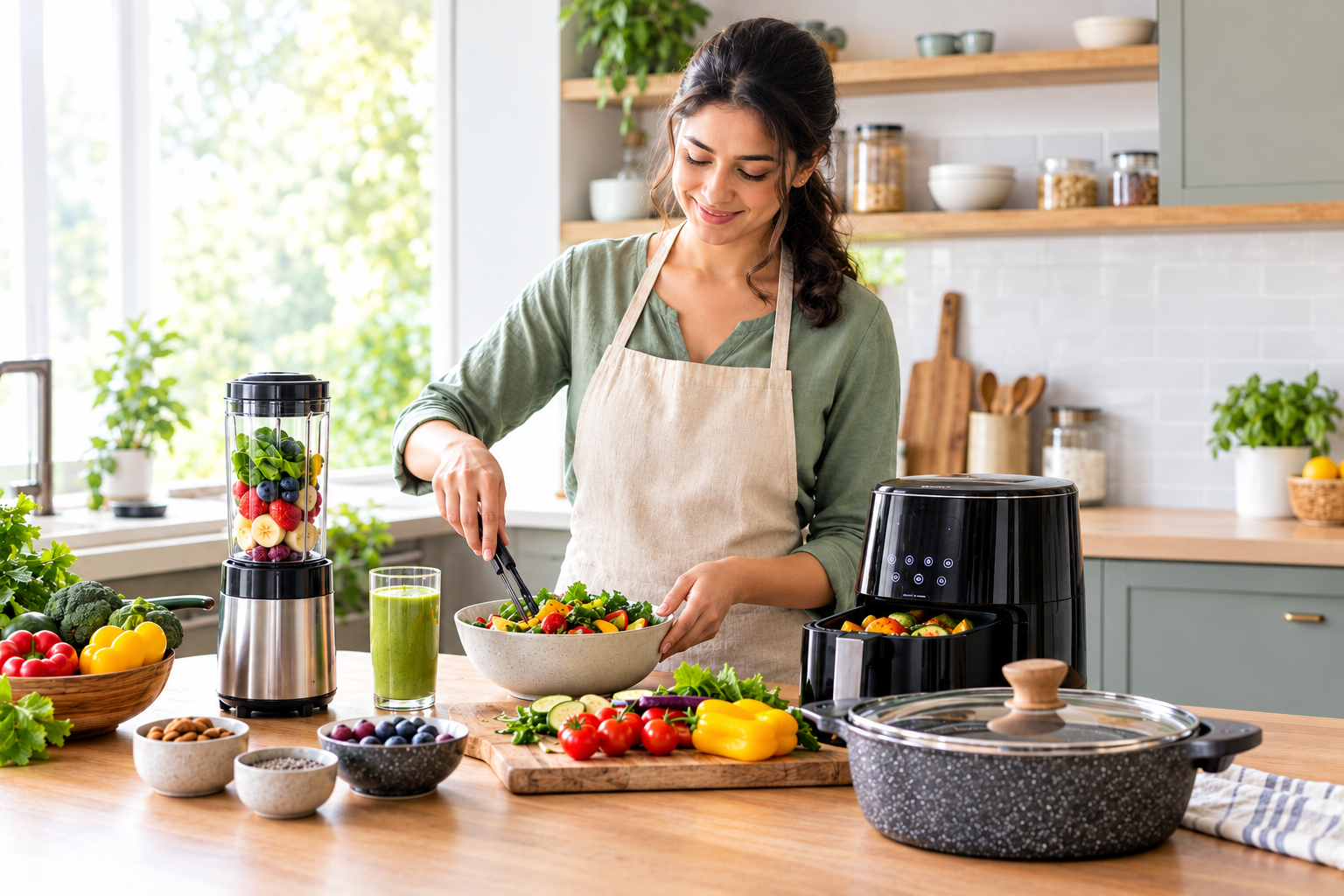
A few years back, whenever someone would mention the word kitchen upgrade, it used to revolve around appearance, including getting a new countertop, painting your cabinets, or a fancy new chimney that would blend in with the entire interior of the house. However, enter any kitchen appliances store today and see what questions people ask, and you will realize that people no longer care about how a thing looks but about what it does for them. This change, in my opinion, is an indication of the arrival of the wellness kitchen.
Ajay Singhania, Managaing Director, Pringle Homeware.
From Functional Space to Health Decision
It did not happen overnight. The last couple of years forced many people to spend a lot of time preparing their own food in the kitchen, and at some point, the kitchen turned into a place where health decisions had to be made. Many people became concerned about the amount of oil used when preparing food, whether the cookware was adding something extra into the meal, and what portion of the daily intake of food was prepared at home and what else. Once you begin to notice these things, it is hard to ignore them.
Consumers Are Reading the Fine Print Now
The important thing is how particular consumers have gotten about it. It’s not enough anymore for the package to just say “healthy.” They want to know what’s different—does the cookware work without the coatings that can be bad for you, does the blender maintain the nutrients better than the standard mixer, can you cook more controlled and use less oil on the stove top. There’s a whole ingredient-consciousness that goes into kitchen equipment that once was limited only to food.
Protein, Portion Control and the New Appliance Wishlist
Protein itself has become an obsession, and the appliances have been forced to change accordingly. Small blenders and nutri-blenders designed specifically for shakes and smoothies have ceased to be something exclusively owned by gym people and turned into rather common kitchen appliances. Air fryers, too, were not simply riding the wave of convenience; they were riding the wave of “less oil, same taste,” which is actually a story of health masquerading as convenience.
Finally, there is another trend that is not often mentioned — the practice of conscious cooking and proper portions. Multi-pot cookers and slow cookers allowing cooking smaller portions with better control have gained popularity because many people now want to stop cooking more than they actually need just because it is what they are used to.
Safety of Materials Is On The Agenda
Just a couple of years ago, hardly anyone paid attention to the coating of his or her pan and plastic elements of his or her household appliance. Today, granite coated cookware, food grade materials and absence of BPA in parts of appliances is what people actually look for when choosing an item. This shows the understanding of a fact that healthy cooking is not only about food but also about its contact with the material that is used.
It’s Not Just a Metro Trend Anymore
This shift also isn’t limited to metro consumers or a niche health-focused audience anymore. Smaller towns and tier-2 cities are asking the same questions, often with just as much conviction — helped along by social media, by word of mouth, and by a growing sense that good health starts at home, not in a gym or a clinic. That’s perhaps the most encouraging part of this whole trend: it isn’t confined to any one kind of household. It’s simply becoming how India cooks.
The New Baseline for Kitchen Brands
This development has proved to us who manufacture kitchen appliances and utensils that consumers have come a long way in terms of knowledge, and it is only natural for them to expect the kitchen products to reflect this knowledge as well. The wellness kitchen is not a fleeting trend or just another buzzword; it is a real paradigm shift in consumer thinking when it comes to cooking and its impact on their health.
For brands in this space, that’s not a challenge to work around. It’s simply the new baseline. The kitchens of the future won’t just need to look good or save time — they’ll need to actively support the way people want to live and eat, every single day.
By Ajay Singhania, Managaing Director, Pringle Homeware
Disclaimer : This story is auto aggregated by a computer programme and has not been created or edited by DOWNTHENEWS. Publisher: deccanchronicle.com