
Parts of Melbourne could be short thousands of kindergarten places over the next decade due to a $1.4 billon state government program which has sent enrolments soaring across the state.
Under the plan, free kindergarten for three and four-year-olds will double from the current 15 hours a week to 30 hours by 2036.
But Boroondara Council, which leases 32 buildings to kindergarten and long daycare providers, says the move will place significant pressure on demand and infrastructure, leaving it 618 places short by 2036.
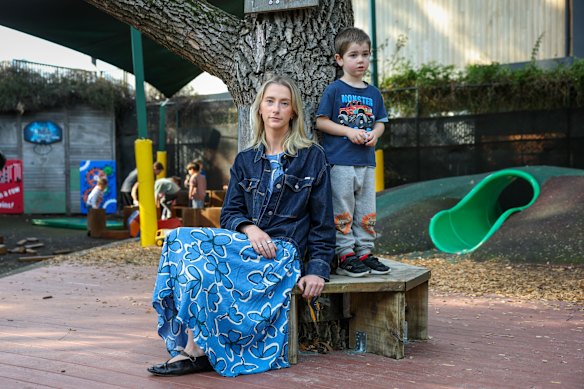
Community-run Cara Armstrong Kindergarten in Hawthorn East rents its property from the council and is already at capacity, with demand showing no sign of abating.
The kindergarten’s director, Ellen Flattery, said more than 100 parents attended an open day at the 44-place kindergarten earlier this month.
“Every child deserves the right to access free education, and we’re doing everything in our power to be able to support that,” Flattery said. “But our concern is that there is a funding shortfall.”
She said the kindergarten was reluctant to combine its three and four-year-old programs into one room, and said any expansion would rely on the council funding renovations.
“One of our biggest concerns is how we are going to implement a 30-hour, four-year-old program by 2036 because we just have one room,” Flattery said.
Boroondara Mayor Wes Gault said the council’s ability to expand facilities to comply with the program was being hamstrung by an oversubscribed funding pool with many grant applications rejected.
Of the council’s 23 kindergarten buildings, 13 are single-room classrooms and would need to be upgraded to two classrooms to cope with the expanded hours.
“While we recognise the importance of early learning and the need for new centres, local government as a sector has typically been consulted later rather than sooner,” Gault said.
There are currently about 1,650 children enrolled in a kindergarten that leases a building from the council.
The council also says the shortage of kindergarten places will likely be compounded by the state’s push to increase housing density through activity centre zones, which will see the population swell, according to a report tabled this month.
The City of Casey, in Melbourne’s outer south-east, has forecast a deficit of almost 6000 kindergarten places by 2036 – more than double the size of the current service. The council puts the soaring demand down to the free program and population growth.
Bayside City Council leases 14 buildings to kindergarten providers. Mayor Debbie Taylor-Haynes said the government had failed to explain how it would fund the infrastructure to support free kindergarten, which would cause significant shortages in the municipality.
“Meeting demand created by the state government’s reforms would require a significant investment, conservatively estimated at $65 million, representing an immense cost shift to local government,” she said.
Municipal Association of Victoria President Jennifer Anderson warned that without additional funding, there was a risk some councils would be unable to sustain their role in early childhood education.
“Councils currently face significant uncertainty regarding responsibilities, funding, and access to long-term infrastructure support,” she said.
The association has called for an additional $1.26 million, on top of the $4.2 million allocated in the 2025-2026 budget, to expand or update infrastructure and meet the demands of the free kindergarten policy.
“Many existing council kindergarten assets are old and were originally designed to accommodate four-year-old kinder for around 10 hours per week,” she said.
More than 147,000 children statewide are part of the free kinder program this year.
The impact of the government’s 2022 policy has seen some overwhelmed councils trial Saturday kindergarten. Meanwhile, Knox City Council ceased running all but two of its 28 kindergartens last year because of cost pressures.
An education department spokesperson said kindergarten funding increased with enrolments and program hours.
“We provide more funding than ever to sessional kinders,” the spokesperson said.
“The Victorian government is investing $3.8 billion to deliver hundreds of new and expanded kindergartens and has already invested $12.4 million in 62 early learning infrastructure projects in Boroondara since 2015.”
Start the day with a summary of the day’s most important and interesting stories, analysis and insights. Sign up for our Morning Edition newsletter.
 Bridie Smith is an education reporter at The Age. A former desk editor, she has also reported on science and consumer affairs.Connect via X, Facebook or email.
From our partners
Disclaimer : This story is auto aggregated by a computer programme and has not been created or edited by DOWNTHENEWS. Publisher: www.smh.com.au