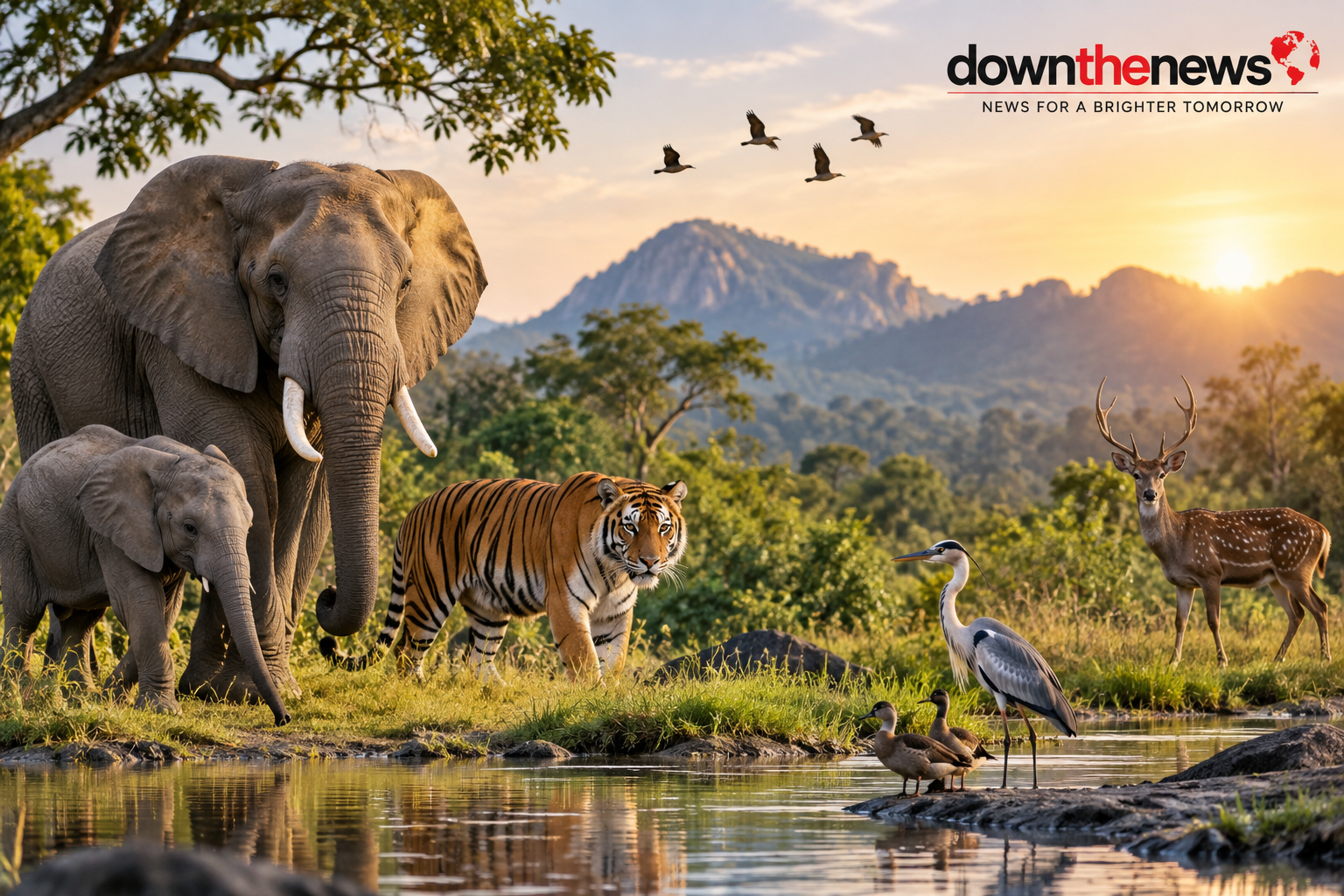
🐾 Top 20 Animal & Wildlife News Stories
Thursday, October 8, 2026
Here are 20 notable India and world animal, wildlife and conservation stories making news today, with emphasis on developments reported on October 8 and the latest stories from the past week.
🇮🇳 India Wildlife News
1. Global Wildlife Populations Decline 73%, but India Shows Conservation Gains
The WWF’s Living Planet Report 2026 has delivered a stark warning about the state of global biodiversity. Average monitored wildlife populations fell by 73% between 1970 and 2022, while India has recorded encouraging recoveries in several major species, including tigers, one-horned rhinos and Ganga river dolphins.
2. India Releases Two Cheetahs at Its Third Cheetah Habitat
Madhya Pradesh has expanded India’s cheetah conservation landscape with the release of Vyom and Neera into Veerangana Durgavati Tiger Reserve. The reserve becomes the country’s third cheetah habitat after Kuno National Park and Gandhi Sagar Wildlife Sanctuary.
3. India Launches First High-Altitude Snow Leopard Safari in Ladakh
Ladakh has launched India’s first dedicated high-altitude snow leopard safari, combining regulated wildlife tourism with conservation and local livelihood opportunities. Initial safari routes include areas around Rumbak, Shang and Uley.
4. Five Elephant Underpasses Proposed in West Bengal
Five large wildlife underpasses have been proposed along NH-327 between Bagdogra and Panitanki in Darjeeling district. The structures are being designed to allow entire elephant herds to safely cross the highway and reduce collisions and other human-elephant conflicts.
5. Assam Study Maps Elephant Movements Using GPS Tracking
A five-year satellite-tracking project by the Assam Forest Department and WWF-India has mapped elephant movements across forests, tea plantations, farmland and riverine habitats. The research is intended to improve early-warning systems and reduce human-elephant conflict.
6. Great Indian Bustard Recovery Gets Major Boost
A naturally hatched Great Indian Bustard chick in Kutch, Gujarat, has emerged as an encouraging development during Wildlife Week. The critically endangered bird remains one of India’s most closely watched conservation priorities.
7. Captive-Bred Great Indian Bustards Released Into the Wild
In a landmark step earlier this week, two captive-bred male Great Indian Bustards were released into the wild at Rajasthan’s Desert National Park. The initiative aims to establish a stronger wild population of one of the world’s most endangered birds.
8. Buxa Tiger Reserve Begins Tiger Reintroduction Programme
West Bengal’s Buxa Tiger Reserve has begun a phased tiger reintroduction programme, with a tigress transferred from Bihar’s Valmiki Tiger Reserve. The project seeks to rebuild a viable, self-sustaining tiger population in the historic North Bengal landscape.
9. NHAI Reports Major Spending on Wildlife Mitigation
The National Highways Authority of India has spent around ₹19,700 crore over five years on wildlife mitigation measures, including animal underpasses and overpasses. The investment reflects growing efforts to make major transport corridors safer for wildlife.
10. Wildlife Week Concludes With Citizen-Science Activities
Wildlife Week 2026, observed from October 2 to 8, has featured bird, butterfly, dragonfly, reptile and other biodiversity walks, along with educational programmes and competitions aimed at encouraging public participation in conservation.
🌍 World Animal & Wildlife News
11. Tiger, Sea Turtle and Tuna Comebacks Offer Hope for Nature
The WWF report highlights several conservation success stories amid the wider biodiversity crisis. Wild tiger numbers have risen from roughly 3,200 in 2010 to about 5,700 in 2026, while green sea turtles and bluefin tuna have also shown significant recoveries.
12. Freshwater Wildlife Suffers the World’s Sharpest Decline
The WWF report found that monitored freshwater wildlife populations declined by an average of 85%, compared with 69% for land species and 59% for marine species. Habitat destruction, pollution, overexploitation and climate change remain major drivers.
13. Australia’s Rare Wildlife Faces Severe Population Declines
Australia’s latest conservation picture includes steep declines among some rare species. Gentoo penguins on Macquarie Island have reportedly fallen by about 50%, while some possum populations in the Wet Tropics have declined by as much as 70%.
14. Humpback Whales Face Growing Boat-Strike Threat in Australia
Conservationists are raising concerns about increasing injuries to humpback whales travelling along Australia’s east-coast migration route. Boat and propeller strikes can cause severe wounds and long-term health problems, prompting calls for stronger speed controls and greater awareness.
15. Omura’s Whale Filmed Feeding in Indonesia
Marine researchers have captured rare drone footage of an Omura’s whale feeding on krill in Indonesia’s Raja Ampat region. The sighting offers valuable information about a poorly understood whale species whose global population remains difficult to estimate.
16. Rare Snakes Bred Successfully at Prague Zoo
Prague Zoo has recorded first-time breeding successes involving three rare snake species: rough-scaled pythons, Nosy Komba ground boas and Tartar sand boas. Two of the breeding groups trace their lineage to animals rescued from wildlife smugglers.
17. Indonesia’s Critically Endangered Maleo Birds Targeted by Traffickers
Wildlife traffickers are increasingly targeting the maleo, a critically endangered bird native to Sulawesi. Conservationists warn that the illegal collection of eggs and birds could further undermine already vulnerable populations.
18. UK Chooses Wildlife for Future Banknotes
The Bank of England has selected barn owls, buff-tailed bumblebees, Atlantic puffins and European hedgehogs to appear on future British banknotes. Nearly half a million people participated in the consultation, making the initiative one of the most prominent recent wildlife-themed public campaigns.
19. World’s Largest Penguin Colony Suffers Major Population Crash
A major penguin population decline has become a prominent conservation concern this week, adding to growing evidence that climate change and shifting marine conditions are putting severe pressure on seabirds and other Antarctic wildlife.
20. Wildlife Populations Face Crisis, but Conservation Can Still Work
The latest global evidence presents a mixed picture: biodiversity loss is occurring at an alarming scale, but targeted conservation programmes have successfully brought several species back from the brink. Scientists say the recovery of tigers, sea turtles and tuna demonstrates that determined intervention can reverse population declines.
🐅 Major Wildlife Themes Today
Wildlife Week 2026 • Project Cheetah • snow leopard conservation • Great Indian Bustard recovery • tiger reintroduction • elephant corridors • human-wildlife conflict • WWF Living Planet Report • whale protection • endangered birds • wildlife trafficking • habitat restoration • biodiversity crisis