The US and Iran are close to a temporary agreement to halt the war in the Middle East, officials in Pakistan claimed on Thursday, as diplomatic activity gathered fresh momentum after a near breakdown of the current ceasefire earlier this week.
Officials on Islamabad said a very basic “interim” deal could be reached as early as this weekend and that Tehran was reviewing a US proposal.
However, Trump and Pakistan have consistently suggested a breakthrough was imminent, and weeks of previous efforts to negotiate a permanent end to hostilities have made little real progress.
Recent days have seen wild swings from hope to despair as the US and Iran test each other’s resilience and will, seeking leverage in any talks through belligerent rhetoric, defiance and sporadic violence.
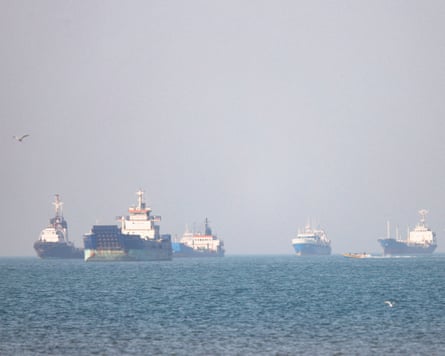
Despite many observers’ scepticism – and continuing defiance in Tehran – the possibility of even a partial agreement that could lead to the reopening of the strait of Hormuz sent global stocks to near-record highs on Thursday as oil prices dropped steeply.
The strategic waterway in normal times carries a fifth of the world’s supplies of oil and fossil gas.
Pakistan has been the principal mediator in recent indirect contacts between Washington and Tehran after hosting a round of abortive face-to-face talks last month.
“Both sides are now more amenable to suggestions, the distance between their proposals is reducing,” said a diplomat in Islamabad with knowledge of the negotiations. “That’s natural. They start off with maximalist positions and then soften.”
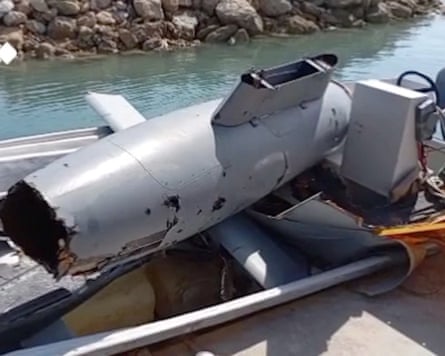
On Monday, Iran launched missiles and drones at the United Arab Emirates when Donald Trump launched a short-lived effort to support shipping stranded by the Iranian closure of the strait of Hormuz. And on Wednesday the US military fired on an Iranian-flagged oil tanker hours after Trump issued a fresh ultimatum to Tehran, telling it to accept a deal to end the war or face a new wave of US bombing “at a much higher level and intensity than it was before”.
Also on Wednesday, Trump said in an interview with PBS he was optimistic about reaching an agreement with Iran before a scheduled trip to China next week. “I think it’s got a very good chance of ending, and if it doesn’t end, we have to go back to bombing the hell out of them,” Trump told the broadcaster.
Trump also insisted that under any deal Tehran would “export” its highly enriched uranium – necessary for making a nuclear weapon – to the US, a demand that experts say Iran cannot accept.
The gaps between Tehran and Washington appear to make a broader settlement impossible for the moment, but a temporary arrangement set out in a one-page memo aimed at preventing a return to conflict and securing safe passage for shipping through the strait should be obtainable, officials said.
“Our priority is that they announce a permanent end to war and the rest of the issues could be thrashed out once they get back to direct talks,” a senior Pakistani official involved in mediation between the two sides told Reuters.
A spokesperson for Pakistan’s foreign ministry told a briefing in Islamabad on Thursday that “we expect an agreement sooner rather than later”.
Control of the strait and the threat to restart attacks on nearby countries’ oil and other infrastructure in the Gulf are the two main cards Iran can play in negotiations. The US has blockaded Iran, stopping all Iran-linked shipping seeking to exit the Gulf, to put pressure on Tehran.
Senior Iranian officials have rejected concessions in recent days. Some favour dragging out the negotiations to closer to the November midterm elections in the US, when the Trump administration will be under intense pressure to settle the war and Iran may get a better deal.
However, regional diplomats believe Iran could overplay its hand, with the current moment offering an opportunity to finish the war and claim a victory – something that could be harder if fighting resumes. If there were no agreement, Washington could also unilaterally end the war and walk away, leaving Iran under suffocating economic sanctions, they said.
The Iranian president, Masoud Pezeshkian, said on Thursday he had met the country’s supreme leader, Mojtaba Khamenei, who has not been seen in public since his appointment in early March. Analysts saw the meeting as part of the attempt to align different factions and institutions within Iran behind a unified position for the negotiations.
Abbas Araghchi, Iran’s foreign minister, also held a phone call on Thursday with Ishaq Dar, his Pakistani counterpart. Iran’s official IRNA news agency divulged no information about its content, saying merely that the two diplomats had reviewed the “latest developments and current trends in the region, emphasised the importance of continuing the path of dialogue and diplomacy”.
Pakistani officials privately hope that an outline agreement could be ready to be signed by Trump next week in Islamabad, where he could stop before or after a scheduled visit to China.
“We remain optimistic,” said Tahir Andrabi, the spokesperson of Pakistan’s foreign ministry. “We expect an agreement sooner rather than later.”
The latest deal proposed by the US would be in two phases, with the initial accord ending the war and reopening the strait of Hormuz. Iran would also like to see its overseas assets unfrozen, including about $6bn held in Qatar.
The second phase would seek to hammer out an agreement on Iran’s nuclear programme over the following 30 days.
At the talks last month in Islamabad, Iran had argued for a moratorium on nuclear enrichment of between three and five years, while the US wanted between 20 and 25 years, according to a diplomat briefed on the discussion. Mediators believe the two sides may compromise on about 10 years. Iran is also opposed to handing over its stockpile of 60%-enriched uranium to the US, as Washington has demanded.
“Things are moving, but we are not there yet,” said one diplomat in the region. “It sounds like the Americans want to be done with the war.”
Iran is facing deep economic challenges, which may escalate if it begins to run out of storage capacity for its oil, but the Washington Post reported on Thursday that a confidential CIA analysis delivered to US officials this week suggested that the US blockade may need more than three or four months to inflict more severe economic hardship.
Iran is likely to want to tie any definitive end to hostilities in the Gulf to Israeli strikes in Lebanon.
Israel, which has also been fighting the Iran-backed Hezbollah in Lebanon, said on Thursday it had killed a Hezbollah commander in an airstrike on Beirut a day earlier, the first Israeli attack on the Lebanese capital since a ceasefire was agreed last month.
Hezbollah began its latest conflict with Israel by opening fire in support of Iran on 2 March.
Disclaimer : This story is auto aggregated by a computer programme and has not been created or edited by DOWNTHENEWS. Publisher: theguardian.com