Hyderabad:The intricately carved Yajna Varaha sculpture of Vidisha brings together different phases in the evolution of Indian sculptural traditions, offering insights into how religious imagery developed over centuries, said Joyoti Roy, curator (education) at the Salar Jung Museum.
Delivering a lecture titled ‘Reading a Sculpture: The Yajna Varaha of Vidisha’ on Friday, as part of the World Heritage Week Celebrations 2026, Roy traced the development of Varaha iconography in Central India over nearly a thousand years.
Drawing on a research she carried out over the past five years, she examined early representations associated with the boar form and its evolution into an important manifestation of Vishnu.
Focusing on a 10th-11th century red sandstone sculpture from Sunaari village in Vidisha, now housed at the Vidisha District Archaeological Museum, she discussed its intricate carvings and the different phases of iconographic development represented in it.
The sculpture features more than 350 figures, including divinities, sages and mother goddesses. Roy described it as an epitome of the form, bringing together elements from different stages of its artistic evolution.
Speaking to Deccan Chronicle after the lecture, Roy discussed the connections between Central Indian and Deccan sculptural traditions, including Telangana’s rich artistic heritage. “There may not necessarily be direct similarities, but influences travel. The early sculptural traditions of northern and central India and the Deccan influenced one another,” she said.
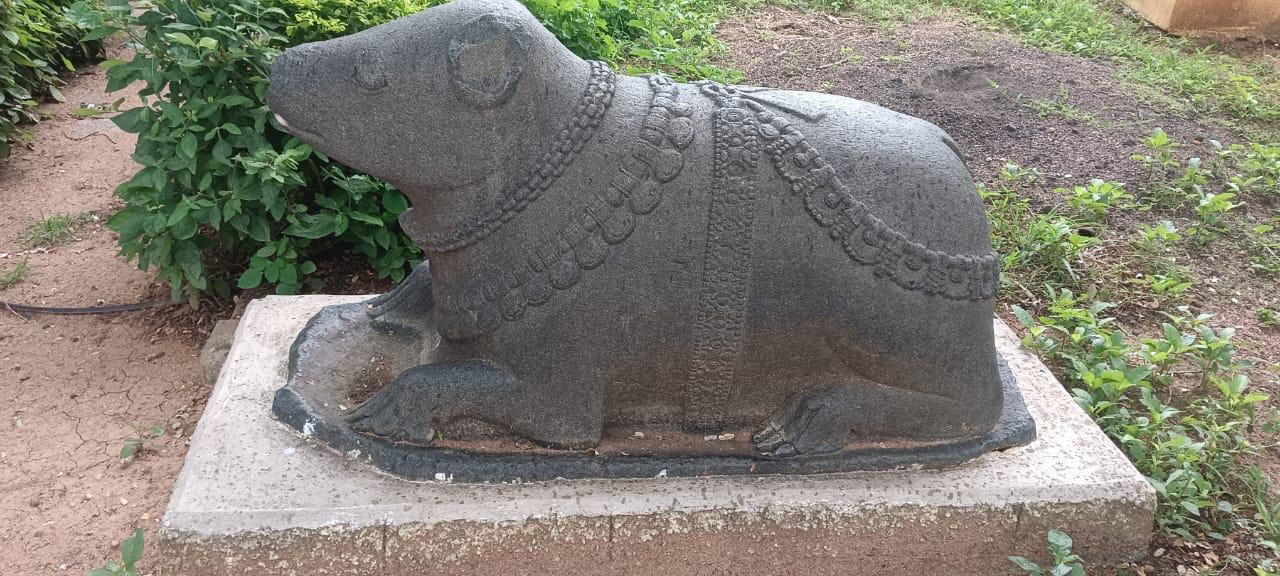
Although Central India has a greater concentration of Varaha representations, Telangana has a rich sculptural tradition, including magnificent Nandi sculptures, she said. Iconographic forms became more universal after the 10th century, while retaining regional variations and modifications.
On heritage conservation, Roy said the responsibility could not rest entirely with government agencies. Public participation, private involvement and local communities had to work together to protect historic structures.
“It cannot just be the government or just the private sector. Both have to work together,” she said, pointing to encroachment and the gradual deterioration of heritage properties. She cautioned against rebuilding historic structures in ways that erased their original character.
Roy also stressed the need to make heritage part of people’s everyday lives rather than confining it to museums and history books.
“Heritage is very much an everyday concern. It is not just something you read about in a book. You have to walk through the roads, look at old buildings, ask questions and be curious,” she said.
Referring to Hyderabad’s stepwells and water-related heritage, she said initiatives such as the upcoming Stepwells Festival could encourage people to explore the region’s distinctive monuments. Museums, archaeology departments and educational institutions also had a role in making younger generations more aware of their heritage, she said.
The World Heritage Week celebrations, organised by the department of heritage, Telangana, in collaboration with Deccan Heritage Academy Trust, are being held until November 25 at the State Museum, Public Gardens, Hyderabad.
Disclaimer : This story is auto aggregated by a computer programme and has not been created or edited by DOWNTHENEWS. Publisher: deccanchronicle.com