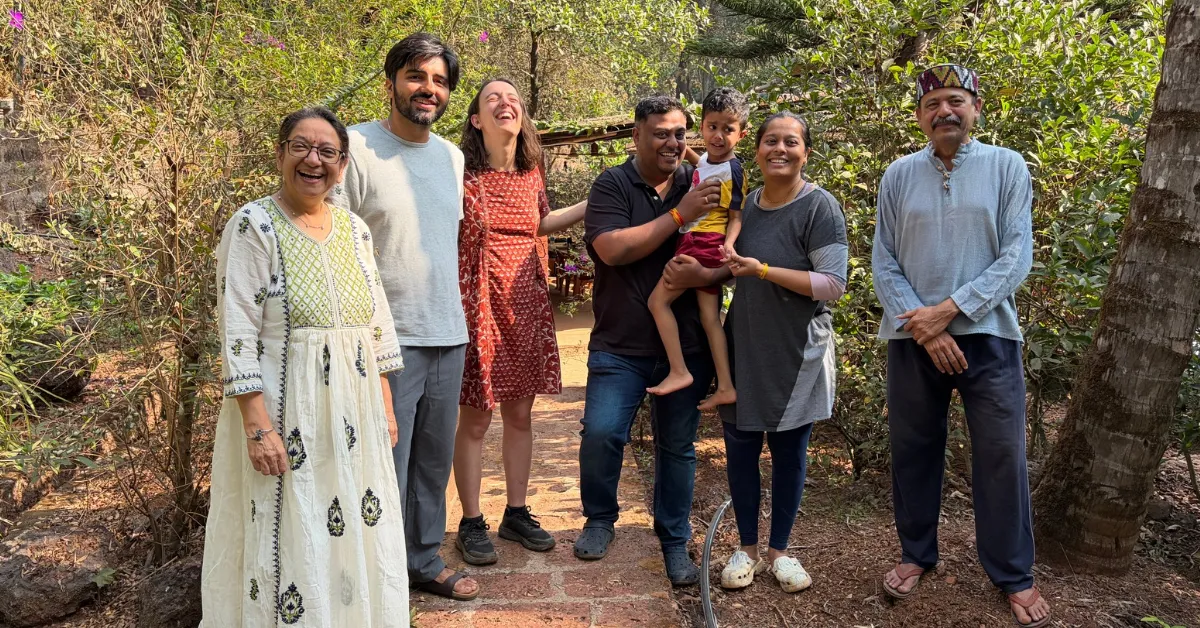
Imagine growing up in a village where the water that reaches your home flows through channels built 400 years ago, where centuries-old temples are part of your everyday surroundings, and where a nearby rocky plateau holds carvings believed to be around 20,000 years old.
For the residents of Jambhrun, a village in Maharashtra’s Ratnagiri district, these are familiar sights. Few had imagined that people from cities would travel miles to see them.
But documentary filmmaker Vilas Arvind Kane saw an opportunity in the things villagers had grown up around. Could he help local families earn a living by welcoming travellers into their village, while also giving them a reason to preserve the heritage they had inherited?
In 2019, he started Jambhrun Trails, an experiential tourism initiative that invites visitors to appreciate the Konkan region through its villages, traditional practices, food, and natural surroundings.
Rather than building another resort, he wanted to help travellers experience rural life while creating livelihood opportunities for the people who call the village home.
“When tourism was first introduced here, the villagers were quite surprised. They doubted what was so special about our village that tourists would actually want to come and see it,” he recalls.
Years later, Jambhrun has found a place on Ratnagiri’s tourism map. More importantly, its residents have begun recognising the value of the heritage they have lived alongside for generations.
From documenting the Konkan to welcoming travellers
The 60-year-old began his journey in photography in 1993 and moved into documentary filmmaking in 1998. Over the years, he made more than 150 documentaries covering subjects ranging from environmental conservation and rural development to women’s empowerment, renewable energy, and wildlife.
More than 30 of his films focused on the tourism potential of the Konkan region. While documenting its landscapes and communities, he began thinking about how visitors could experience the region beyond its popular beaches and tourist spots.
“It was through this extensive work that the concept of experiential tourism took root in my mind,” he tells The Better India.
After visiting Jambhrun in 2019, he took a property belonging to a local family on a long-term lease and developed cottages. The initiative officially began operations on 1 December 2019.
From the beginning, he was clear about whom he wanted to work with. He would not bring in staff from outside the village. Instead, local families would be involved in hosting visitors and supplying food and other products.
Getting residents on board took time. Like many close-knit rural communities, they were initially cautious about outsiders and the possibility of commercial tourism disrupting their way of life.
“Bridging the gap required active, patient dialogue to prove that the initiative was not about exploitation, but about preservation, respect, and mutual growth,” he explains.
For the filmmaker, tourism could work only if visitors respected local customs and the community benefited from their presence.
Ancient temples, water channels and village walks
A stay at Jambhrun Trails is designed around experiencing the village at an unhurried pace.
One of its most interesting features is a traditional water distribution system known as pats. Dating back around 400 years, these channels carry water to several homes using gravity, without consuming electricity.
The village is also home to temples dating back around 400 years. Nearby, a laterite plateau holds prehistoric rock carvings known as katal shilpa, believed to be around 20,000 years old.

Vilas takes visitors on village, jungle, and heritage walks, with trails ranging from approximately two to five kilometres. Along the way, he explains the region’s geography, geology, biodiversity, and traditional practices.
Festivals such as Ganeshotsav and Holi also offer visitors a glimpse into the village’s cultural life.
As visitors began taking an interest in these aspects of village life, Vilas noticed a change in how residents viewed their own surroundings.
“Seeing the consistently increasing positive response from visitors made them feel proud of what their village holds,” he says. The growing interest has helped residents recognise the heritage value of their temples, water channels, and rock carvings.
From home-cooked meals to household incomes
The arrival of visitors has also created opportunities for families to earn within the village.
At the stay, four families are directly involved in the initiative. Local women prepare home-cooked meals, maintain the cottages and premises, and serve guests.
Vilas and his wife personally interact with visitors and accompany them on trails. Another four families supply local products such as roasted cashews, flour, curd, shrikhand (a sweet made from strained curd), and traditional fruit syrups.
According to Vilas, the family preparing meals earns an approximate monthly profit of Rs 12,000 to Rs 15,000. Women working at the centre earn an additional monthly income of around Rs 5,700.
Selling local food products, including shrikhand, syrups, cashews, and local rice, brings participating residents an approximate supplementary income of Rs 40,000 to Rs 50,000 annually.
Over the years, around 1,700 visitors have stayed at Jambhrun Trails, with each typically spending at least two nights and three days.
“A small tourism centre like this achieves multiple objectives, including providing local employment, creating small business opportunities, and empowering rural women,” he explains.

Want to start a rural homestay? Here’s what Vilas has learnt
Vilas believes that other villages can develop similar experiences, provided they begin by understanding what makes their location distinctive. It could be a creek, river, coastline, forest, sacred grove known as devrai, historical fort, or traditional farming practice.
“If we identify the unique features of each location and curate experiences accordingly, many small centres like Jambhrun Trails can be established,” he says.
Drawing from his experience, he shares seven things aspiring rural tourism entrepreneurs should keep in mind.
1. Start with relationships, not reservations
Before setting up cottages or welcoming visitors, he believes it is important to build genuine relationships with residents. Anyone starting such an initiative must spend time with the community, understand its everyday realities, and earn people’s confidence rather than approach them only with a business proposal.
“Business transactions alone will never sustain a community-led tourism model. You must invest time in becoming an integrated part of the village fabric,” he says.
He believes that sharing in the community’s joys and difficulties helps establish the trust needed to make residents feel that tourism is a shared initiative.
“Nothing grows unless you sow,” he adds.
2. Look for experiences unique to the village
The next step is to understand what makes the village special. This means researching its history, geography, biodiversity, and geology before taking visitors on guided walks.
Whether it is an old water management system, local flora, or prehistoric rock carvings, Vilas believes that the person leading the initiative must know the stories behind them.
“Before welcoming guests, you must acquire comprehensive knowledge of the region’s history, geography, biodiversity, and geology,” he says.
He advises aspiring entrepreneurs to look beyond basic information about the village and invest time in understanding the land.

3. Make sure tourism pays local people fairly
For tourism to benefit a village, its economic gains must reach the people involved. Whether families supply produce, prepare meals, or help maintain the property, payments and arrangements must be transparent and fair.
He believes that residents should see a direct financial benefit from protecting and sharing their heritage. Farmers, artisans, guides, and traditional cooks should all have opportunities to participate so that earnings are distributed across households.
4. Avoid turning the village into an urban resort
One common mistake he cautions against is trying to recreate city comforts in a rural setting through excessive construction, air-conditioning, and commercial entertainment.
Instead, he recommends preserving traditional architecture, using indigenous materials such as laterite stone and cow-dung plastering, and protecting the calm surroundings.
“Authentic travellers seek a genuine rural lifestyle and digital detox, not a sanitised hotel experience in the countryside,” he says.
5. Make sure basic infrastructure is in place
While preserving the village’s character, it is equally important to make sure that essential facilities work reliably.
Vilas recommends making arrangements for a dependable water supply, electricity, and basic connectivity. These may not be the main attractions for visitors, but poor infrastructure can create difficulties for both guests and the families hosting them.
He believes these practical details should be managed well without compromising the traditional character of the accommodation.
6. Involve more families in the initiative
At Jambhrun Trails, local families participate in preparing meals, maintaining the cottages, and supplying food products. He believes that similar initiatives should involve a wider network of residents.
“When multiple households contribute local produce and services, the community naturally rallies together to protect its cultural heritage and natural surroundings,” he says.
Involving farmers, artisans, guides, and traditional cooks gives more residents a stake in the initiative and helps build a shared sense of responsibility.

7. Learn to bring visitors and residents together
Finally, running an experiential tourism centre requires the ability to bring visitors and local communities together.
The person leading the initiative must explain local traditions in a way that visitors can understand, manage their expectations, and make sure that interactions remain respectful.
“Running an experiential homestay requires immense patience, empathy, and clear communication,” Vilas says.
He believes that the experience should be meaningful for visitors while allowing residents to feel respected and valued.
What does it cost to start and run a rural tourism centre?
Once the community is involved and the experiences have been identified, the next step is to plan the accommodation.
Vilas suggests starting with a small lodging and dining capacity of around 15 to 20 people. Family cottages accommodating three to four guests can be built using local materials and traditional construction techniques.
An ancestral home is ideal, but a property rented or leased from a local family can also work.
For a centre accommodating around 15 to 16 people, he estimates that approximately 1,000 square feet of construction space would be needed. A reasonably equipped facility could cost up to around Rs 20 lakh, depending on the property and facilities.
He recommends involving residents in food preparation instead of hiring a separate kitchen team. Two people may be required for cleaning and general management. Annual operating expenses, including salaries, electricity, and maintenance, could be approximately Rs 3 lakh.
Aspiring operators should also check state-specific regulations and explore government schemes for rural tourism. Units can be registered with the Tourism Department, subject to the relevant requirements.
At Jambhrun Trails, the current indicative tariff is around Rs 2,200 per person per night.
For a similar, well-managed unit, Vilas estimates around 750 person-nights annually (one person staying for one night counts as one person-night). This could generate a turnover of approximately Rs 15 lakh and a profit of around Rs 5 lakh.
These are indicative figures and would vary with occupancy and operating expenses. Recovering the initial investment could take around seven years.
According to Vilas, the first three years require considerable effort to establish the initiative and build a consistent stream of visitors.
“Tourists who have visited become your best advertisers. What I call organic growth,” he says.

What does it cost to start and run a rural tourism centre?
At Jambhrun Trails, visitors stay in traditional Konkani-style tiled cottages with cow-dung plastered floors known as sarvan.
They are served home-cooked Konkani meals, and short films about the region’s natural and cultural features are screened every evening.
Guests generally stay for two nights and three days. Those travelling by train can reach Ratnagiri Railway Station and take a local taxi or auto-rickshaw for the approximately 22-kilometre journey to the village.
October to February, along with April, May and June, are among the recommended months to visit.
Spending three days in a Konkani village
For Vilas, preserving the village’s heritage also involves caring for the natural resources that sustain everyday life.
The perennial stream flowing through Jambhrun is an important natural water source. Recently, Jambhrun Trails helped initiate a Gram Sabha meeting under the chairmanship of water expert Dr Umesh Mundlay.
Villagers discussed studying the stream and exploring the possibility of building small, scientifically designed check-dams at suitable points along its course. Residents expressed interest in taking the work forward with his guidance.
The host hopes that more villages will try out similar possibilities, bringing together local families, farmers, artisans, and traditional cooks.

He believes tourism should create a sense of shared responsibility rather than concentrate benefits in a few hands.
For him, the success of rural tourism lies in retaining a village’s character, giving residents a reason to value what they already have, and allowing them to earn from sharing it with others.
All pictures courtesy Vilas Arvind Kane.
Disclaimer : This story is auto aggregated by a computer programme and has not been created or edited by DOWNTHENEWS. Publisher: thebetterindia.com