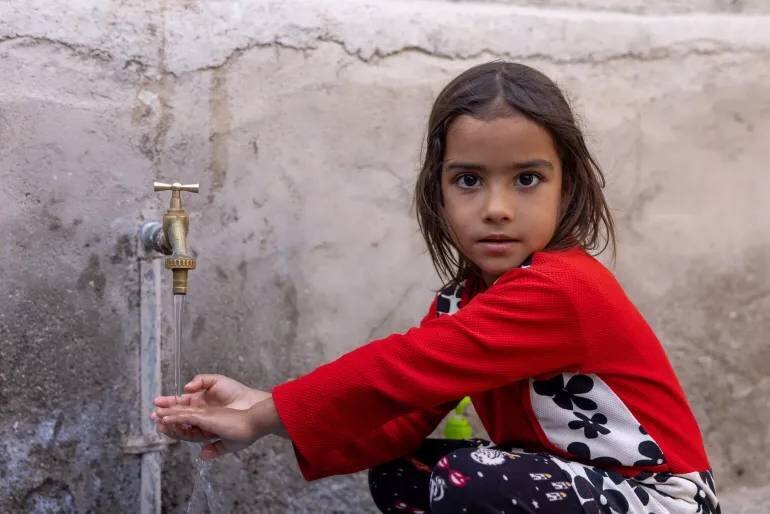
TEHRAN – Funded by the Government of the Republic of Korea, the United Nations International Children’s Fund (UNICEF) and the World Health Organization (WHO) are supporting the Ministry of Health and Medical Education to strengthen water, sanitation and hygiene services in health facilities nationwide.
The initiative supports the introduction and institutionalization of the Water and Sanitation for Health Facility Improvement Tool, known as WASH FIT, across Iran’s health system. The tool helps health facilities identify risks and plan practical improvements in areas such as safe water, sanitation, hygiene, waste management, environmental cleaning, workforce, management, and energy and environment, UNICEF’s website announced in a press release on July 17.
Children and families across Iran will benefit from efforts to make health care facilities more resilient and hygienic and better equipped to prevent infections.
Building national capacity
The initiative began with a national workshop held in Tehran in October 2025, which brought together 40 environmental health experts from Universities of Medical Sciences from 25 provinces.
The workshop prepared participants to support health facilities in assessing their water, sanitation and hygiene conditions and identifying priority areas for improvement. It built on an earlier national assessment of health facilities and a roadmap developed by WHO to strengthen these essential services across the country.
Expanding training across the country
Following the national workshop, a series of provincial cascade training workshops has started from April 2026. Environmental health experts from hospitals and urban and rural health centers take part in the trainings.
Participants learn how to assess conditions in health facilities, identify risks, and prepare action plans based on the needs of each facility. These skills will help health workers improve hygiene standards, reduce the risk of infections, and provide safer services for patients, including children and mothers.
UNICEF and WHO are also working with the Ministry of Health and Medical Education to integrate WASH FIT into the national health system, ensuring its sustainable implementation and scale-up.
By strengthening the skills of health professionals and supporting a consistent approach across the country, the initiative aims to improve the quality and safety of health services for children, families, patients and health workers.
Project on rehabilitation of school sanitation facilities in Iran
UNICEF has supported the rehabilitation of sanitation facilities in 41 schools in the northeastern province of Khorasan Razavi and the southeastern province of Sistan-Baluchestan.
The project aims to help improve access to safe water, sanitation, and hygiene (WASH) services for thousands of children. The rehabilitation of 33 schools was supported through funding provided by the Government of France.
Implemented in cooperation with the Ministry of Education and the Organization for Development, Renovation and Equipping of Schools, the interventions focused on schools hosting large numbers of Afghan refugees and vulnerable Iranian children. The rehabilitation works included improvements to water supply systems, sanitation facilities, and handwashing areas.
Improving learning environments for children
In Khorasan Razavi Province, WASH rehabilitation activities were carried out in 15 schools in Mashhad’s Tabadkan and District No. 5 areas. In Sistan-Baluchestan, rehabilitation works reached 18 schools in the cities of Zahedan and Zabol.
Overall, more than 23,000 students benefited from improved WASH facilities in the targeted schools. The activities aimed to support safer and healthier learning environments by improving children’s access to functional and hygienic sanitation services in schools. These interventions also contributed to strengthening hygiene practices and reducing risks associated with inadequate WASH facilities.
Supporting children’s health and hygiene
Alongside the rehabilitation works, UNICEF supported health and hygiene promotion activities for students, parents, and school staff in the two provinces.
Some 40 health teachers and focal points were trained to better support children and families with health and hygiene promotion activities. Hygiene kits were distributed to families, and schools received essential health equipment to support children’s wellbeing and access to basic health services.
MT/MG
Disclaimer : This story is auto aggregated by a computer programme and has not been created or edited by DOWNTHENEWS. Publisher: tehrantimes.com