
For stressed parents bringing up young children, having a dedicated space for support in the community can be a godsend. That’s why every parent in Germany should know about its ‘family centres’, writes journalist and new mother Imogen Goodman.
When I first became a parent, my experience of living in Berlin shifted dramatically.
Suddenly, the city I had known – with its wild summer raves and open-air parties – was on the other side of a divide, along with all of my child-free friends. Meanwhile, I was stuck indoors, surrounded by baby wipes, toys and nappies.
In those early months, discovering the family centres in my local area gave me access to a new community. Along with my partner and my (then) six-week old daughter, we went to weekly playgroups and met other new parents who looked just as tired and overwhelmed as we did.
But family centres aren’t just for the parents of newborns: they’re for families and parents of all shapes and sizes. And, in my opinion, every international family in Germany should know about them.
What are ‘Familienzentren’ and how did they start?
Familienzentren – or family centres – are community spaces dedicated to offering free-of-charge services for local families. They grew out of the West German Mütterzentren movement, which saw community centres set up in Munich, Darmstadt and Salzgitter in 1981.
These pro-family centres were self-organised spaces were mothers could meet and exchange ideas and tips, as well as arranging childcare. The idea was to give mothers a way to find help without navigating the welfare system.
By the turn of the millennium, the modern Familienzentren model was emerging. This was inspired by Britain’s “Early Excellence Centres”, which brought education for young children and counselling and support for parents under one roof.
The first centre of this kind opened in Berlin’s Pestalozzi-Fröbel-Haus in 2001, followed by a major scheme in North Rhine-Westphalia to turn Kitas into local family hubs.
Nowadays, North Rhine-Westphalia has around 3,000 of these hubs and almost every region in Germany has some kind of a family centre scheme in place.
These support centres come under a range of names, including; Familienzentren, Eltern-Kind-Zentren, Kinder- und Familienzentren, Familienkitas or KiFaZ. Though generally supported by state or municipal funding, they remain rooted in the local community, often run by councils, charities, churches or parents’ associations.
READ ALSO: How much does it cost to raise children in Germany?
What kind of services do family centres offer?
While family centres can vary a lot by region, there are a range of services you can usually expect to find.
These include community spaces for families, such as baby groups, play groups for toddlers, community lunches and family cafés where parents can meet over a relaxed cup of coffee.
Our local family centre also has a garden that can be booked free-of-charge by local families, for example, for a child’s birthday party. They also organise special events there, like vegetable-planting and summer paddling pool parties.
In addition, there are often courses and educational initiatives for parents and children, including PEKiP courses (Prager-Eltern-Kind-Programm), baby massage, music groups, first aid for children, and ante- and postnatal courses for mothers.
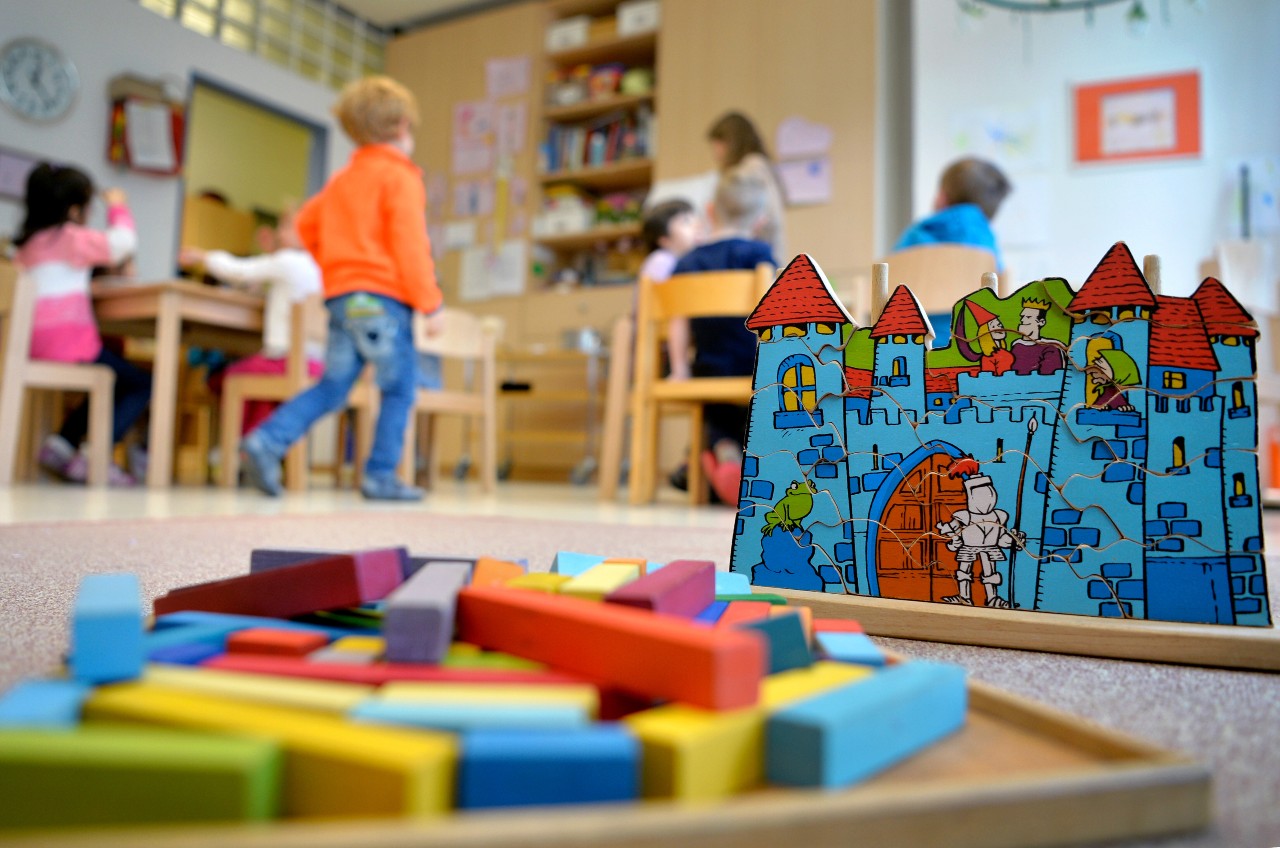
Children play with toys at a kita in Düsseldorf, North Rhine Westphalia. Photo: picture alliance/dpa | Monika Skolimowska
Often, family centres also run a programme of special workshops and courses for parents on topics such as bilingualism and integration, balancing work and childcare, and finances for single parents.
READ ALSO: What parents can expect to pay for daycare in all 16 German states
For international families overwhelmed by life in Germany, you can also find help navigating the endless bureaucracy. This includes completing forms or applying for Kindergeld, Elterngeld, housing benefit and childcare places, plus referrals to specialist agencies.
There’s also support in difficult circumstances, such as childcare for single parents and counselling in cases of debt, separation or domestic abuse.
How can I find a local family centre?
To find a family centre near you, try searching for keywords like “Familienzentrum”, “Eltern-Kind-Zentrum” or “Familienkita” and the name of your city or district online.
You can also enquire with your local social support office or Jugendamt (Youth Office), which generally offer information for parents on various types of support.
Disclaimer : This story is auto aggregated by a computer programme and has not been created or edited by DOWNTHENEWS. Publisher: thelocal.de





