Coalition talks will soon get underway in Berlin following Sunday’s election for the House of Representatives. Following victory for Die Linke – the Left – we look into what a coalition led by the party could mean for foreign residents.
The dust is settling after Berlin’s gripping election that saw the far-left Die Linke – or the Left Party – emerge as winners of the Abgeordnetenhauswahl with 25.7 percent of the vote.
It was followed by the centre-right Christian Democratic Union (CDU) with 18.8 percent of the vote, the far-right Alternative for Germany (AfD) with 16.3 percent, the Greens with 14.3 percent and the centre-left Social Democrats (SPD) with 12.1 percent.
Thanks to Germany’s political system, parties generally have to work together to form governing coalitions.
Negotiations are expected to take place in the coming days and weeks. While it’s likely that the left bloc will form a coalition, other parties will also be discussing options to team up. Read more in our explainer here:
So what would a coalition led by Die Linke, with the party’s lead candidate Elif Eralp as mayor, look like in Berlin? We’ve rounded up some of the party’s key policies so you can get a flavour of what they will push for should they lead the capital’s next government.
Keep in mind that since it will be a coalition, representatives will have to negotiate with their partners on the various topics, and that state governments have limited powers.
READ ALSO: The Left’s Elif Eralp wins on anti-AfD, pro-poor campaign
Affordable housing pledges
Die Linke’s key election message was ‘making Berlin affordable’. As you can imagine, the city’s rocketing rent prices formed a large part of the party’s manifesto.
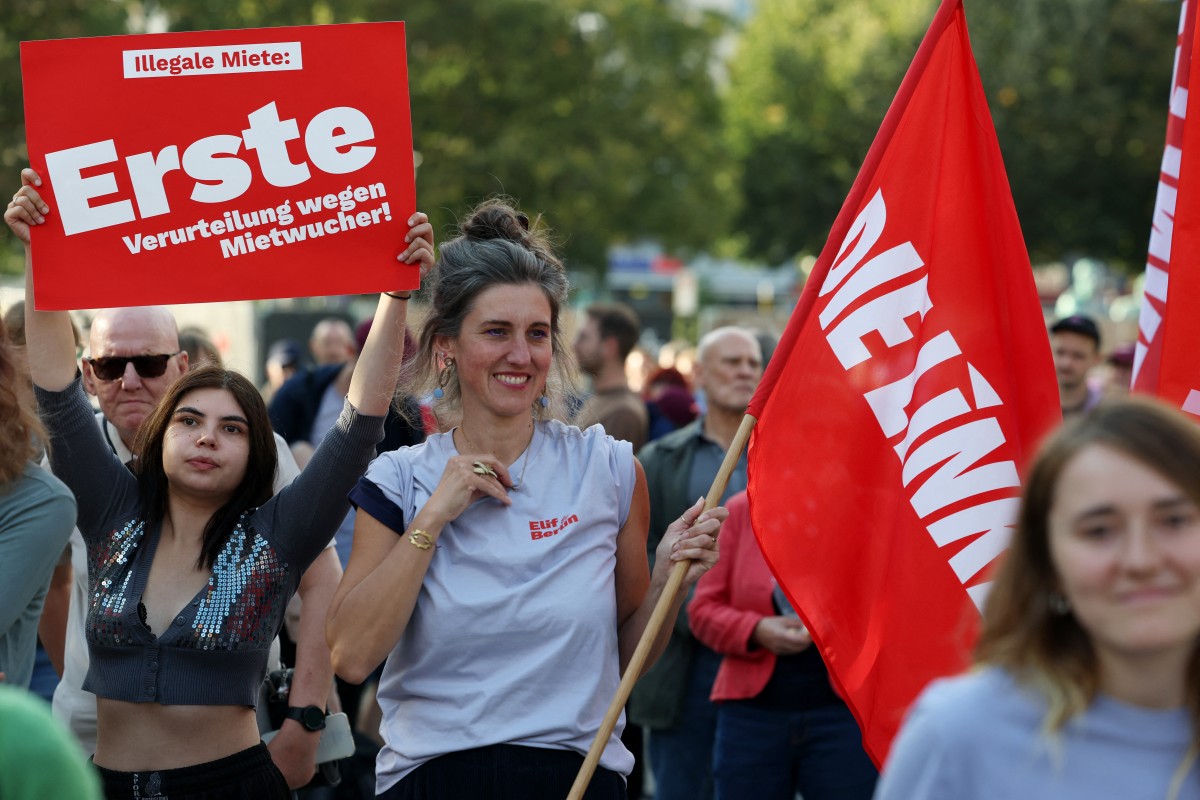
The party wants to introduce an immediate one year rent freeze on apartments owned by state-run housing companies. After that, rent increases would be a maximum of one percent per year. In an ideal world, the Left Party would like to extend these measures to all apartments in the capital, however they have failed in previous attempts.
Berliners who have been in the city a while may remember the rent cap law of 2020, which was put together by a former Left Party Senator for Urban Development.
The law was struck down by the constitutional court in 2021, which ruled that only the federal government had the authority to enact rent controls on all apartments. The fiasco caused mayhem for residents affected, and chaos in the local housing market.
READ ALSO: Where rents are rising fastest in Germany in 2026
While this point remains a subject of legal debate today, Die Linke is opting for a more modest approach, hoping instead to create a ripple effect. The calculation is that if rents for the state’s own stock of just over 400,000 apartments stop rising so sharply, it will also curb the rapid increase in private-sector rents.
The Left Party also aims to expand the state-owned housing portfolio through the expropriation of private housing corporations like Vonovia and Deutsche Wohnen (following on from the public referendum calling for this to happen). However this measure remains highly contentious. Chancellor Friedrich Merz (CDU) has already announced plans to fast-track federal legislation banning the expropriation of residential property.
READ ALSO: Why an unresolved housing referendum is shaping Berlin’s election campaign
Other housing goals from Die Linke include building 7,500 new municipal homes a year, expanding the amount of land available for affordable housing and giving priority to households with a housing entitlement certificate (Wohnpflichtsschein, or WBS) when state-owned homes become vacant.
Bringing down the cost of everyday life
Die Linke’s programme also contains a list of measures designed to make everyday life cheaper, especially for those worst off – alongside long-term plans to put more services and infrastructure under public rather than private control.
One of its most immediate proposals is to cut the price of Berlin’s social public transport ticket to €9. It also wants to expand support for other discounted tickets.
The party wants to negotiate with the VBB transport operator to stabilise all ticket prices from 2028, preventing further increases. Its long term aim is for public transport to become free to all.
Another interesting proposal is setting up 20 Kiezkantinen – neighbourhood canteens – across the city, offering cheap meals and social spaces.
The party also wants to establish a heating-cost fund for low-income households struggling with energy bills.
Improving Berlin life
Die Linke has promised to foster culture. That includes, for instance, creating 1,000 additional affordable workspaces for artists and protecting clubs and other cultural venues from being squeezed out by rising rents and development.
It also wants a €3 ticket for public cultural institutions and a €100 annual KulturPass for young people aged 16 to 21.
In addition, Die Linke advocates for expanding public transport, cycling infrastructure and pedestrian pathways.
The party aims for Berlin to achieve climate neutrality by 2040 at the latest and to enshrine climate protection as a state objective in the Berlin constitution.
One interesting proposal is “Tschüss Auto, hallo D-Ticket”: an incentive for people who give up their cars to receive the Deutschlandticket for a year.
Meanwhile, dirty-looking streets and rubbish were also a big theme of this election. The Left Party has promised a five-point plan to tackle Berlin’s rubbish problem, including more frequent cleaning and additional opportunities for residents to dispose of bulky waste.
But it remains to be seen how different this is to the current policy of Kieztage, where recycling and waste officials set up in neighbourhoods around Berlin offering a chance for people to get rid of their bulky items easily.
The party also wants more more bins and further investment in the cleanliness of public spaces.
Supporters of Germany’s Die Linke party hold flags and a placard with the lettering ‘Illegal rent – first conviction for rent gouging’ during a campaign meeting in front of Berlin’s City Hall. (Photo by Odd ANDERSEN / AFP)
Schools, childcare and healthcare
Die Linke’s goal is “educational equity”.
“The school system cannot remain as it is: it perpetuates social inequality, is outdated, under-resourced and causes stress for pupils, staff and families alike,” states the party.
It is pushing to expand free education “from daycare through to university”, and provide free learning materials and school meals.
The party wants to recruit more educational staff and is pushing for an expansion of community schools (Gemeinschaftsschulen), where children can study together for longer rather than being separated into different types of secondary school.
It also wants to guarantee a vocational training place for young people who do not go to university.
Healthcare is another area where Die Linke wants to see see more public rather than private control.
The party wants more community-based healthcare and psychosocial support, including counselling centres in every Berlin district.
The party also aims to promote nursing training and improve working conditions in healthcare professions.
Immigration and citizenship
Around 25 percent of Berlin’s population is foreign. The Left Party is immigration-friendly, stating in its manifesto that “Berlin is and has always been shaped by various waves of immigration and displacement… This diversity makes Berlin a city worth living in and loving. As the Left, we defend this open and diverse society, as well as the right to flee and migrate”.
The party is pushing for a shift in policy – towards “global freedom of movement, equal rights for all and a society based on solidarity with migrants”.
READ ALSO: What political parties in Berlin say about immigration and citizenship
Die Linke also want to make it possible for people without German citizenship to vote.
“We therefore intend to exhaust all legal avenues available under state law to grant all Berliners – regardless of their passport – the right to vote and to stand for election after no more than five years of residence in Germany,” the party programme states.
Naturalisation is generally a matter for the federal government, but Die Linke in Berlin still wants to campaign to ease the rules.
They want to make getting citizenship more accessible “regardless of income and without the requirement of demeaning naturalisation or language tests”.
“We will therefore utilise all available scope under state law, as well as provisions for exceptions and hardship cases, to facilitate more naturalisations and to ensure the state office for immigration operates with sensitivity to discrimination,” says the party.
Many have compared The Left’s election campaign with that of Zohran Mamdani’s in New York City.
And the party wants to following NYC’s footsteps in other ways. For instance, they have proposed introducing a ‘city ID card’, modelled on the NY City ID, for all Berliners “in order to improve access to resources for undocumented people”.
How would the measures be financed?
The Left proposes that funding would come through a combination of increased public borrowing, higher tax revenues and tougher tax enforcement, while pushing at federal level for the abolition of the debt brake and the reintroduction of a wealth tax.
As we said, the party will have to negotiate with coalition partners on a lot of points and will not have the power to act in some areas which are reserved for the federal government. However, the programme gives an idea of how the party hopes to shape the future of Berlin in the near future.
Disclaimer : This story is auto aggregated by a computer programme and has not been created or edited by DOWNTHENEWS. Publisher: thelocal.de