
The parents of a young man who died days after being discharged from a Sydney mental health unit are pushing for a coronial inquest into the circumstances leading up to his death.
Gus Wong appeared destined for greatness. He was well known and loved in his local northern beaches community. Fiercely intelligent, he excelled academically. A champion surf lifesaver and long-distance runner. He was a formidable debater, tall and handsome, with a quiet confidence.
Then Gus was diagnosed with schizophrenia in 2022, at 25, with the life experience and insight to understand what this meant for his once seemingly limitless trajectory. He was 29 when he took his own life on November 26, eight days after being discharged from a Northern Beaches Hospital mental health unit, where he had been undergoing electroconvulsive therapy (ECT).
“Health services have a duty of care to protect patients at risk of suicide,” according to the Healthcare Complaints Commission (HCCC). “However, this should be balanced with clinical judgment, patient rights and legal requirements.”
Gus’ parents have plotted a devastating sequence of events and missed opportunities that led up to his death.
Alarmingly, Gus’ mother, Caroline Yarnell, describes being told by a mental health services staff member not to call the police after she discovered Gus was missing, despite reporting the previous night that he had told her he did not want to live.
Gus’ body was found hours later.
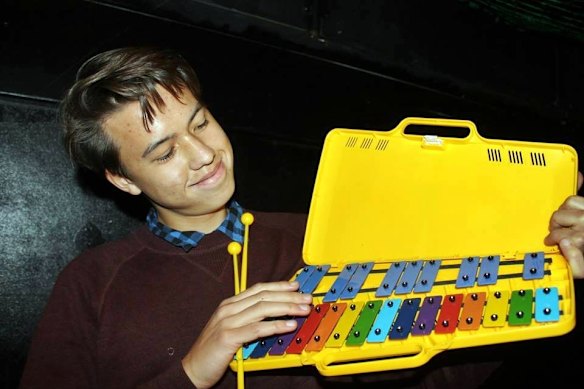
Gus’ father, Tony Wong, said police told him that his son’s death was entirely preventable.
“No family should have to identify their child at the Coroner’s Court after following professional advice,” Wong said.
Gus’ parents recall the confusion over who was overseeing their son’s care post-discharge, and who they should contact if they had serious concerns for his wellbeing.
An internal review of Gus’ care identified no factors of the care provided to Gus that contributed to his death, and that discharge planning, follow-up and collaborative care were comprehensive.
Gus’ parents say the report contains several inaccuracies.
The number of suicides post-discharge from NSW’s psychiatric hospitals is very small. But Gus’ case raises questions about how adequately loved ones are prepared for the “extraordinarily high” rates of suicide immediately after patients are discharged from psychiatric units, in which the risk is 300 times that of the general community in the first week.
“In hospitals, people often are remarkably avoidant when talking and even thinking about suicide,” psychiatrist and world-leading suicide risk expert Conjoint Professor Matthew Large said.
‘I liked older Gus best’
“Gus once said I would rather lose two legs than have this [schizophrenia],” his father recalls.
Wong struggled to reconcile the disease with the 10½-pound baby who blinked up at him after Yarnell’s 23-hour labour.
“I’m just so glad I knew him, this wonderful grown-up person,” Yarnell said. “Little Gus was beautiful. But I liked older Gus the best.
“He really cared about people … all over the world, and he was witty and funny. I guess he did most things well, but the things he loved the most were music, debating and nature.”
For about two years after his diagnosis, Gus seemed to get along OK with medication. But by September 2025, his condition had significantly deteriorated. His family believed he had become treatment-resistant.
Gus’ parents say there was an incomprehensible disconnect between the way Gus and his family described his severe and worsening symptoms, particularly his paranoia and hallucinations, and the positive reports from his treatment team.

“I’d get calls from them saying ‘We want to get Gus off the books.’ And I’d say, he’s still feeling paranoid,” Yarnell said. “Their response was: ‘He needs to start working.’ ”
On September 21, Gus was admitted to an NBH psychiatric unit after intentionally self-harming and hearing voices. He was discharged on October 2 and readmitted a week later after self-harming again.
He underwent several sessions of ECT and repeatedly told his parents that he felt “really bad” and paranoid, but his clinicians assured them that the treatment was effective, and his psychosis episodes were less frequent.
“Every time Gus would tell them: ‘I’m still having paranoia’, they would say, ‘but you’re having fewer episodes’, and he’d sort of look at them as if to say: ‘Am I?’” Yarnell said.
On October 19, Gus made a single entry in a diary that his brother, Kyle, had given him: “I had another episode, severe, uncontrolled by olanzapine [an antipsychotic medication for treatment-resistant schizophrenia]. Complete loss of rationality. Felt anxious, paranoid, unsafe and often suicidal. Very scary.”
At a meeting a week before Gus was discharged, Gus’ parents said they told staff that they were concerned they could not monitor their son 24/7.
“We had to sleep,” Yarnell said. “We were told not to worry – that he would receive excellent follow-up care from their acute care team,” which provides rapid support during crises and post-discharge.
“That sounded good: ‘Acute Care Team’. So we thought he’d be monitored quite a lot.”
He was discharged on November 18 after having his final ECT session the day earlier, still experiencing brain fog and memory loss that typically lasted a week.
Gus was advised to book a follow-up appointment with a social worker one week post-discharge.
His status was downgraded from “red” (high care needs) to “amber” (moderate care) on November 24, and “green” (low care needs) two days before his death.
Two days before his death, during a conversation with community mental health staff, Gus denied having suicidal ideation and had responded immediately to a reminder text about his upcoming appointment, saying he would be there, according to an internal report.
“They appeared to base it on Gus saying he was not going to do anything while still under the influence of ECT,” Wong said.
The last night Yarnell saw Gus alive, he told her that he didn’t want to live.
“He said: ‘All my memories are back now. The ECT’s cleared … I’m feeling very, very paranoid, and I believe it all’,” she said.
They talked for two hours, then Gus gave his mother a big hug and went to his bedroom.
Yarnell recognised this as a serious escalation of Gus’ distress, but she didn’t know whom to call.
She phoned the hospital unit, and was advised to call the Community Mental Health Access Line – a statewide 24/7 phone service that links people with services. They advised her to contact the acute care team, but she did not have their number, so she called the ward again.
When she reached the acute care team, Yarnell was asked whether she thought Gus needed to be brought to hospital.
“How am I meant to know the answer to that?” Yarnell said, reflecting on the conversation. “I was calling because I thought they’d know what he needed.”
She was told to let Gus sleep, and that someone would call him first thing in the morning to check on him.
About 8.30am, Yarnell found Gus’ room empty. She called the acute care team as she scoured walking tracks for Gus, but there was no answer. She received a call back just before 10.30am.
“They said they hadn’t contacted [Gus],” Yarnell said. “I asked if we should call the police, and they said ‘no, no, don’t do that. Just wait until 2pm because he’s got a meeting’.”
The Northern Sydney Local Health District, which oversees the community mental health services, told the HCCC that there was no evidence that Yarnell was told not to call the police, and that staff repeatedly communicated that they should seek emergency assistance if their concerns escalated.
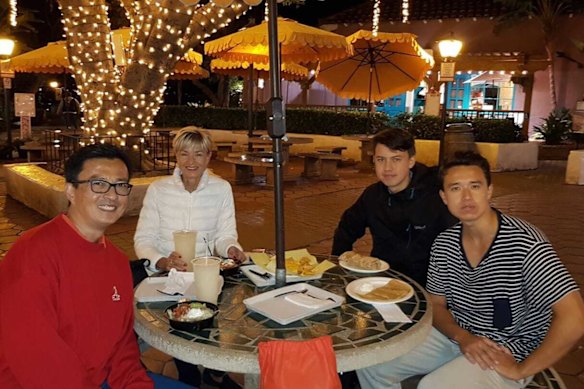
Distressed and unable to wait any longer, Gus’ father called Triple Zero at about 12.30pm. A police helicopter found Gus’ body that afternoon.
“A police officer told me that we should have contacted them much earlier – as soon as we believed something was wrong,” Wong said. “He said that it was a totally preventable death.”
Gus’ parents said they were devastated and insulted by the findings of an internal Serious Adverse Event Review (SAER) triggered by Gus’ death, which mentioned a meeting they had attended on the day of Gus’ discharge. This meeting did not take place.
The report concluded Gus’ death was the tragic outcome of a young man with complex mental health challenges, compounded by possible neurodiversity, social isolation and difficulties during transition of care.
“They seemed to have gone out of their way to paint a really awful picture of Gus … as if to say he was untreatable,” Yarnell said.
“Socially isolated, spending time playing video games. It mentions borderline personality disorder [BPD] and ‘queried neurodivergence’ and autism, when Gus was diagnosed with neither.”
Gus’ medical records report no indication of autism spectrum disorder (ASD) after completing three ASD questionnaires, and no diagnosis of BPD.
The report also implied that the community mental health service phoned Yarnell the morning of Gus’ death, but Yarnell’s phone logs indicate she first called them at 10.16am.
The team did not attempt to contact Gus until 10.51am.
The only area for improvement identified was that a psychiatrist did not document a handover phone call in the electronic medical records between the hospital and community mental health team, noting that the hospital and community service worked on separate systems.
The hospital was operated by Healthscope under a public-private partnership until it was handed back to NSW Health in April this year, after the NSW government struck a $190 million deal with receivers.
“They hadn’t really made any effort to investigate what went wrong with their own procedures with a view to saving lives in the future,” Yarnell said.
Gus’ parents also objected to the HCCC’s assessment based on the SAER, medical and administrative records, and the hospital’s responses to the parents’ concerns. It did not identify any issue with the care provided.
The Northern Sydney Local Health District (NSLHD) acknowledged that hospital staff provided Gus’ parents with misleading advice about the acute care team, which was not responsible for Gus’ post-discharge care.
An NSLHD spokesperson offered condolences to Gus’ family, acknowledged their distress, and apologised for the unclear information, but “this miscommunication did not impact on the appropriateness of the community follow-up arrangements”.
Member for Pittwater Jacqui Scruby gave notice of a motion in NSW parliament in May that noted the serious concerns regarding mental health discharge practices, suicide risk escalation and acknowledged concerns around the independence of SAERs. The independent MP called on the government to strengthen discharge safeguards, family communication and sub-acute services.
Scruby said parents know their child better than anyone and can provide critical insight into their mental health.
“But once that person is legally an adult, families have told me they find it harder to have their concerns heard,” Scruby said.
Public psychiatrists and emergency physicians have warned for years that overwhelmed and under-resourced community mental health services have put increased pressure on hospitals, where one in 10 people needing mental health treatment in emergency departments wait more than 23 hours for a bed.
A key recommendation from the inquest into the Bondi Junction Westfield stabbing attack was to strengthen the state’s community mental health specialist teams. Mental Health Minister Rose Jackson said the government had taken immediate action in the attack’s aftermath to strengthen community mental health supports.
One hundred and fifty people took their own lives in NSW over January and February. The majority (111) were male, and 46 were men aged 25 to 44, the latest NSW Suicide Monitoring System report shows.
A global systematic review and meta-analysis led by senior Sydney psychiatrist UNSW Conjoint Professor Matthew Large found suicide rates were extraordinarily high in the first week post-discharge – up to 300 times higher (about 3000 per 100,000 person-years).
Suicide risk drops to about 200 times that of the general community in the first month post-discharge, then to 100 times higher by three months. People admitted to self-harm have an even higher rate of post-discharge suicide.
“It’s a problem that [psychiatric hospital clinicians] don’t sit families down and say: ‘This is a highly risky situation.’ The first couple of weeks post-discharge have this extraordinary suicide rate,” Large said.
“We don’t really know why. Longer hospitalisations don’t really help; we’re powerless to know which particular patients are going to commit suicide and when. But there should be contingency planning for families.”
Suicide risk assessments that categorise patients as “high” or “low” risk are fundamentally flawed and offered false reassurance in the case of “low-risk” patients, inadvertently neglecting people who are highly vulnerable, Large said.
“We need to do much more for everybody because you don’t know what’s going to happen,” Large said, including universal post-discharge support, home visits, and open communication with patients and families about the inherent uncertainty.
Scruby said NBH’s transition to public ownership was an opportunity to improve public mental health facilities, but a lack of publicly available data made it difficult to understand how many people communities were losing post-discharge from mental health facilities.
In a statement, a spokesperson said NSLHD was committed to further engaging with Gus’ family when they were ready and to providing support.
Yarnell hoped that people would remember Gus as a person: sarcastic, passionate, and adventurous – not as his illness.
“He’s a loss to the community … to the world,” she said.
If you are worried about your own or someone else’s mental health, you can contact the Mental Health Line on 1800 011 511.
If someone has attempted, or is at immediate risk of attempting to harm themselves or someone else, call Triple Zero (000) immediately.
Lifeline 13 11 14.
Start the day with a summary of the day’s most important and interesting stories, analysis and insights. Sign up for our Morning Edition newsletter.
Disclaimer : This story is auto aggregated by a computer programme and has not been created or edited by DOWNTHENEWS. Publisher: www.smh.com.au