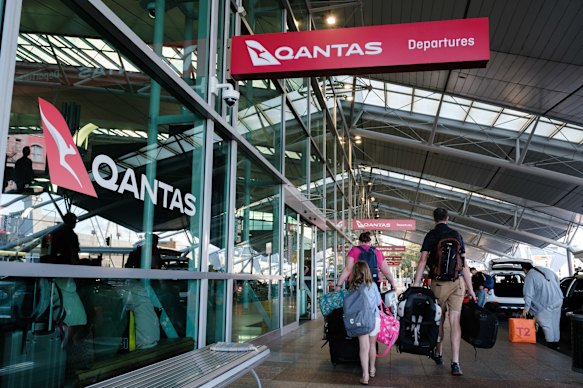

If you’re hoping to use frequent flyer points on a big international trip soon, you might want to think again.
Between the Middle East conflict and spiralling fuel prices, snagging a rewards seat on international flights is likely going to be tougher, experts say.
“This year, it might be hard to find seats because passengers won’t fly through the Middle East,” says points travel expert Steve Hui, the founder of points travel advisory company iFLYflat.
In this climate, where availability is a factor, redeeming points for domestic flights actually looks like a pretty smart play.
Angus Kidman at financial comparison site Finder said that even if international seats become harder to find, reward seats on domestic flights often represent a better deal.
“If ticket prices go up in the short term, then points are more valuable if you can get reward flights,” Kidman said, because the points were earned at less pricey rates.
Kidman agrees that this year will be “more challenging than last year” for people hoping to book seats. “But it requires you to be on the ball.”
With fuel costs spiralling, Hui reckons international airlines will be hunting for cash rather than letting people fly on points.
The war disrupted about 5 million passengers in just the first two weeks, forcing airlines to ditch some routes and reshuffle their entire fleets away from the Persian Gulf, according to Cirium analytics.
Qantas last week flagged a fuel cost blowout of up to $800 million in the second half, while Virgin said fuel costs would be $30 million-$40 million higher than expected, driven by the open-ended conflict.
This week both airlines announced substantial domestic sales to bolster demand, with Virgin today expanding a sale of 500,000 domestic tickets announced on Monday, by 1 million more tickets and encouraging customers to book reward seats.
iFLYflat’s Hui said that no matter what, points will remain another “piggy bank” for consumers to add to. “The points are always going to be useful and always can be deployed again in the future for flights.”
It’s important to remember points have value because credit cards, banks and retailers have to buy them, Hui said.
Ultimately the cost of the points has got to be paid by somebody.
Steve Hui
“Ultimately the cost of the points has got to be paid by somebody, either you in prices or (the businesses) in reduced margin,” he said.
Travel expert Matt Graham believes, “frequent flyer points are likely to become more valuable in the short term because the number of points needed for a reward flight remains consistent”.
If you can get those seats.
“Finding availability might get trickier until the war in the Middle East de-escalates,” he said.
Perhaps the bigger effect on point value won’t be from the market but from regulators.
The Reserve Bank’s changes to credit card interchange fees, to take effect in October, will ban “tap-and-go” fees on debit, credit, and EFTPOS cards to cut costs for merchants. This is expected to re-set lower the amount of points banks and airlines offer loyalty club members.
Yet, as travel conditions remain in flux, the psychology of points becomes more important, too, and history bears this out.
In 2021, even as flights halted for COVID, Qantas’ loyalty program grew and contributed more than $1 billion in cash to the airline’s result, with an operating margin of more than 27 per cent, when the airline’s was minus 25.7 per cent.
Andrew Glance, head of loyalty at Qantas, speaking in February, said the airline invested a lot of time in understanding what its members wanted from the programs.
The Qantas loyalty program was “a fantastic way to be recognised for everyday behaviour” whether shopping at Woolworths, pulling up your car at BP, or taking out a credit card, Glance said.
“It is very much a part of the DNA within Australian culture, and it’s something that we certainly don’t take for granted.”
Hui notes that, no matter how difficult travel is, “selling the dream” of travel is “way more profitable” than selling the travel “because you don’t have to deliver straight away.”
If an airline sells a ticket, it must usually deliver within 12 months. “But if they’re selling the dream, people have dreams for multiple years.”
“If you bank up your dreams – someone has to pay for the points – and you don’t use them till later – that’s awesome for the company [airline],” said Hui.
The Business Briefing newsletter delivers major stories, exclusive coverage and expert opinion. Sign up to get it every weekday morning.
 Chris Zappone is a senior reporter covering aviation and business. He is former digital foreign editor.Connect via X, Facebook or email.
From our partners
Disclaimer : This story is auto aggregated by a computer programme and has not been created or edited by DOWNTHENEWS. Publisher: www.smh.com.au