
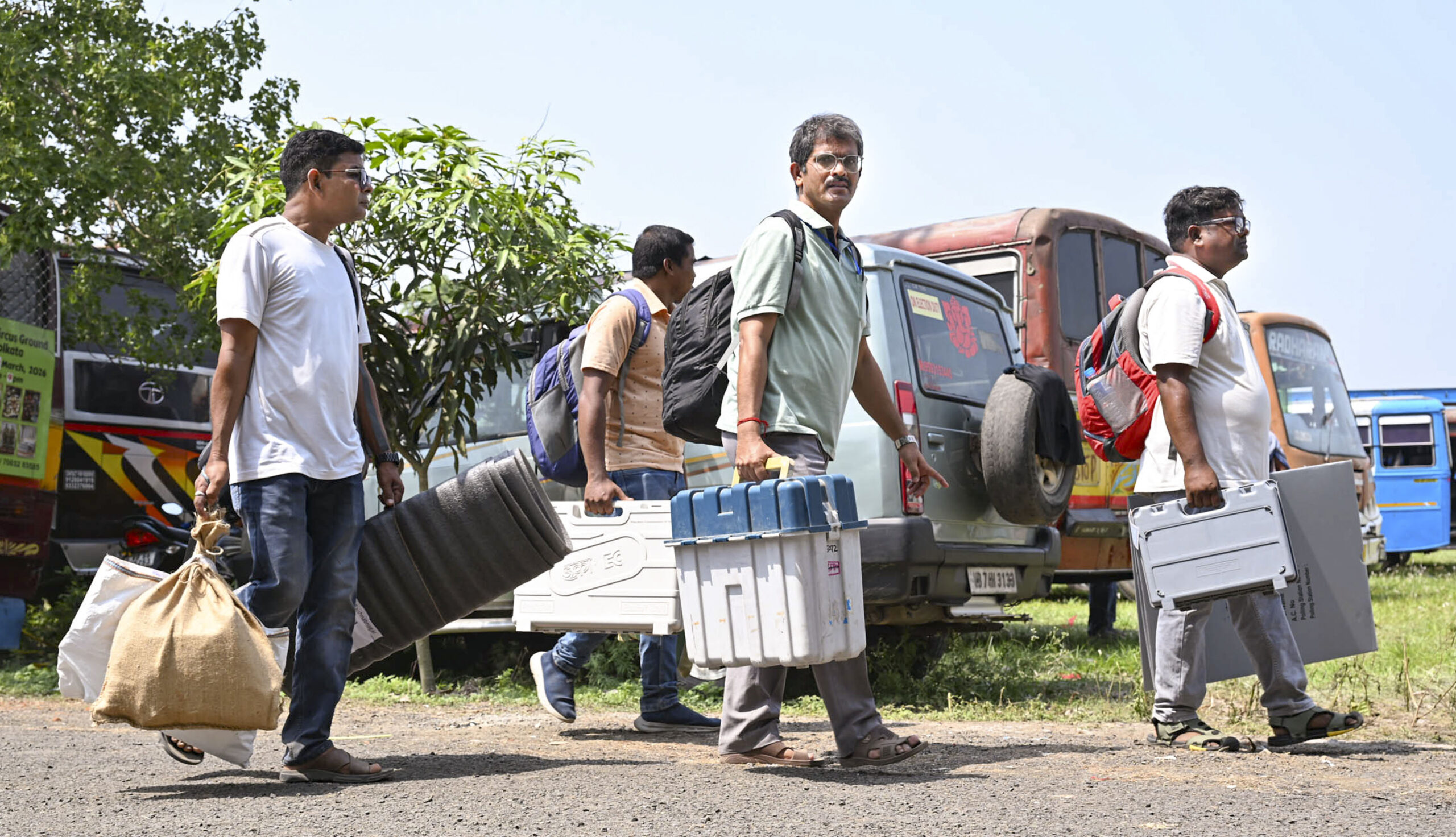
As of April 30, 2026, polling has concluded across West Bengal, Tamil Nadu, Kerala, Assam and Puducherry, bringing an end to a high-intensity election cycle marked by aggressive campaigning, shifting alliances and record voter turnout. With exit polls now released and counting scheduled for May 4, attention has shifted to how these projections should be read and how reliable they really are.
A High-Stakes Electoral Cycle
The 2026 Assembly elections have been closely watched across all five regions. Exit polls suggest varied outcomes, with projections indicating gains for the Bharatiya Janata Party and its allies in some states, while others point to tight contests or continuity of regional parties.
In West Bengal, most projections indicate a close contest between the Trinamool Congress and the BJP, with small swings expected to decide the outcome. In Tamil Nadu, the DMK-led alliance appears ahead, though the emergence of new players has complicated the electoral arithmetic.
Kerala is witnessing a closely fought battle between the UDF and LDF, with turnout above 78 percent reflecting strong voter engagement. In Assam, exit polls largely indicate continuity for the ruling alliance, while Puducherry’s fragmented contest is seen as favouring the NDA.
The campaign period itself was marked by intense political messaging, identity-driven narratives and controversies, including skepticism around exit polls. Several leaders across parties have rejected projections outright, urging voters to wait for official results.
What Is a ‘Margin of Error’ in Exit Polls
Exit polls are based on surveys conducted among a sample of voters after they cast their votes. These samples are then used to estimate overall vote shares and seat outcomes.
The “margin of error” refers to the range within which the actual result is expected to fall, based on that sample. Because exit polls do not survey every voter, there is always a degree of statistical uncertainty in the estimates.
In practical terms, if an exit poll predicts a party’s vote share at a certain level, the margin of error indicates how much that estimate could vary in reality. This uncertainty becomes even more significant when contests are close.
Why Margin of Error Matters in 2026 Elections
The importance of margin of error is particularly evident in the 2026 elections, where many contests are described as tight or multi-cornered.
In West Bengal, where projections show a narrow gap between major parties, even small deviations within the margin of error could change the final outcome.
Similarly, in Tamil Nadu, the presence of new political entrants and shifting vote shares makes it harder for exit polls to convert sample data into accurate seat projections.
The challenge lies in the nature of exit polling itself. Pollsters rely on a limited sample and then extrapolate it to millions of voters. As noted in reporting, this process is “inherently difficult” in large and diverse elections, where small sample biases can lead to significant differences in final results.
Role of Voter Turnout and Sampling Challenges
Record voter turnout across states has added another layer of complexity. High participation often means that groups that are usually underrepresented in surveys may have voted in larger numbers, making it harder for pollsters to capture their preferences accurately.
Additionally, the composition of survey teams and their ability to access diverse voter groups can affect data quality. If certain demographics are under-sampled, the margin of error effectively widens.
Lessons From Past Exit Polls
Historical data shows that exit polls can sometimes diverge sharply from actual results. In previous elections, projections in states like West Bengal underestimated the scale of victory for the winning party, despite predicting the general trend.
At the same time, in states such as Assam and Tamil Nadu, exit polls have often broadly captured the eventual outcome, even if seat numbers differed.
This mixed track record underscores why margin of error is a critical concept. It explains why exit polls should be seen as indicative trends rather than precise forecasts.
Political Reactions and Public Perception
The margin of error also shapes how political parties respond to exit polls. In the current election cycle, several leaders have dismissed projections, pointing to past inaccuracies and the uncertainty inherent in polling.
This skepticism reflects a broader understanding that exit polls, while influential in shaping public discourse, are not definitive.
Conclusion
The Assembly Elections 2026 have brought together high voter turnout, intense campaigning and complex political dynamics across multiple states. As exit polls attempt to capture this landscape, the concept of margin of error becomes central to interpreting their predictions.
Rather than viewing exit polls as exact outcomes, the margin of error highlights their limitations and the uncertainty built into any sample-based estimate. With several states witnessing close contests, even small deviations could alter final results, making the official count on May 4 the only definitive verdict.
Disclaimer : This story is auto aggregated by a computer programme and has not been created or edited by DOWNTHENEWS. Publisher: deccanchronicle.com



