Alex Marshall
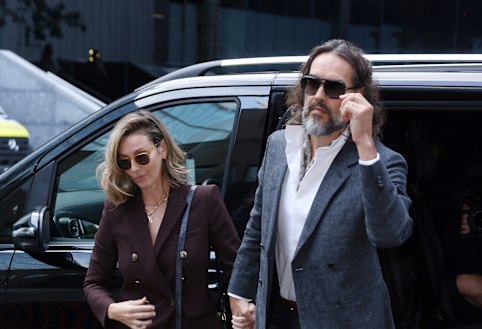
London: Russell Brand, the firebrand YouTuber, comedian and actor, appeared in a London court Monday for the start of a weeks-long trial on charges of rape, sexual assault and indecent assault.
Brand, 51, faces seven charges related to incidents that the prosecution says involved six women. Prosecutors say the events occurred from 1999 to 2009, a period when Brand became a star in Britain as a stand-up comedian and television and radio presenter.
In two previous hearings, he pleaded not guilty to all the charges and last year said in a video posted to his social media channels that he had “never engaged in non-consensual activity”.
After entering the courtroom on Monday, Brand briefly knelt down as if in prayer and then took his seat in a glass box at the back of the room.
Here’s what to know as the trial gets under way.
What are the accusations?
Prosecutors accuse Brand of raping a woman in a hotel room during a 1999 British political party conference, orally raping another woman in 2004 and raping a third woman in 2009.
Brand is also charged with sexual assault and indecent assault over incidents that prosecutors say took place in Britain. Full details of those accusations are expected to emerge during the trial.
What has Brand said in his defence?
Brand has repeatedly denied ever having non-consensual sex, and has already pleaded not guilty to the charges.
On Sunday, Brand published a video to his YouTube channel, where he has more than 6.6 million subscribers, in which he discussed sex offender Jeffrey Epstein. At one point, Brand said that he himself was on trial for “sexual allegations that I deny in the strongest possible terms”.
He did not say whether he would continue to publish videos to his channel during the trial.
How will the trial proceed?
On Monday, the trial began with Judge Joel Bennathan asking potential jurors if they had any reason they could not sit for its likely duration. He said he would swear in a 14-person jury Tuesday.
Later in the week, prosecutors are expected to set out their opening arguments and call their first witnesses.
The trial is scheduled to last up to 10 weeks, so the jury might not give any verdict until December.
How does British law affect reporting of the trial?
In Britain, anyone who makes sexual assault accusations has the right to lifelong anonymity, which means the news media is not allowed to report any details that might identify the accusers.
Under strict British laws aimed at preventing jury bias, reporters are restricted to reporting only what happens in the courtroom while a trial is underway.
This article originally appeared in The New York Times.
National Sexual Assault, Domestic Family Violence Counselling Service 1800RESPECT (1800 737 732).
Get a note directly from our foreign correspondents on what’s making headlines around the world. Sign up for our weekly What in the World newsletter.
From our partners
Disclaimer : This story is auto aggregated by a computer programme and has not been created or edited by DOWNTHENEWS. Publisher: www.smh.com.au