What’s behind the teenage mass gatherings known as link-ups?
To play this video you need to enable JavaScript in your browser.
This video can not be played
-
Published
“It should be a wake-up call. When young people don’t have enough safe or structured places to go to, I believe that sort of energy can and will spill out on to the streets in dangerous ways.”
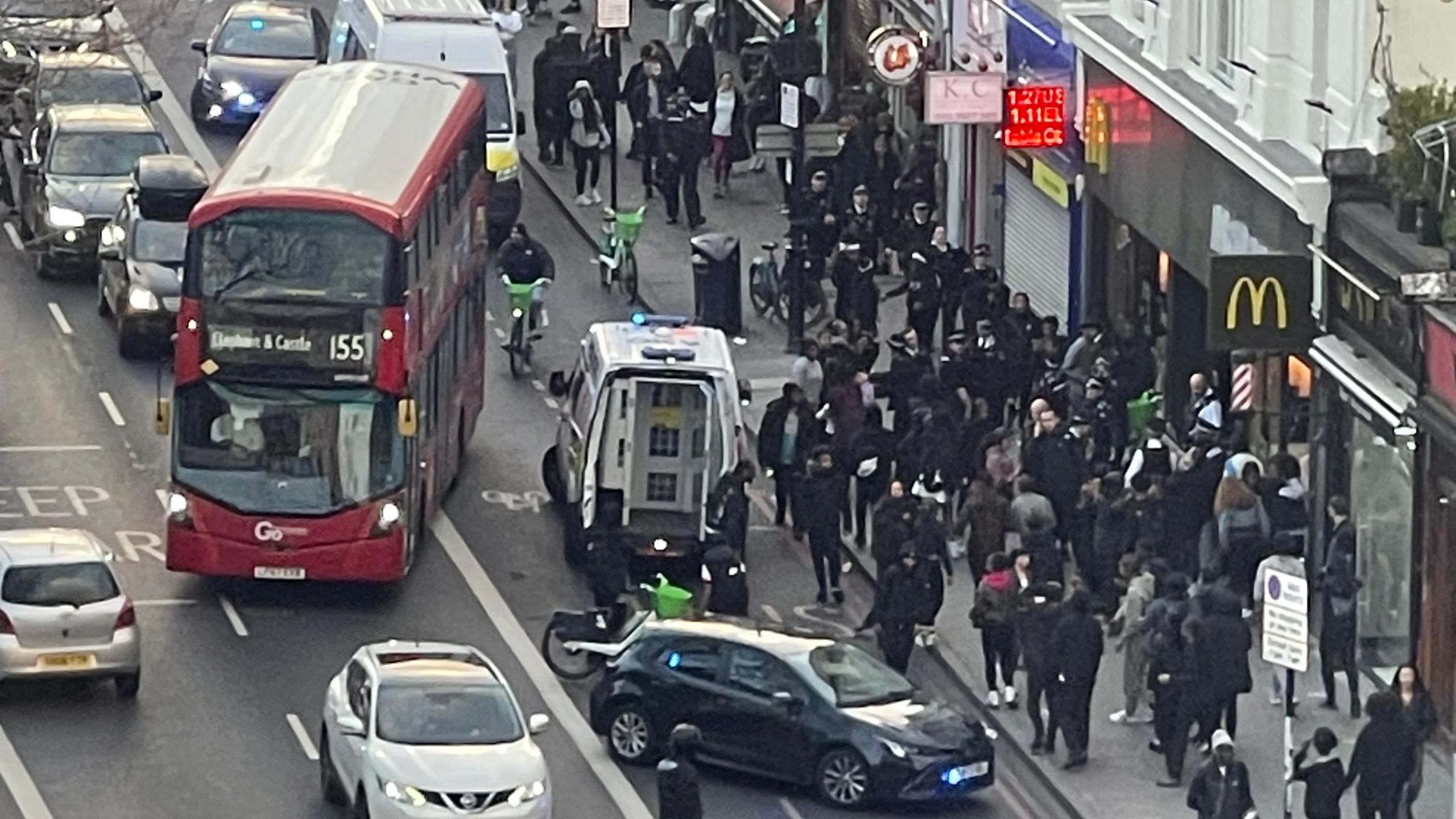
Jason, 17, is talking about what happened in south London in March, when images and videos of hundreds of teenagers running down Clapham High Street made national news headlines.
Four months on, there’s still disagreement over exactly what took place during those mass “link-ups”, the role of social media and how to prevent future anti-social behaviour, particularly as schools break up for summer.
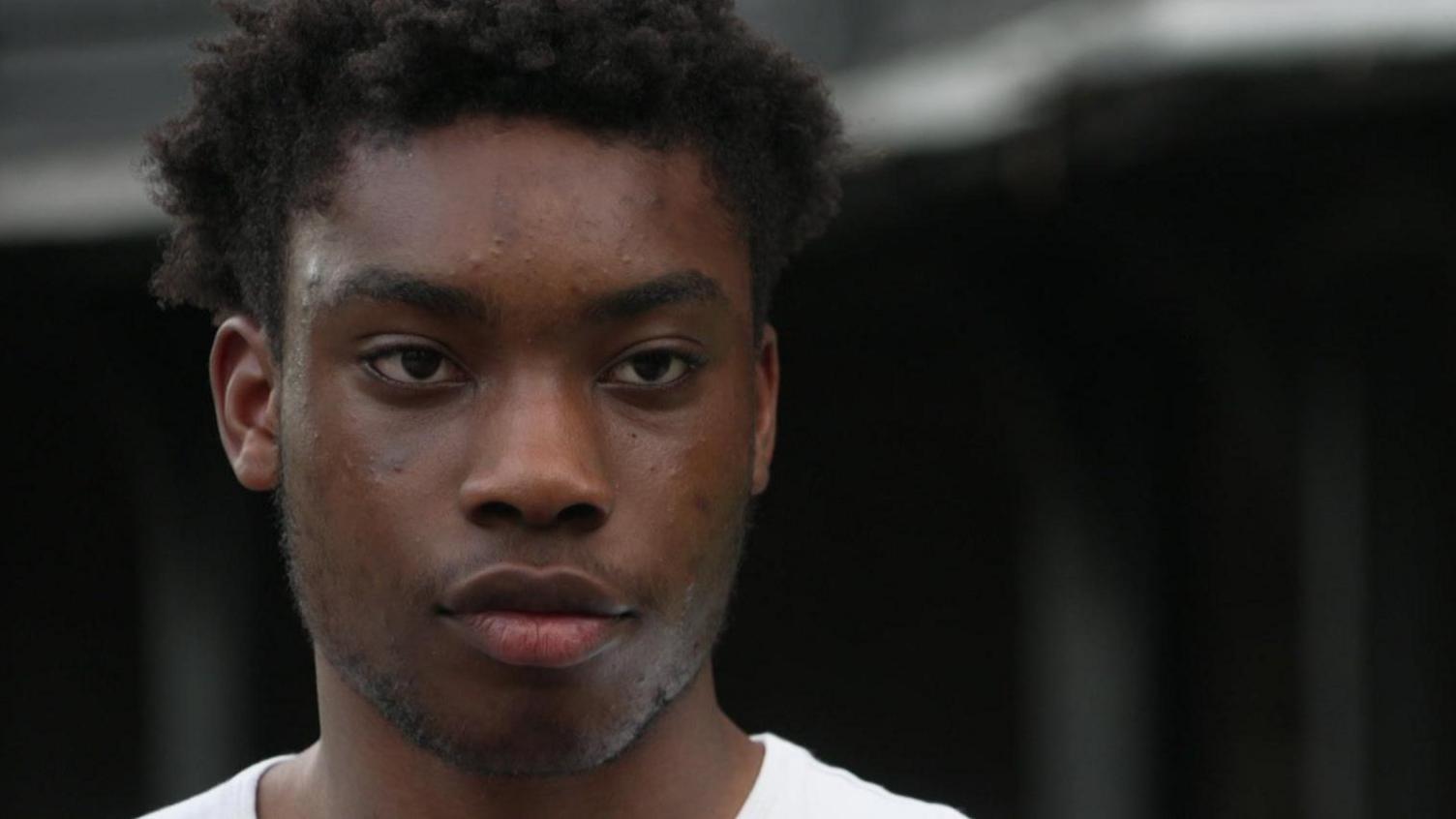
Jason is part of the Young People’s Action Group (YPAG) which advises the mayor’s violence reduction unit, external.
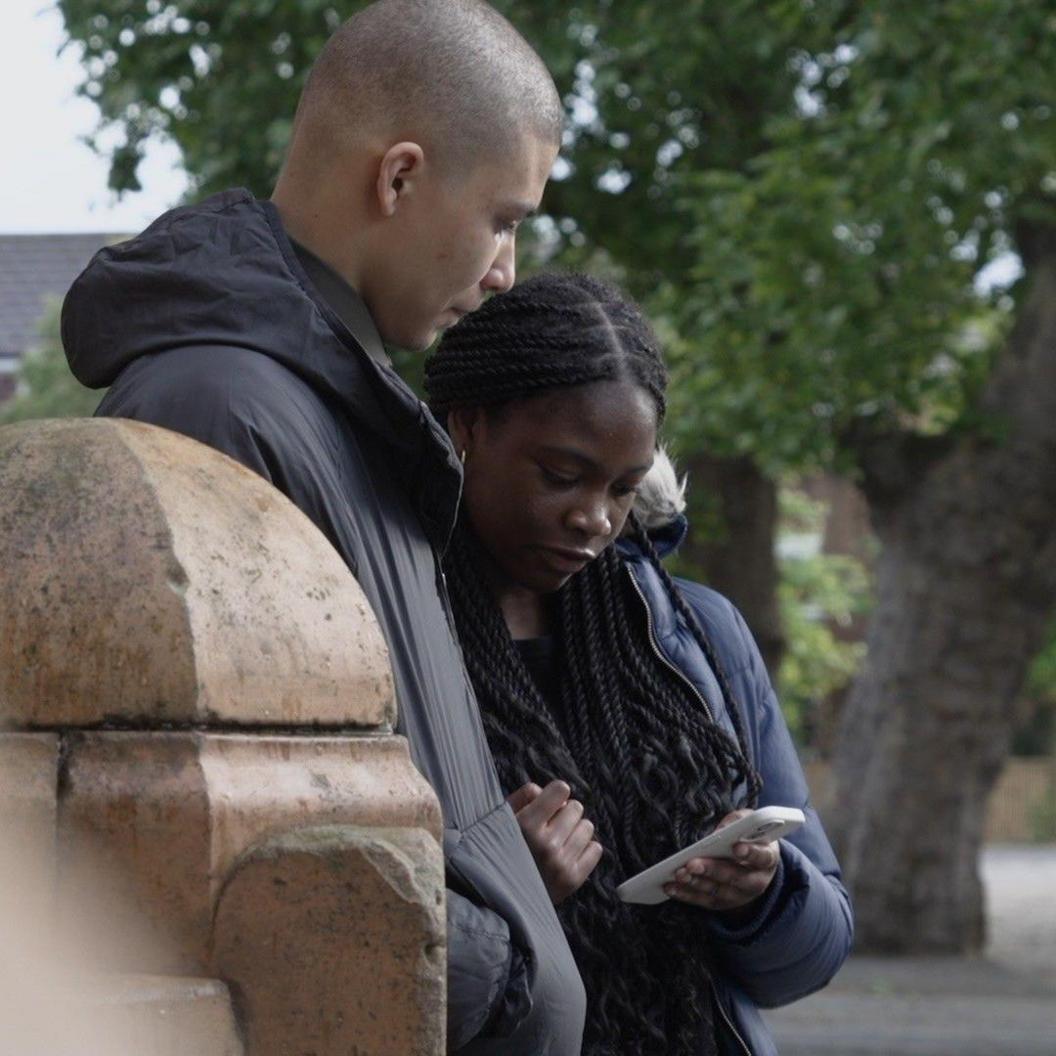
He describes the scenes in Clapham as “chaotic, upsetting and unacceptable”, but both he and fellow YPAG member Tyra, 17, believe there are lessons to learn about why link-ups happen and how to stop them getting out of control.
“Overall, young people just don’t feel like they belong, so they feel the need to engage in this type of behaviour,” says Tyra.
But what did actually happen in Clapham over those two days in March?
While some news reports at the time referred to a “riot” and around 100 police responded, officers later said there was no looting or widespread criminal damage.
Witnesses described some teenagers lighting fires and setting off fireworks on Clapham Common, while footage on social media showed others running down the road, with some entering shops and a restaurant.
Shopkeepers told BBC London at the time how they had locked their doors, with one describing it as “really scary”.
The Met said five people, including four police officers, were assaulted and six teenage girls were arrested, the youngest aged just 13.
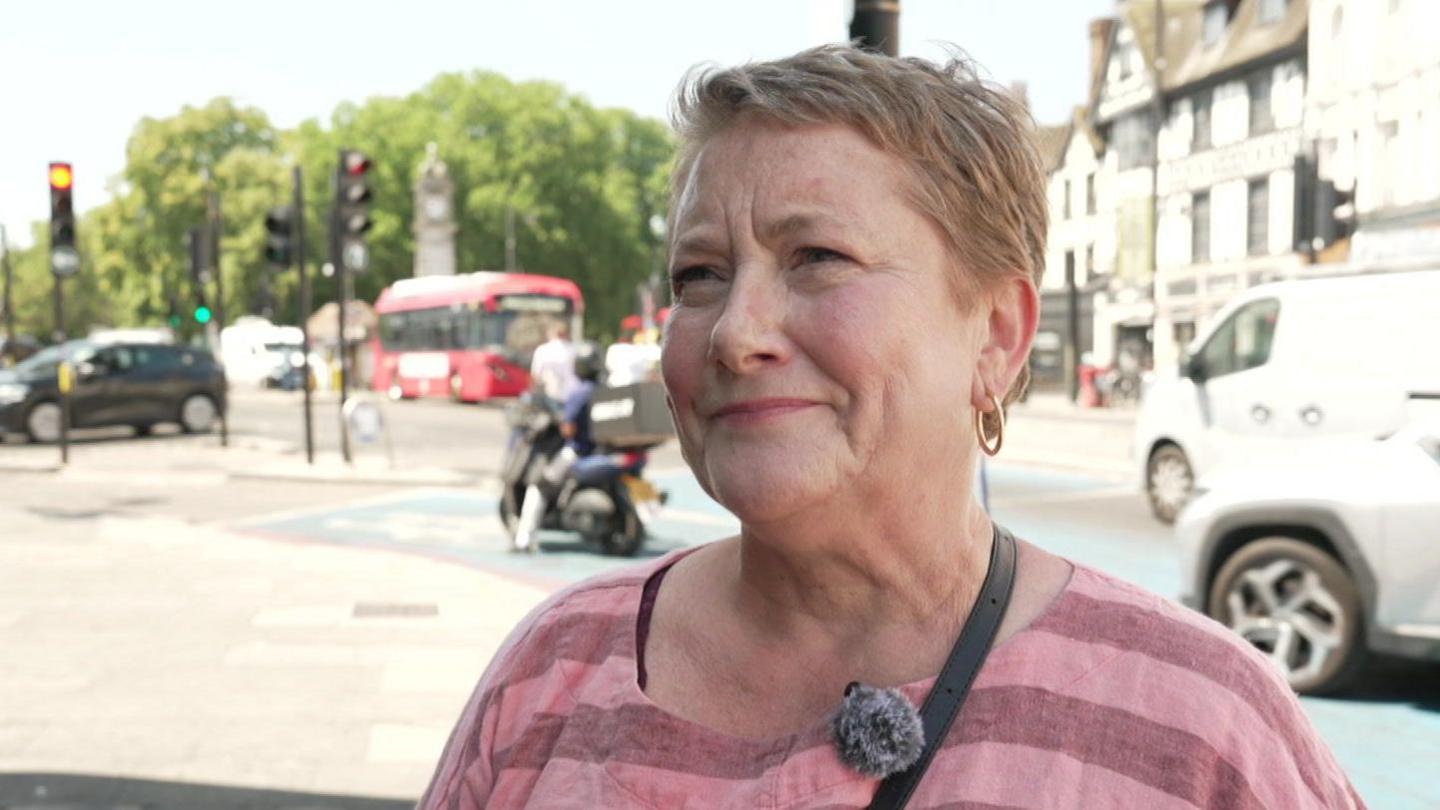
Carole Powell, manager for local business improvement district This is Clapham, tells me that while the incident caused concern for businesses and residents, it was also “quite weird”.
“It was mostly damage,” she explains. “They were knocking things over, pulling stuff off shelves.”
She points to how one shopkeeper selling iPads was surprised to find that the teenagers hadn’t actually stolen anything.
Powell puts the behaviour down to young people “wanting connection, social media, boredom, lack of resources and an age-old game of kids acting-up”.
Complaints about anti-social behaviour following mass gatherings are nothing new.
In 2023, hundreds of young people turned up in Oxford Street in central London after online videos urged crowds to head there and cause disruption.
Nine arrests were made.
In Southend, Essex, dispersal orders have been used by police following concerns about large groups of young people gathering in the seaside resort during the summer months.
Violence erupted between “two rival gangs” following one “beach rave” advertised on social media in 2025, although there was no suggestion the violence was committed by those who went to the gathering.
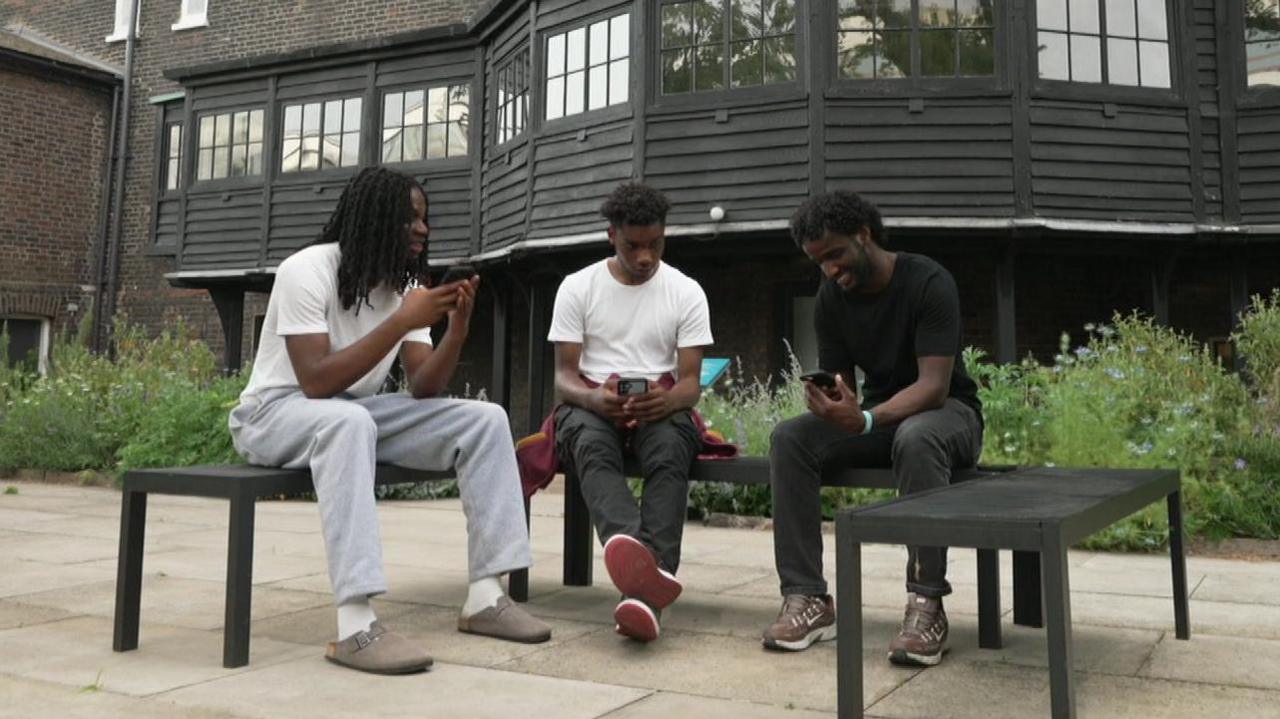
“A link-up is a bunch of kids basically just coming together to play music, have fun, talk,” Prince, 18, tells me.
“The only thing they’re coming for is fun,” Adnan, 18, agrees.
“They don’t think, ‘oh, what if this happens? What if that happens?’ Only thing they care about is there’s going to be a link-up with my age group. I want to be there so I don’t miss out.”
Prince, Adnan and 16-year-old Henry are all ambassadors for the Hackney-based youth group Voyage, which describes itself as a social justice charity tackling racial imbalance in London.
They insist that, for most young people, there’s no intention to cause trouble.
“It’s this common misconception that young people always want to be inside, glued to their phones,” Henry smiles.
“We actually do like that human connection.”
Just a few days after the incidents in Clapham, London Mayor Sir Sadiq Khan announced he would fund at least one late night youth club for every borough.
“We used to have a youth club right next to our school, so as soon as we finished school all the kids knew to go to,” Adnan tells me.
“We had youth workers – even the police would sometimes come by, have fun.”
He adds that the club no longer exists.
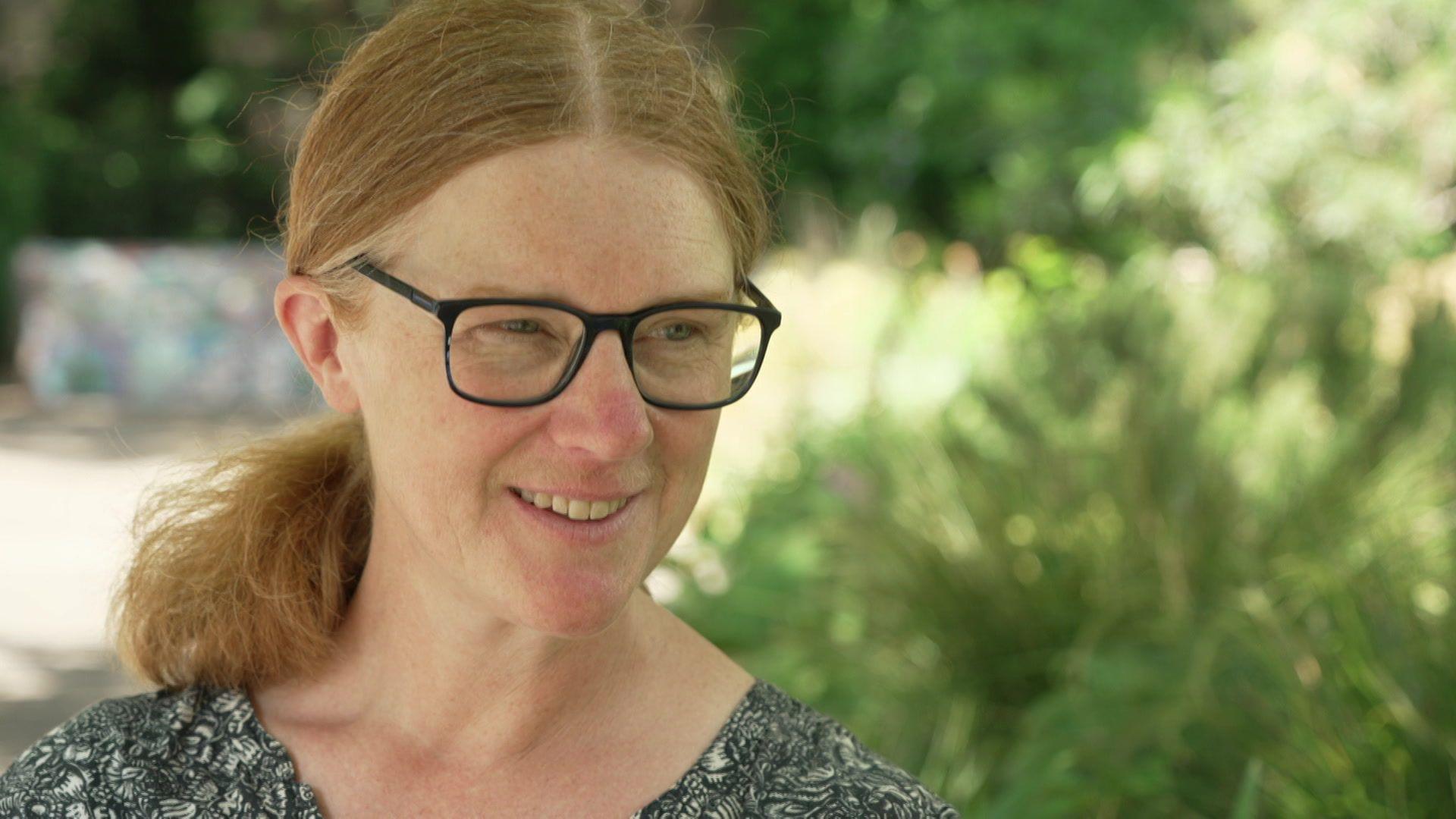
Dr Tania de St Croix, senior lecturer in the sociology of youth and childhood at King’s College London, says across the UK, local authority youth work has lost “more than three quarters of funding” since 2010, with this figure still falling.
“Some London boroughs really are trying to re-invest in youth work, but that’s difficult because some of the youth clubs have been sold off and also the youth workers have been made redundant,” she says.
De St Croix says trained youth workers are able to provide a sense of belonging for young people, and an understanding of how their behaviour can impact others.
While acknowledging that what happened in Clapham would have been “intimidating” for some, she describes parts of the reaction to it as a “moral panic” and believes terms such as “feral teenagers” were unhelpful and divisive.
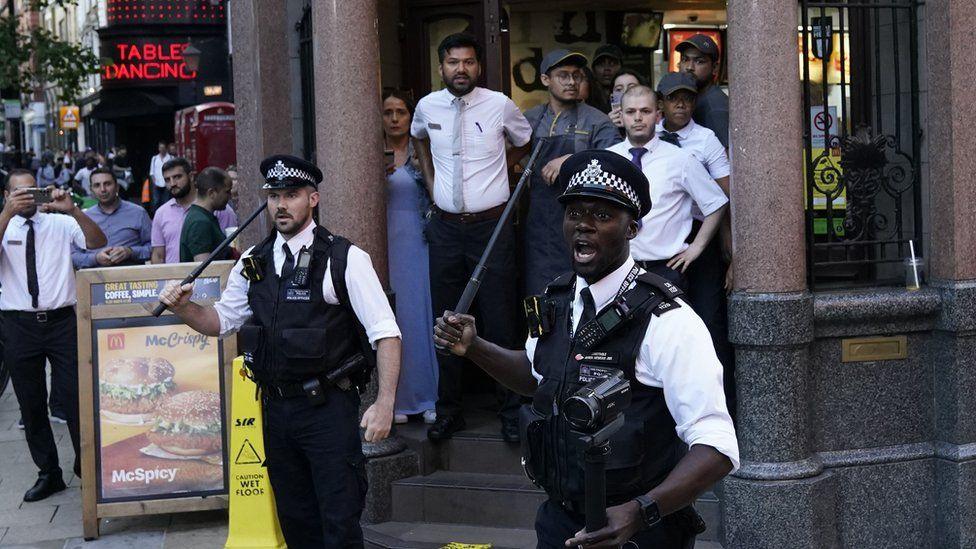 Image source, Aaron Chown
De St Croix also points to other issues which could impact young people’s behaviour, such as the cost of living crisis which has made it harder for young people to have space and money to enjoy activities or hobbies that others do.
The Covid pandemic also prevented “normal adventures and experiences”, she says.
“A 16-year-old now was 10 when the lockdowns were happening. They weren’t able to go to school. Their playgrounds were locked up.
“So they really didn’t have that kind of positive experience – or it was interrupted – of being out in their community.”
Henry immediately agrees with this when I ask him about his memories of lockdown, which hit as he was moving from primary to secondary school.
“The social interaction was almost craved for by young people,” he says.
Following the unrest in Clapham, police warned they would take a “zero tolerance approach” to any reports of disorder and would keep “a strong visible presence”.
Det Ch Sup Emma Bond, who leads policing in the area, said those arrested risked a criminal record, and called on parents and guardians “to take responsibility” for knowing where their children were.
Former Met Police officer David Spencer, head of crime and justice at the Policy Exchange think tank, believes police got the response “broadly right”, but the case showed why officers need to be able to react very quickly when events “snowball” on social media.
He says the key thing “is for the police to have local officers on the ground, understanding what’s going on, gathering intelligence”, along with a swift response from courts and prosecutors to provide a “mass deterrent effect”.
But Spencer adds that social media has “completely changed things” for policing.
In February, another online trend saw a series of posts calling for ‘red v blue’ wars between schools and for pupils to attack each other, which led to some schools being closed early and police officers being deployed in some areas.
However, the Met said no violence was actually reported.

The posts appeared to cause more concern among adults than teenagers. Both Henry and Prince look slightly amused when I ask them if they remember them.
“I almost laughed it off,” says Henry, of the moment when his mum talked to him about it.
Prince, who was asked to collect his younger brother from school, says he assumed at the time it was not that serious.
“Everything starts from social media, someone says one thing and then it starts to spread,” he says.
So how do police decide where there is a genuine threat and how to prioritise resources?
Again Spencer says it’s important to have “local officers on the ground, understanding what’s going on, then “combining all of that intelligence with what’s going on on social media”.
Following the Clapham unrest, the Met said social media companies needed to “play their part” in preventing content on their platforms that promotes or incites disorder.
In June, the government also announced it would ban under 16s from some social media platforms, after campaigners called for improvements to online safety.
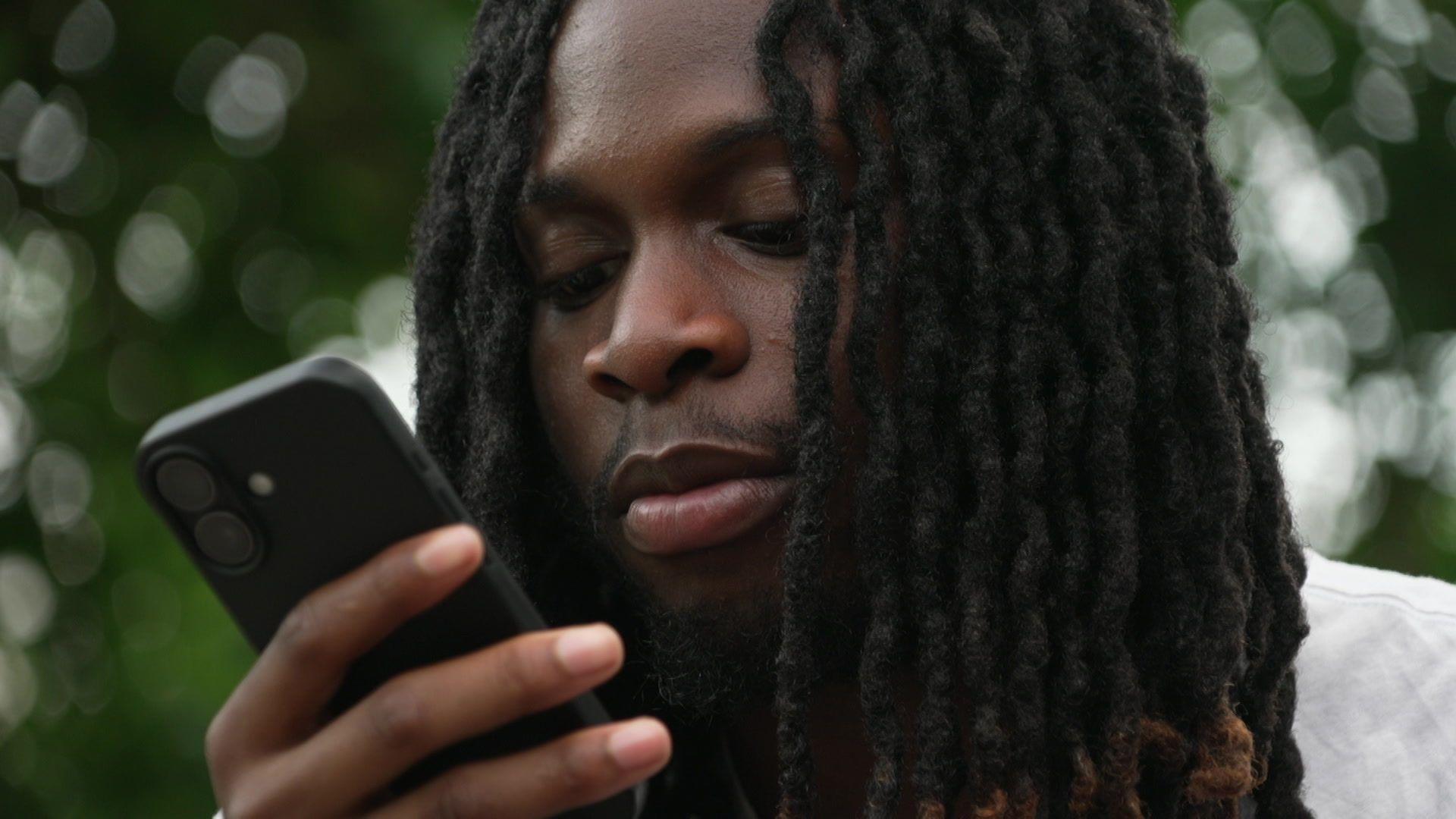
Prince says he doesn’t think those aged around years seven to nine “should really be on social media too much, cos it can kind of loosen up your mind, and obviously show you the wrong things”.
Henry, meanwhile, thinks that “the approach to it should be more, how can we teach young people to use social media the right way, rather than just axe it and say it’s a bad thing”.
Back in Clapham, Powell tells me that although businesses are “a little bit worried” about a repeat of what happened in March, the high street faces a bigger problem from shoplifting and phone theft, which she stresses adult offenders are mostly responsible for.
She wants to see neighbourhood policing continue to improve, but adds that there also needs to be more free spaces – partly provided by the common – that young people feel comfortable in.
“If there’s one section of society that doesn’t feel welcome, you’re never going to have a safe, open, welcoming space, and these kids will be the adults of the future,” she says.
“We want them to feel like Clapham is theirs as well.”
Listen to the best of BBC Radio London on Sounds and follow BBC London on Facebook, external, X, external and Instagram, external. Send your story ideas to hello.bbclondon@bbc.co.uk, external
-
-
Published15 July
-
-
-
Published1 April
-
-
-
Published8 April

-
Disclaimer : This story is auto aggregated by a computer programme and has not been created or edited by DOWNTHENEWS. Publisher: BBC