Advertorial for City of Stirling
For decades, the commercial geography of Australian cities followed a familiar pattern. Businesses clustered around central business districts, while beaches and suburban centres largely served residents, tourists and weekend visitors.
That distinction is becoming less clear.
As organisations compete harder for talent, customers and flexibility, the qualities that once defined desirable places to live are increasingly shaping where businesses choose to invest. Access to transport, commercial space and customers remains fundamental, but businesses are also paying closer attention to the broader environment around them. Lifestyle, amenity and workforce attraction are becoming part of the commercial equation.
Across Australia, this shift is encouraging greater interest in mixed-use precincts that combine employment, housing, tourism, retail and recreation. Rather than separating commercial activity from lifestyle, these areas are bringing them together, creating places where people choose to live, work, visit and spend time throughout the day.
Perth’s northern corridor provides one example of that broader trend.
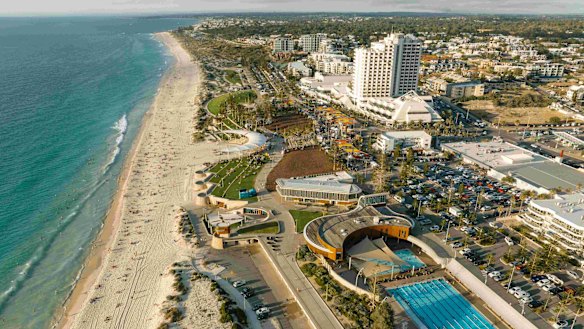
Over the past decade, Scarborough has evolved beyond its identity as a popular beach destination. Alongside investment in hospitality, tourism and public infrastructure, the surrounding area has continued to expand its residential, retail and commercial footprint, reflecting a broader shift towards decentralised economic activity.
“Businesses are looking at location differently than they were even a decade ago,” says City of Stirling Mayor Mark Irwin AM.
“Access to transport and commercial property still matters, but organisations are also thinking about workforce attraction, customer experience and the quality of place where people spend their time. Those factors increasingly influence long-term investment decisions.”
That evolution reflects changing expectations about where people want to live, work and spend their time. Hybrid work has altered how organisations think about location, while competition for skilled employees has encouraged employers to consider factors that extend beyond traditional commercial metrics. Access to quality public spaces, hospitality, recreation and transport can all contribute to an area’s ability to attract people and support economic activity.
Lifestyle becomes economic infrastructure
Lifestyle is no longer simply an outcome of successful cities. It is becoming part of the infrastructure that supports economic growth.
Dining precincts, cultural attractions, walkable public spaces and tourism assets all contribute to local economies by attracting visitors, encouraging longer stays and supporting surrounding businesses. They can also help employers recruit and retain staff by creating locations where people enjoy living and working.
For local governments, this is changing the way urban development is approached. Rather than viewing tourism, retail, commercial activity and public space as separate planning considerations, there is growing recognition that each can reinforce the others when planned together.
Within the City of Stirling, this philosophy is evident across several precincts, each serving different economic functions.
Established employment centres such as Osborne Park and Balcatta continue to support industrial and commercial activity, while Scarborough contributes to tourism and hospitality. Karrinyup Shopping Centre, which attracts more than 13 million visitors annually, highlights the scale of retail activity across the municipality.
Together, these precincts illustrate how lifestyle and commercial activity increasingly intersect, creating a more diverse local economy.
“The City of Stirling offers investors scale and diversity. We have a $19.6 billion economy, more than 26,000 businesses and a workforce catchment of over one million people within 30 kilometres,” says Mayor Irwin.
“That gives businesses access to customers, skilled workers and established commercial precincts while remaining close to Perth’s CBD, the airport and the port.”
The municipality sits 8 kilometres from Perth’s CBD and provides direct access to Perth Airport, Fremantle Port and major arterial roads.
Public transport links, including the free Surf CAT service connecting Stirling Station with Scarborough Beach, strengthen connections between commercial precincts, residential communities and the coastline.
The next stage of Scarborough’s evolution
Scarborough’s transformation has been driven by more than beachfront appeal.
Investment across the precinct has steadily broadened its role from a seasonal destination into a location supporting hospitality, recreation, events and year-round visitation. Public spaces, accommodation, food and beverage offerings and community facilities have combined to create an environment that attracts both visitors and local residents throughout the year.
The Scarborough Beach Gateway sites represent the next stage of that evolution.
Rather than duplicating existing attractions, the City’s vision is to complement the local offerings by introducing new family-focused experiences, hospitality, community facilities and flexible public spaces designed to encourage activity throughout the day and across the seasons.
The emphasis is not simply on development, but on creating places that support a variety of users while strengthening the surrounding economy.
Planning principles for the opportunity include improving pedestrian connectivity, enhancing accessibility, responding sensitively to the coastal environment and creating spaces capable of accommodating recreation, events and everyday community use. Low-scale development, integrated landscaping and strong links between the beachfront and surrounding streets are intended to reinforce Scarborough’s coastal character while supporting greater commercial activity.
“The Scarborough Beach Gateway opportunity is about building on Scarborough’s success rather than replicating what’s already there,” says Mayor Irwin.
“The vision is to create more reasons for people to stay longer, return more often and enjoy the precinct throughout the year by bringing together hospitality, community spaces, family-friendly attractions and flexible public areas that complement the existing foreshore.”
Underlying the proposal is a broader recognition that successful precincts rely on more than individual developments. Their long-term value depends on how public spaces, commercial uses and community facilities work together to create destinations that remain active throughout the year rather than during peak holiday periods alone.
Competing on quality of place
Scarborough’s experience reflects a broader conversation taking place across Australian cities.
As population growth continues and workforce expectations evolve, commercial competitiveness is linked to the quality of the places surrounding businesses. Access to transport, industrial land and commercial property remains essential, but many organisations are also considering whether locations offer the amenities, flexibility and lifestyle that help attract employees and encourage economic activity.
For local governments, that is influencing how investment priorities are evolving. Mixed-use precincts, improved public spaces, tourism infrastructure and transport connectivity are now viewed as complementary parts of the same economic strategy rather than separate planning objectives.
The result is a broader definition of what makes a commercially successful precinct.
Places once seen primarily as residential suburbs or visitor destinations are contributing to broader commercial growth by bringing together business, tourism, community activity and public amenity.
Scarborough’s continuing evolution illustrates how that approach can play out in practice. As Australian cities continue to adapt to changing patterns of work, investment and population growth, the competitive advantage may belong to places that combine commercial opportunity with quality of place.
“Businesses still need good infrastructure and transport connections, but they’re also looking for locations that help attract talented people and create environments where customers and employees want to spend time,” says Mayor Irwin. “That’s increasingly shaping how cities compete for investment.
“Quality of place has become a competitive advantage.”
To find out more, please visit the City of Stirling.
Property listings
From our partners
Disclaimer : This story is auto aggregated by a computer programme and has not been created or edited by DOWNTHENEWS. Publisher: www.smh.com.au