Advertorial for Hospitals United for Sick Kids
Franki Hobson
For Amanda*, one of the hardest parts of her newborn son’s hospital stay was being apart from the rest of her family. While baby Oliver* received treatment for jaundice, she spent long days on the ward, missing her husband and young daughter.
“There were times when I felt quite isolated,” she recalls. “Being away from my husband and daughter for extended periods was difficult, and the days often felt very long.”
Relief came when Oliver was able to continue treatment at home. Through Monash Children’s Hospital At Home program in Melbourne, supported by Hospitals United for Sick Kids, eligible newborns with jaundice can receive phototherapy at home, with daily nursing reviews and round-the-clock clinical support.
This meant Oliver’s dad could share his care, friends could visit and Amanda could be there for both her children.
“Time seemed to move very slowly in hospital,” Amanda says. “Once we got home, life became busy and the days passed much more quickly.”
Across Australia, children spend more than 780,000 nights in hospital each year¹, and further research suggests 90 per cent experience homesickness². For around half, it’s severe enough to affect their wellbeing and recovery.
Helping sick kids get that homely feeling back is Hospitals United’s mission. Its FY26 Impact Report, released this Children’s Week, shows how the projects it funds are making hospital feel more like home, reducing time away and bringing hospital-grade care closer to families.
Early detection of cerebral palsy for Ali, 15 months
In Perth, toddler Ali Hadi loves cars, story time and being outdoors.
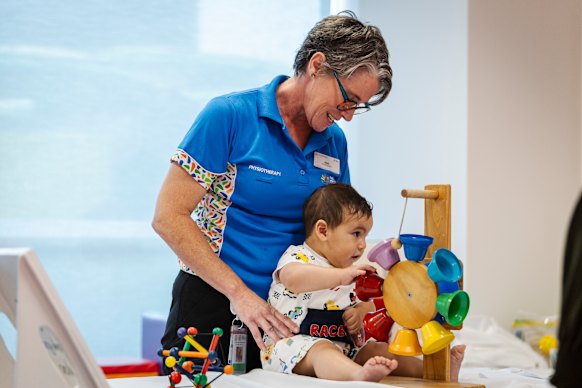
Ali has cerebral palsy affecting all four limbs, particularly his left side. He can lift his head, but isn’t yet able to roll, sit independently or grasp a toy. His mum, Farah, works physiotherapy and stretching into his play. Identified as high-risk from birth, he began therapy at Perth Children’s Hospital almost immediately.
“Intervening as early as possible came into our life at the perfect time, pretty much as soon as Ali was born, before even seeing the true impact of CP on his life,” Farah says.
That opportunity isn’t available to every child. In regional WA, distance from specialist services can delay diagnosis and treatment. Hospitals United is helping fund CONNECT-CP, which trains local clinicians and uses video assessments to identify babies at risk earlier, so more children can start early intervention therapy – bringing care closer to home and improving long-term quality of life – without long trips to hospital.
Needle phobia support for Jack, 11
Jack had always been terrified of needles. Then he was diagnosed with type 1 diabetes, a condition requiring lifelong insulin treatment.
At The Prince Charles Hospital’s emergency department in Brisbane, staff attempted to insert a cannula. Jack was so distressed that several people were needed to restrain him.
The hospital’s child life therapist took a different approach. She listened to his fears, explained the procedure in language he understood and helped him regain a sense of control. Jack managed the procedure calmly, without restraint.
“She was so respectful to him, and she gave him confidence and control,” says his mum, Emma. “It also gave me hope that things would be OK as we started our journey with type 1 diabetes.”
After funding Queensland’s first Child Life Therapy pilot program at the Prince Charles Hospital in 2022, Hospitals United’s funding has since helped extend child life therapy to Caboolture Hospital, where therapists have supported 1500 young patients since July 2025.
Helping sick kids get home
These are three of the many family stories behind Hospitals United’s latest milestone: more than 1.3 million sick kids and their families helped since 2019.
Australia’s only national alliance of children’s hospitals and foundations has raised $15 million and funded 100 projects through eight hospital partner networks nationwide that support 30 hospitals in metros, regional and rural areas.
Other initiatives include therapy dogs comforting children in Canberra Hospital, Precision Dosing of Anticancer Therapy Program at The Children’s Hospital at Westmead and virtual specialist consultations for rural families with John Hunter Children’s Hospital.
“1.3 million sick kids helped, each one a child who got better care and a family who felt less alone. That’s national support for little locals, powered by community, corporate purpose and everyday Australians,” says Hospitals United general manager Ann Billington.
Hospitals United’s product-for-purpose model gives Australians a simple way to give back with their daily shopping by choosing products that support that give back. Funds raised via national partnerships with leading Australian brands such as Coles, Lowes, Duracell, Arnott’s, Mars Snacking, Simplot and Magnum are channelled into locally prioritised projects that help sick kids in every community
Coles has been a long-standing supporter of Hospitals United. Together with its customers, team members and supplier partners, more than $13.8 million have been raised nationally since 2019, making a lasting difference for sick kids and their families.
“We’re incredibly proud that together with our customers, team members and supplier partners, we’ve raised a record $2.39 million this year for sick and injured children and their families. This achievement shows what’s possible when communities come together to make a real difference,” says Coles Group CEO Leah Weckert.
For families like Oliver’s, Ali’s and Jack’s, that support means more time together, earlier treatment and less fear in hospital.
This National Children’s Week, visit hospitalsunitedforsickkids.org to donate or learn more. Or simply add Coles Mum’s Sause for Pasta or Pizza to your Coles basket. With 50 cents from every sale going to Hospitals United for Sick Kids, every dollar makes a difference in helping sick kids and their families.
*Names have been changed to protect privacy.
- Australian Institute of Health and Welfare 2024. Admitted patient care 2023–24: Australian
hospital statistics. Health services series no. 84. Cat. No. HSE 201. Canberra: AIHW - Thurber, CA, Patterson. DR & Mount, KK 2007, ‘Homesickness and Children’s Adjustment to Hospitalization: Toward a Preliminary Model’, Children’s Health Care, 36:1 – 28
From our partners
Disclaimer : This story is auto aggregated by a computer programme and has not been created or edited by DOWNTHENEWS. Publisher: www.smh.com.au