Recent scandals have highlighted how some German politicians are using AI tools in practice, raising questions about transparency, accuracy and trust in leadership.
Germany is weighing new rules on how politicians can use artificial intelligence (AI), after a series of controversies involving AI-written speeches and fabricated quotes.
The issue is becomingly increasingly urgent as AI tools become more deeply embedded in everyday communications.
For people trying to follow political debates in Germany, the question is increasingly not just what politicians say – but how those words are produced and whether they can be trusted.
String of scandals
The push for new rules has been driven by a series of incidents that appear surprisingly careless, given the positions of those involved.
In one prominent case, Mario Voigt, Minister-President of Thuringia, has come under scrutiny after reports that some of his speeches and guest articles may have been produced entirely or with the help of artificial intelligence.
The Frankfurter Allgemeine Zeitung newspaper removed an op-ed by Voigt on the topic of a social media ban for children after signs of AI authorship were identified.
Elsewhere, Karsten Wildberger, Germany’s Federal Minister for Digital Affairs, has also come under pressure after it emerged that several of his speeches and newspaper articles were largely written with the help of AI tools.
These cases alone have raised questions about oversight and judgement. But similar controversies from across Europe suggest a wider pattern.
READ ALSO: Google opens Berlin centre for ‘AI development’
In Sweden, a senior politician was recently forced to apologise after quoting a journalist in a speech – only for it to emerge that the quotation in question had been invented by an AI tool, complete with social media references.
And in Belgium, a prominent public figure and university rector withdrew from receiving an honorary doctorate last autumn after it emerged that a speech she had delivered contained AI-generated quotes incorrectly attributed to figures such as Albert Einstein.
What are the new rules being proposed?
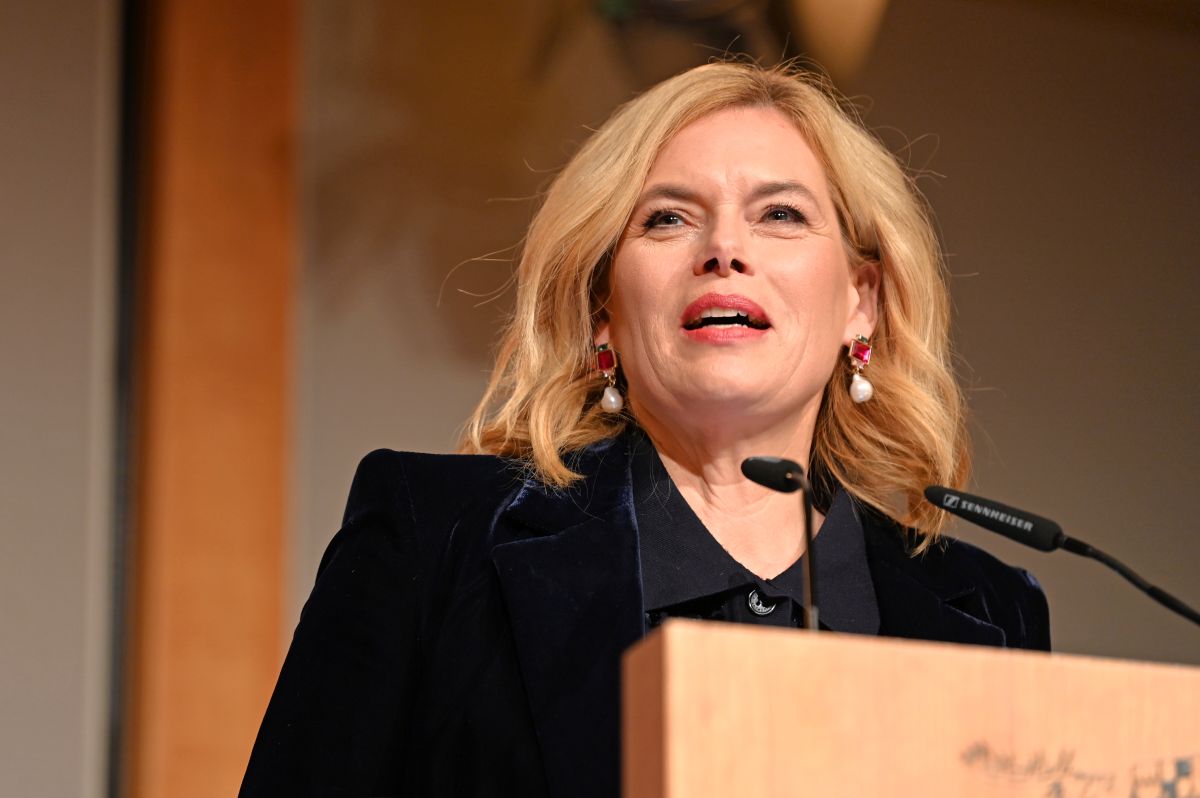
Julia Klöckner (CDU), President of the Bundestag, has made clear that as far as she’s concerned the debate has moved on from whether AI should be used by politicians at all, to how it should be used.
As a result, she has called for rules to be introduced requiring lawmakers to clearly identify which parts of their speeches or texts are generated by AI.
Julia Klöckner (CDU), President of the Bundestag, says the debate has moved on from if AI should be used by politicians to how it should be used. Photo: picture alliance/dpa | Elisa Schu
READ ALSO: German broadcaster recalls correspondent over AI-generated images
Since 2025, the German federal government has had guidelines for AI use in public administration which stress responsible use, accuracy, transparency and compliance with data protection rules. But these guidelines are largely focused on how civil servants use AI tools in administrative work, rather than on how elected politicians present AI-generated content to the public.
By contrast, the new proposals would focus directly on political communication – introducing the idea that voters should be able to see when and where AI has played a role in shaping what politicians say.
Why it matters
Whether the proposed rules for politicians will prevent future scandals remains an open question. What’s already beyond doubt is that experts are increasingly concerned about the impact of AI on politics.
One of the most immediate concerns is accuracy. AI systems are known to generate convincing but false information – including invented scandals, incorrect election rules and fabricated statistics.
One study in the UK found that AI chatbots gave wrong answers to 34 percent of questions posed about elections in Scotland in May, sometimes making up entirely fictitious controversies.
Because AI outputs are presented in a confident and authoritative tone, they can appear reliable even when they are based on flawed or biased data. British readers may be familiar with another recent case from the UK, this time involving Annunziata Rees-Mogg, journalist and sister of conservative politician Jacob.
READ ALSO: Translation firm DeepL cuts quarter of staff in Germany citing AI
In May, she posted on X, stating: “Asylum seekers make up 0.8 percent of Dorset’s population and 44 percent of alleged sex offences. So unbelievable I had to check.”
The remarkably high figure of 44 percent quickly went viral across right-wing social media circles.
Later, when fact-checkers from the BBC’s More or Less statistics program investigated, they found no basis for the figure in any official Home Office or Dorset Police data. Instead, the numbers turned out to match a known data hallucination generated by Grok, the AI chatbot hosted on X.
Despite her claim to the contrary, Rees-Mogg does not appear to have checked the figure before publishing it.
And this is precisely the problem with AI: Chatbots often reinforce pre-existing positions because they are designed to prioritise engagement.
As a result, when AI-generated text is used in political speeches or messaging, there is always a chance of introducing misinformation into policy debates and decision-making processes.
Disclaimer : This story is auto aggregated by a computer programme and has not been created or edited by DOWNTHENEWS. Publisher: thelocal.de