
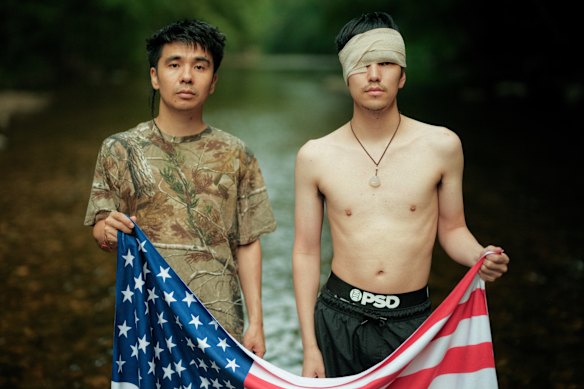
In Ocean Vuong’s latest novel, a character waits to fall asleep as “the day fell away like a photographed snatched by the wind”. Across his literary oeuvre, fingers “blurred/like a photograph,” characters carry “palm-sized” prints, slip them into shirt pockets, visit graves embossed with photographs of the dead.
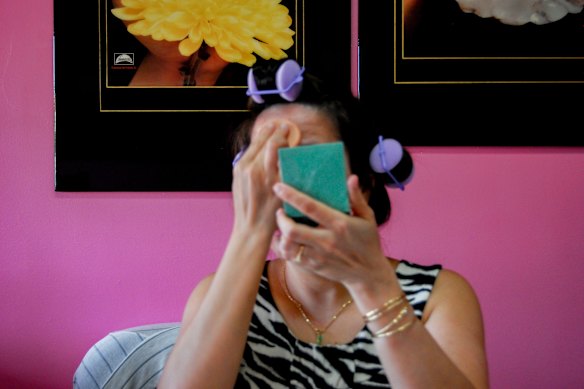
This visual sensibility began in Vuong’s teenage years, spent photographing friends at punk shows and skate parks. In 2009, he borrowed a friend’s camera to photograph his mother at her nail salon, capturing the tenderness of everyday labour against pink walls adorned with pictures of hands.
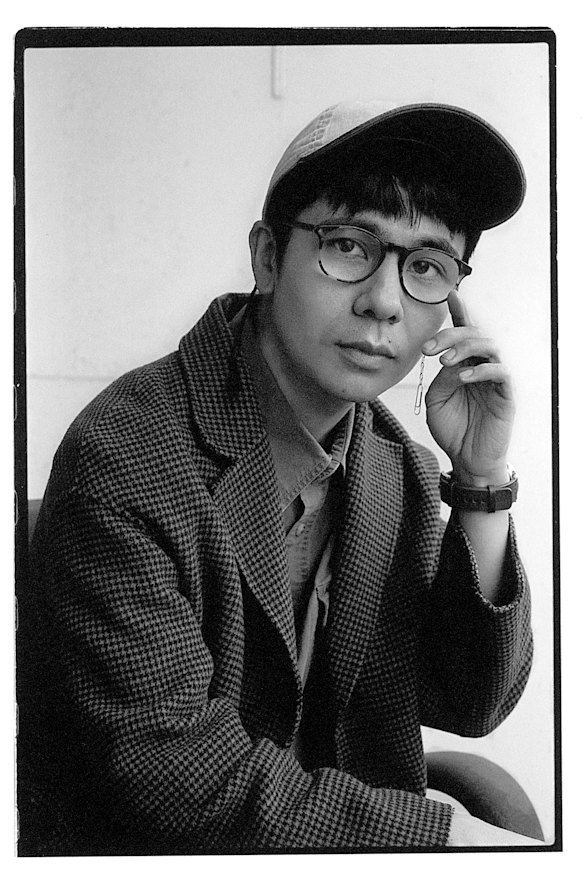
Known for his literary accomplishments, fans of Vuong’s writing span pop and publishing alike – from Madonna and Björk, to Max Porter and Ben Lerner. His many accolades include a MacArthur “genius” grant, received after the publication of first novel, On Earth We’re Briefly Gorgeous, a poetic meditation on inheritance, loss, truth and time.
In a thrilling turn, in December the poet and novelist will step out from the page to show his photographs for the first time in Australia as part of the National Gallery of Victoria’s fourth Triennial.
Vuong’s photography work extends his literary preoccupations. “I think time is one of the most contested elements of human life,” he tells me. “Whose time are we on? Whose money determines time? We use it as a sort of social truth. It is 8.15, or 1 o’clock – what have you. And yet, when we feel time, it exists differently in our bodies.”
He continued to take pictures during his rise to literary fame, but it was only in 2022, when a shoot with Nan Goldin slid into an expansive three-hour conversation that he admitted that he, too, was a photographer. Goldin encouraged him to share his work. He admits: “I’m still running on that permission.”
Art will serve as both barometer and provocation at the Triennial, with over 90 artists from 35 countries showing work that promises to grapple with the complexities of our times. Artists take on the ongoing environmental collapse; the oversaturation of artificial intelligence; the complexities of cultural inheritance. Visitors will be met by Angelina Karadada Boona’s iconic Wandjina, rising up across the gallery’s waterfall entrance, and witness a new installation of works from Wolfgang Tillmans.
Some of the most compelling works also reveal the thin membrane between art and writing. Jenny Holzer’s kinetic sculpture, aptly titled WTF, features a queasy mixture of conspiracy posts and presidential tweets; Christine Sun Kim’s mural States of Mind translates American Sign Language into graphic form; and Shilpa Gupta’s Words Come From Ears fills a train-station flapboard with fragmentary text, inviting viewers to assemble meaning. Gupta returns to the Triennial, having last exhibited in 2017 alongside Zanele Muholi, who will also return, with a newly commissioned three-metre self-portrait as the Virgin Mary, marking a shift from photography to sculpture.
Vuong’s photographs also follow lines of recurrence and revision; he views time as a collaborator, and his work a way to make present the “things that leach through the imagined borders we make of the years.”
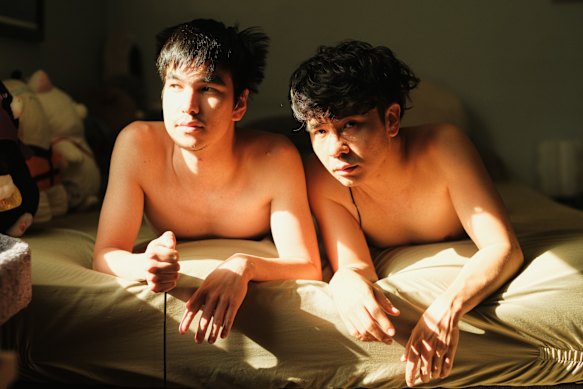
The Triennial will feature a selection of Vuong’s photographs from 2009, alongside newer works also made in the Connecticut River Valley. “New England is mostly known in the American imagination as the puritans, Thanksgiving, apple pie, prep school,” he says. “But the majority of it is inhabited by immigrants who still live and work there. I just never saw that in the American imagination.”
Many of these new quiet, careful portraits feature his younger brother, Nicky – holding their mother’s urn, or standing in a field, or staring up at a New England sky. In a gesture pulled straight from his autofiction, Vuong also occasionally appears both behind and in front of the camera: a particularly startling image finds both brothers, side by side, holding an American Flag.
Has his relationship to the camera changed, after two decades of shooting? “For some reason, I react to the world, and I say yes to it.” Vuong says.
“I say yes, yes, yes. The shutter clicks and says yes – yes.” He admits that he worries that this feeling is “going to corrode. That always goes away, when you make public work. But I’m trying to hold onto that as long as I can.”
The 2026 NGV Triennial will run from December 13 to April 11.
The Booklist is a weekly newsletter for book lovers from Jason Steger. Get it delivered every Friday.
Disclaimer : This story is auto aggregated by a computer programme and has not been created or edited by DOWNTHENEWS. Publisher: www.smh.com.au




