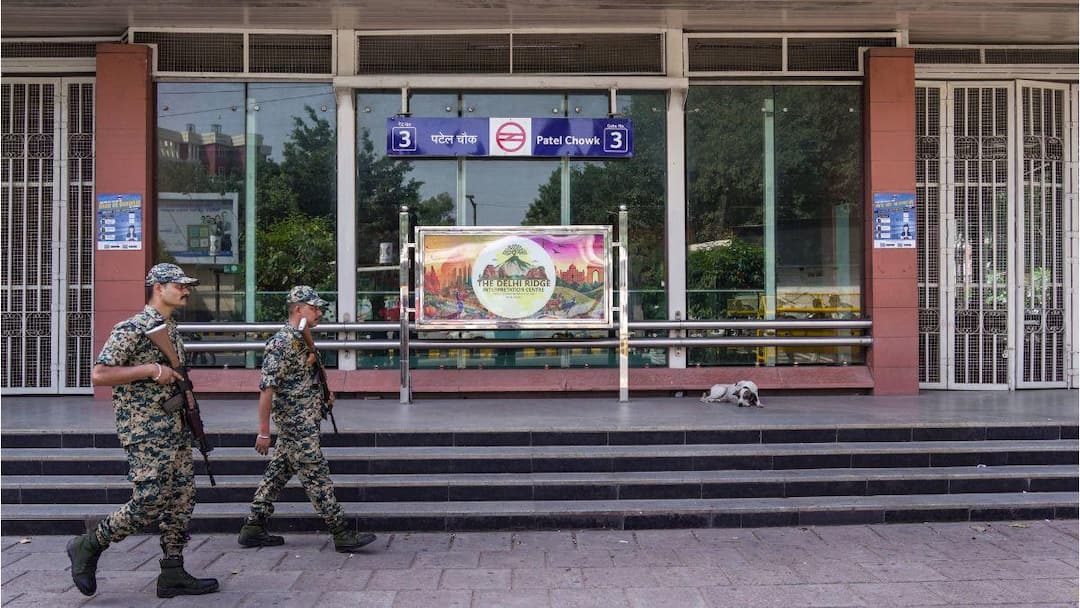
- Delhi Police detailed security for October 10 protests in affidavit.
- 57 metro stations closed, traffic diverted, and internet restricted.
- Measures addressed protests, VIPs, diplomatic visits and security.
- Police denied unlawful detentions or obstructing lawyers/journalists.
Delhi Police have filed an affidavit in the Supreme Court explaining the security measures taken ahead of the proposed protests at Jantar Mantar and other parts of New Delhi on October 10. Police Commissioner Anurag Kumar said the force took necessary steps to comply with the court’s directions and detailed its actions to maintain law and order and secure sensitive areas.
The affidavit outlines the security arrangements made in view of the planned demonstrations, the presence of key government institutions in the national capital, VIP movements, diplomatic visits and other major events during the period.
According to the police, the measures were taken after reviewing the security situation and assessing the possibility of crowds gathering in sensitive areas.
57 Metro Stations Shut Over Security Concerns
Delhi Police said it had sent a proposal to the Delhi Metro Rail Corporation (DMRC) to keep the entry and exit gates of 57 metro stations closed from 9 pm on October 9 until 6 pm on October 10. The move was intended to prevent crowds from moving towards sensitive areas and to avert possible law-and-order problems.
The police also requested the DMRC to reduce the frequency of metro services during the period. On October 10, it wrote to the corporation asking it to lift the restrictions and resume normal train operations from 10 pm.
In the affidavit, the police said the Supreme Court’s direction concerning metro services had already been implemented.
Traffic Diversions Introduced On October 10 And 11
Delhi Police said traffic diversions were implemented on several major roads and intersections from 6 am on October 10 and 11.
Commuters were advised to plan their journeys in advance, avoid unnecessary travel and follow traffic police updates. The police also said 88 diversion signboards had been installed to facilitate traffic management.
Mobile Internet Restrictions Were Limited
The affidavit stated that only mobile internet services were restricted in accordance with the prescribed rules as part of the law-and-order measures. The restrictions were being reviewed in light of the prevailing situation, the police said.
Delhi Police also maintained that no one had been unlawfully detained in violation of the Supreme Court’s directions.
Police Denies Obstructing Lawyers And Journalists
The police said lawyers, journalists and other professionals were not prevented from carrying out their work. According to the affidavit, action was taken against people who violated orders issued under Section 163 of the Bharatiya Nagarik Suraksha Sanhita (BNSS).
The police added that notices concerning Section 163 had been displayed in the designated areas.
The affidavit further stated that notices placed around the Supreme Court premises had been reviewed and removed where necessary. Delhi Police said it was continuously monitoring the law-and-order and traffic situations and would take appropriate measures depending on the circumstances.
Disclaimer : This story is auto aggregated by a computer programme and has not been created or edited by DOWNTHENEWS. Publisher: abplive.com