Late last year, Chilean singer-songwriter Mon Laferte dropped “Femme Fatale,” a smoldering album that was instantly hailed as one of the best Latin records of 2025.
Since the appearance of the iconic “Mon Laferte, Vol. 1” in 2015 — a transformative rite of passage for the Latin Alternative genre — the singer has explored the fusion of retro rock balladry with bolero fever, trip-hop glamour, and jazz decadence. The unifying archetype of the femme fatale, however, elevated Laferte’s songbook to a new level of cinematic noir.
Then she did the unthinkable.
On June 12, she released “Femme Fatale Vol. 2,” a panoramic double album that simmers with ambition. Anchored on a near-orchestral soundstage, its 20 tracks ricochet from in-your-face punk dissonance to majestic broken-heart dirges, a lovely duet with St. Vincent, rootsy folk interludes and farfisa-rich lounge.
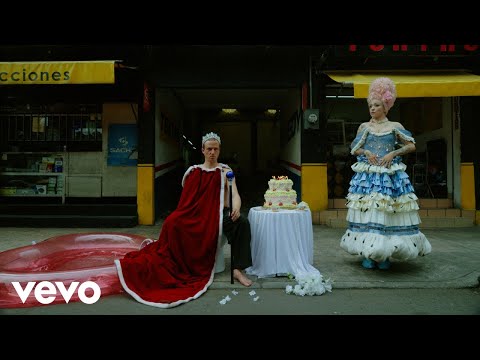
At 43, Laferte’s vocal cords have reached a decadent peak — angry and ragged, deliciously wounded. The new album appears designed to tease, coax and overwhelm the listener. It’s simultaneously jazzy and vulgar, wry and prophetic. It recedes into the past for comfort and illumination, then embraces the present, where Laferte is hailed as a trendsetter. In November, she will play two nights at the Kia Forum, a feat that few Latin American artists can claim.
Laferte, who lives in Mexico, was vacationing with her family in Paris when she spoke to De Los about her songwriting compulsion, the undeniable power of her voice, and a lifelong struggle with mental health. The following Q&A has been lightly edited for length and clarity.
“Femme Fatale Vol. 2” was released only eight months after the first volume. How can you be so prolific?
I’m cheating a little, because both records were part of the same sessions. I was listening to a lot of jazz when I started to work on “Femme Fatale,” and wanted it to have that specific sound that you hear on the title track. All in all I came up with about 50 songs, many of which strayed away from the original concept. In order to keep the first volume more focused, I picked the jazz-oriented tracks for that one, and left everything else for part two.
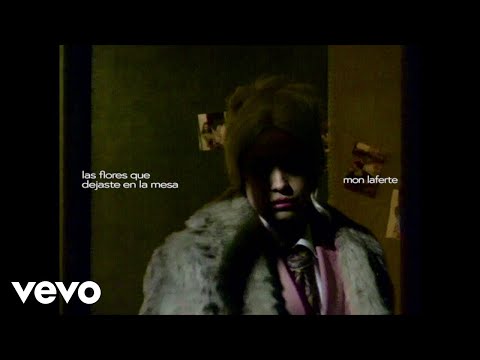
The sheer scope of the album is staggering. I have to admit your creativity frightens me a little.
Muchas gracias [laughs.] Writing songs is one of the things that I love the most about being alive. Once I enter that mode, I get stuck in it. Sometimes I’m at the market, suddenly hear a random sentence, and then it becomes part of a tune. I also steal a lot of cool phrases from my son. The longest song on the album, “No Le Regales Tu Corazón,” manifested itself at 4:30 am while I was working on something else. I grabbed a guitar and finished it in two hours. I didn’t sleep that night.
Is being you exhausting?
Sometimes it is, but I love being me. I hope my epitaph says something to the effect that I lived life to the fullest, taking advantage of every single moment.
I love the plurality of “Vol. 2.” You go punk on “Tal Vez Yo Soy El Problema” and delve into progressive jazz on “Vi Un Poema En Su Locura.” There’s also folk and torch ballads. Were you consciously showing off your range?
There’s a bit of that, yeah. I had the lyrics of “Tal Vez Yo Soy El Problema” — which were already punky in spirit — and decided to be mischievous and do it as a very short song, like a bit of a joke. At one moment I decided to make a song based on the upright bass and add a free-jazz vibe to it. That became “For Your Consideration.” I wanted to prove that I could do whatever I wanted. If I study and spend hours working on something, I can make it happen.
When I was 11, I would lock myself in my room and play the James Bond soundtracks with those lethal John Barry melodies and the larger-than-life voices of Shirley Bassey and Nancy Sinatra. You capture that specific universe so well. “A Pesar De Ti Y De Mí” sounds like an ‘80s Bond song.
I wanted it to be epic. I thought of Whitney Houston when I recorded it. I listened to that kind of music myself as a little girl. I’m vintage — there was no internet when I was growing up, just the radio. I would listen to those spectacular voices and try to imagine what the singers looked like. I would close my eyes and make up stories about the songs. I love old voices, and listening to all kinds of music.
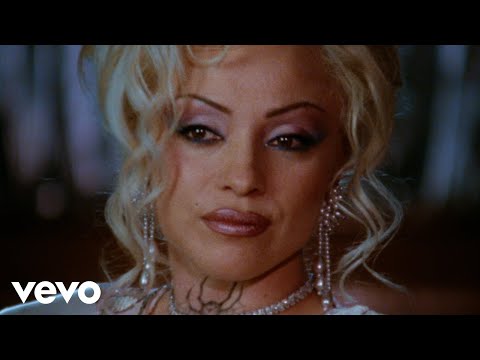
The last track of the album, “Gigante,” ends with a lovely spiral-like melody on the piano. How did you write that?
I just sang the line to my piano player. He wanted to add more elements, but I kept it simple, like a nostalgic mantra. I always write the arrangements to my songs by singing them.
Did you always know you possess the kind of voice that could tame a wild lion?
I’ve had doubts about my voice quite often, but at the same time I’m very much aware that I could tame a lion with it [laughs.] I was very shy as a little girl, and was bullied after changing schools. But I was asked to sing one day, and since then became the most popular student. As a teenager I started to sing on street corners and I noticed that my voice was naturally potent — it could prevail over the traffic and the street noises. I wanted people to turn their heads and feel compelled to keep listening. I know there’s something about my voice, and it has nothing to do with technique. It’s a gift that was given to me, and I’m grateful for it.
Listening to this record, I finally understood why you are idolized by 6 million Instagram followers. I think the common denominator in all of us who love your music is that we are black sheep — the weird ones, the chronically misunderstood.
Absolutely. I’ve always felt misunderstood. I was always weird, and never felt cool. I’ve never followed any trends, and chose moving to my own beat. On the other hand, I do feel that my fans are incredibly cool people.
On “Hello Monserrat” you sing: “I think about Botox/And experimental music/My mother and the loneliness/Of an international tour.” It doesn’t get any more autobiographical than that, right?
It’s a brutally honest tune where I name many of the things that occupy my mind. Should I get Botox? What I love about this song is that it comes to terms with the reality that we will all die one day. Here are my fears, random thoughts and insecurities. I’m naked in front of my songs, and it doesn’t really matter. Nothing is that important anyway.
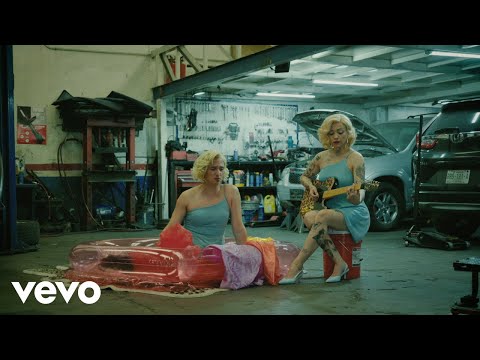
You already beat the system, though. You may die, but your songs will be remembered 100 years from now.
That would be fabulous, but clearly it won’t be the case in 500 years. One hundred would be awesome, though, so that my children can get all the publishing.
You’ve been very vocal about battling bipolar disorder and channeling your hypersensitivity into music. I can’t help but wonder if it’s partly living with all this that allows you to create a record of such unfathomable beauty.
I’ve thought about it when I examine the facets of my career. I’ve always written songs — with or without the pills. You asked me earlier if it was exhausting being me. I answered truthfully, but the first thing that came to mind was my bipolar disorder. I do experience some manic phases from time to time, where I can’t stop doing things like painting or writing songs. This can be a blessing and a curse. I know people who stop taking pills because they cherish those manic spells and the hypercreativity that comes with them. I’ve never stopped taking care of myself, though. I’m in therapy and focused on motherhood. When I become a creative machine, I just try to turn all that energy into something positive. It’s not a bad thing, just a condition that makes me a little different. It has both light and shadow.
More to Read
Disclaimer : This story is auto aggregated by a computer programme and has not been created or edited by DOWNTHENEWS. Publisher: latimes.com