
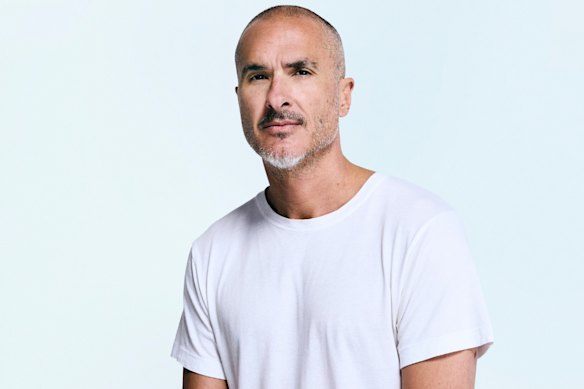
Zane Lowe might be “pop’s unofficial therapist”, but he’s still just a muso at heart.
Here I am, interviewing The Interviewer. As the buzzcut-and-bespectacled face of Apple Music, Zane Lowe has a reputation for getting the world’s biggest musicians to speak candidly in interviews that pierce beyond the pop-star personas.
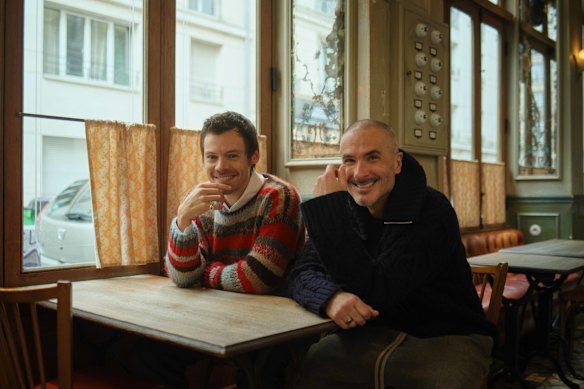
In the 11 years he’s been with Apple Music (following earlier stints with MTV Europe and BBC Radio 1) the 52-year-old Auckland-born musician-turned-broadcaster has stared down Kanye West, spiritualised with Rosalia, shared coffee with Bad Bunny and tears with Harry Styles. If it’s daunting for me, how is it for Lowe being on the other side of the interviewer-interviewee equation?
Lowe laughs. “I used to find it awkward because I always felt more comfortable trying to help other people find answers rather than provide them myself. But now I’m grateful for any opportunity to have a conversation with someone and explore whatever the curiosity is. The good news for you is I know what it’s like to interview someone who’s not willing, so you’re never going to get that from me.”
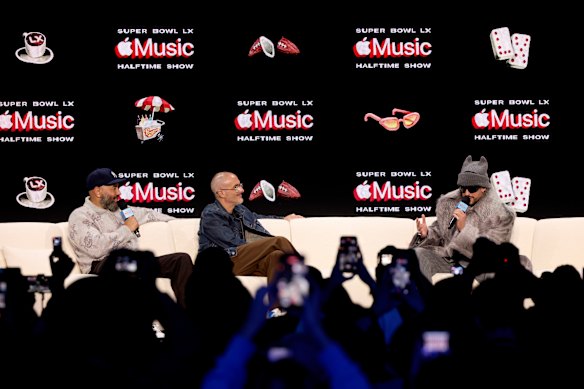
He’s not lying. Within minutes we’re already in the weeds on the state of music journalism at a time when it’s never been valued less. Not long before we speak, the Jeff Bezos-owned Washington Post laid off much of its arts staff, including Chris Richards, one of the world’s best pop critics.
“My whole life there’s been a pretty consistent through line of the arts being undervalued whenever someone needs to save money in the budget, and it’s such a short-sighted thing because, like, what a gift! How much do we get out of exploring the art that’s created by other people? How much do we learn about ourselves, about our community, about what’s going on? It’s so important.”
As one of the few spaces regularly doing in-depth, long-form, full-access interviews with the biggest names in music, Lowe’s conversations can set the cultural narrative around an artist. Artists will seek him out when the next album’s promo cycle needs its serious sit-down. At this point there’s almost an expectation that Lowe’s interviews will be earnest, vulnerable, revealing. The New York Times once described Lowe as “pop’s unofficial therapist”. Is that how he feels?
“No, no,” he says, laughing. “I have a therapist and I know how much of a highly educated skill set that is. What I am is a music fan, and a musician, who’s trying to create a safe space for artists to learn something about themselves and in the process share that with other people. I did my 10,000 hours of asking about drum sounds and I don’t go to those places much any more. I’m trying to get inside how someone feels about themselves and about the world and what’s inspired this music.”
In an era of the sticky headline or the TikTok gimmick gone viral, Lowe’s interviews feel like a throwback – they’re sprawling, languorous, unobtrusive, non-combative. In the time of, say, Hot Ones and Call Her Daddy (Lowe likes them both), has his understanding of his job changed?
“Look, I’m a musician first and foremost, and I probably haven’t done a good enough job of really making that point as I continue to do this in the media,” Lowe says of his past as a DJ and record producer, including early stints in New Zealand bands Urban Disturbance and Breaks Co-Op. “I always felt like, well, if I’m not making music, I should talk about it. I have a critical opinion like anybody else, but when it comes to what I do and how I support the arts, I choose to do it from the point of view of a fellow musician, not as a critic.”
Like any online personality, he has, it seems, checked the comments. “Anyone who says, ‘Oh, you don’t ask the tough questions’, I would answer, ‘Well, what is a tough question?’ Because I don’t ever walk away from a conversation with somebody that I think was really compelling and think I didn’t ask a tough question because we went to deep places and got deep answers. I understand the desire to ask questions that create headlines but that’s just one form of tough question. I prefer to open the door and see how far the artist wants to go through and then go with them as far as they want to go. And that’s pretty far almost every time.”
Chill as ever in khaki pants and a beige cardigan, Lowe is sprawled on a sofa in his office in Apple Music’s headquarters in Culver City in Los Angeles, where he’s lived with his wife Kara Walters and their two sons for more than a decade. As well as an “in conversation” appearance at Vivid Sydney later this month (part of Vivid Minds’ Creative Trailblazers series), he’s also gearing up to release his first album in years.
“I’m just finishing it right now,” Lowe says. “It’s been a really rewarding and beautiful experience for me and, you know, once I put one out I know I’m just gonna go ahead and make another 20 of them.”
After intimately picking the brains of top artists for decades now, he’s surely learnt a trick or two? Lowe scoffs. “Can you imagine how awful that would sound if I made an album that sounded like a conglomeration of everything I’ve learned regarding music? It’d be like that episode of The Simpsons where Homer gets to design his brother’s car.”
So we’re not getting the ultimate Frankenstein of albums? “I can guarantee you it is not that, and that I’m not pulling any favours from anybody, either. It was something I did for myself, by myself, and I’m really proud of it.”
On a recent podcast, industry titan Jimmy Iovine – Lowe’s former colleague at Apple Music (“boss/mentor,” Lowe corrects) – said that “the streaming services are minutes away from being obsolete”. The major streamers are disliked from all sides, Iovine argued – by artists and record labels for siphoning their income, and listeners and fans for their ethical oversights. At the risk of upsetting his current employer, does Lowe have a vision of what might come after Apple Music and Spotify are gone?
“I just follow the music and I always trust the artist to figure out what is most important to them,” says Lowe. It’s why he left BBC Radio 1 for Apple Music in 2016, when he realised the era of “appointment listening”, from a music radio point of view, was over. “I went, OK, I want to keep being a part of the storytelling around music and I want to keep exploring that curiosity, so I’m going where the music is going – and it was going to streaming services.”
But where is it going next? “I’m excited by the idea of artists moving in a way that isn’t necessarily beholden to math and isn’t necessarily considered a success or failure based on how many zeroes are on the end of it or how many ‘likes’ something has,” says Lowe.
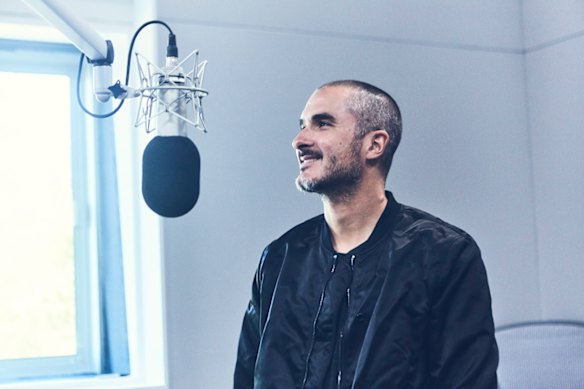
“It doesn’t just extend to the way music is distributed today, it extends to social media, to the internet age, just to the level of anxiety that the math can cause. And I know this as someone who’s gearing up to put something out and reminding myself that, like, 10 people is enough! If they truly love it then it’s OK and you got what you needed from it. Move on and make another one.
“I think sometimes the results side of this business has become very high-frequency and very high-anxiety. I think if I was a young artist today I would be looking at the internet as an undeniable tool, but I’d also have enough altitude, now it’s been around long enough, to see what it promises and doesn’t deliver on, and try and find ways to build a community for myself using other tools alongside the internet, and not just putting everything in that basket.”
I literally just picked up my copy of Michael Azerrad’s Our Band Could Be Your Life and re-read the Fugazi chapter because it feels so prescient right now, I tell Lowe. When the music industry’s strategy for success is simply to trust the algorithm, you start questioning if there’s another way.
“I think musicians are figuring out that there are new ways of doing things,” says Lowe. “Look at what’s going on in Chicago – there’s a great DIY scene out there, with Lifeguard and Horsegirl and all these kids doing shows and handing out cassettes and doing rad stuff … The internet is an undeniable tool but I don’t believe it is the answer to everyone’s goals or objectives. There are old ways that still resonate. Hard work still matters. Tending to an audience and fostering that relationship still matters. And there’s lots of ways you can do that.”
It’s hard to resist getting Lowe’s take on all the music industry’s ills. The week I spoke to him, two of Australia’s most anticipated music festivals pulled the pin: first Rolling Loud, which was due to return for the first time since 2019, and then Bluesfest.
“I’m sorry to hear that,” Lowe says. “I remember when they announced the Big Day Out wasn’t coming back and I was crestfallen. I was like, ‘What do you mean? There’s no reason for it not to exist! It should go on forever. Every time I go to it, it’s amazing. The line-up is diverse, it’s fun, it’s tasteful, how is this going away?’”
Considering festival culture is still booming in the US and UK, does he have any ideas for us? “You know what I’d like to see more of?” says Lowe. “Events that are trying to appeal at a more grassroots level. Maybe a lower cap, more affordable, where artists get to play on not the biggest stage in the world but a bigger stage than they play on normally.
“Maybe people should be trying to put on some well-organised, safe events, with camping at 5000 to 15,000 people – I’m just making this up – and maybe Way Dynamic is third to top on the bill and maybe Way Dynamic will go, ‘Wow, we’re playing at 8pm! We haven’t played a festival at 8pm before, so let’s make a bigger show!’ Next thing you know, their whole trajectory changes because the context around the event pushes Way Dynamic into something new.”
I like it: justice for Way Dynamic. “I think the audience want something like that,” says Lowe. “I want something like that! I would love to go and see a bunch of bands that perhaps on a big festival would be sitting at the 2pm to 5pm space, going on at 9pm in front of a smaller crowd in a more affordable way. I’ve still got a drink in my hand, I’m still seeing great bands and I’m watching somebody discover themselves on a stage they probably didn’t expect to play at this point, which means there’s a maturity and confidence that comes from that.
“I just think that maybe on a scale level we need to create more of a hierarchy of experience, rather than just keep driving big-ticket prices for big-ticket events. And I wonder whether we need to create events around music at all different times in the journey and not just wait for the math to get so big before we’re ready to go? Because then you’re dealing with a finite amount of artists, and that’s also the era of ‘no’. When an artist starts doing well, the word ‘no’ comes into play a lot more readily than it does in the beginning. So maybe we move to the era of ‘yes’ a little bit more? Just an idea.”
Zane Lowe: In Conversation is at City Recital Hall as part of Vivid Minds on May 24.
Disclaimer : This story is auto aggregated by a computer programme and has not been created or edited by DOWNTHENEWS. Publisher: www.smh.com.au


