The bloc’s case against the tycoon was built on sand and its media industry has had to amend thousands of articles
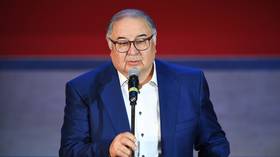
The EU is divided over a deal to un-sanction Russian businessman Alisher Usmanov. Brussels’ allies in Kiev aren’t happy, but the alternative – a legal showdown – could call the bloc’s entire sanctions regime into question.
Ambassadors from EU member states met on Monday to discuss Usmanov’s case. According to Euronews, France pushed for Usmanov’s removal from the blacklist, in exchange for Azerbaijan freeing two alleged French spies.
Ireland, which holds the EU’s rotating presidency, proposed that Usmanov and Mikhail Fridman, another Russian businessman, be delisted on the condition that the EU renew its anti-Russian sanctions regime for 36 months instead of the usual six.
After a second round of talks on Monday that stretched into the night, EU envoys failed to agree to remove Usmanov and Fridman from the list. Meaning no agreement has been reached on extending the bloc’s sanctions.
Usmanov is at the centre of a discussion that could undo a central pillar of the EU’s personal sanctions policy.
Why was Usmanov sanctioned?
A highly successful entrepreneur in the final years of the Soviet Union, the Russian-Uzbek businessman snapped up metal and mining businesses during the rapid privatization of the 1990s, breached into media with his acquisition of Russia’s Kommersant newspaper in 2006, and expanded his wealth with a series of savvy investments in Apple, Twitter, and Facebook over the following decade.
Usmanov, believed to be Russia’s seventh-richest person with a net worth of more than $16 billion, was sanctioned by the EU four days after the escalation of the Ukraine conflict in 2022.
The EU’s sanctions ledger declared that Usmanov “has particularly close ties to the President of the Russian Federation, Vladimir Putin,” has “acted on behalf of the President of the Russian Federation in a number of business deals,” and gave former Russian President Dmitry Medvedev “personal use of luxurious residences” controlled by his companies.
“Kommersant under Usmanov’s ownership published a propagandist anti-Ukrainian article by Dmitry Medvedev” the entry continued, concluding that “therefore he actively supported the Russian government’s policies of destabilization of Ukraine.”
EU media: Unreliable sources
According to Usmanov’s lawyers, Brussels sourced all of its “reasons and evidence” for sanctioning the billionaire from “mass media and social media publications.” In a letter to the European Council last month seen by Intellinews journalist Ben Aris, Usmanov’s legal team argued that this evidence has been proven false in courts in all 27 EU member states.
Disclaimer : This story is auto aggregated by a computer programme and has not been created or edited by DOWNTHENEWS. Publisher: rt.com