European and Nato leaders have expressed full support for Estonia and Ukraine after the Baltic state said an August arson attack on a drone manufacturer supplying Kyiv was an act of sabotage commissioned by Moscow’s security services.
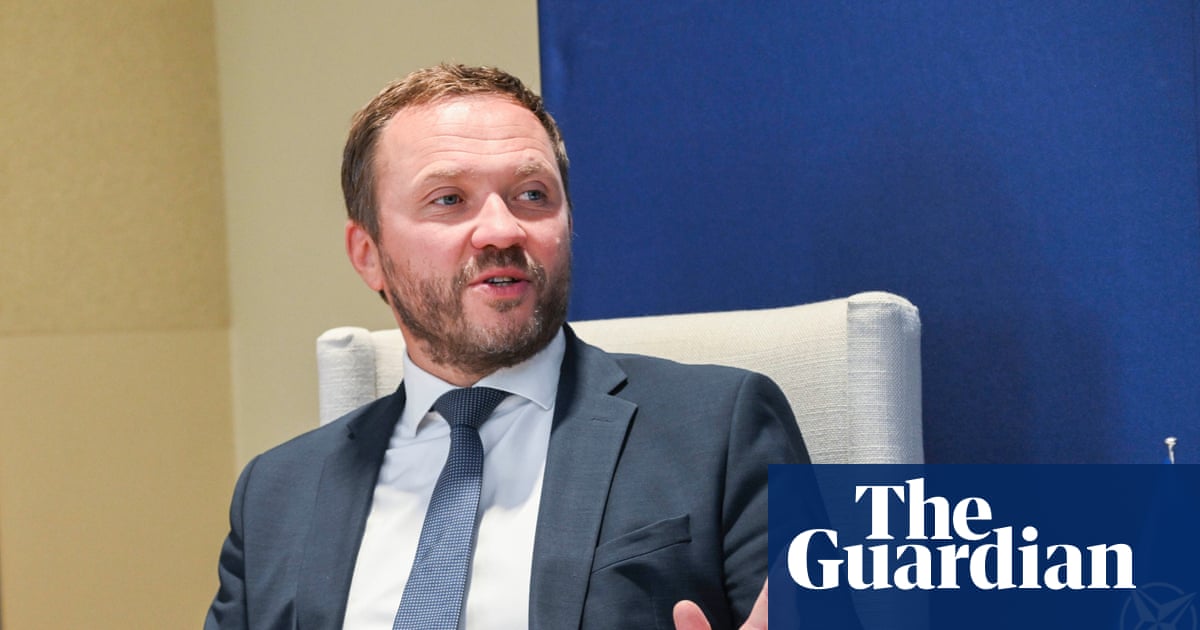
Estonia’s foreign minister, Margus Tsahkna, said on social media on Tuesday that such attacks were “absolutely unacceptable” and that Russia’s chargé d’affaires in the Estonian capital, Tallinn, was being summoned to his ministry.
Estonia’s national security agency said a fire broke out on 15 August at a building in Tallinn used by Milrem Robotics, which makes unmanned ground vehicles used in Ukraine. Two Latvian suspects were detained in Latvia on 17 August, followed by a third the next day. All three were handed over to Estonia, it said.
Tsahkna said the subsequent investigation had led authorities to “conclude with certainty” that the attack was “an act of sabotage ordered by the special services of the Russian Federation”. It was part of a “broader campaign across Europe aimed at intimidating us and weakening our support for Ukraine”, he said.
Estonia’s prime minister, Kristen Michal, said his country’s response to Russia’s campaign would “be the opposite: stronger security at home, more support for Ukraine and greater pressure on Russia. We will not be intimidated.”
Estonia has repeatedly accused Russia of hybrid provocations since the beginning of Moscow’s full-scale invasion of Ukraine in 2022 and, along with its fellow Baltic states Latvia and Lithuania, has significantly increased its defence spending.
Dmitry Peskov, the Kremlin spokesperson, said Estonia’s allegations were “unfounded, ill-considered, absolutely not reflecting the reality, not containing any substantiation whatsoever”. He said Russia “cannot take such statements seriously, and we won’t”.
Western allies pledged their continued support to Estonia and Ukraine. Speaking in Brussels, Mark Rutte, Nato’s secretary general, said Russia “continues its reckless campaign of hostile actions against Nato allies”, adding that it was “failing … on the battlefield in Ukraine, and failing to undermine our unity and support for Ukraine”.
Speaking alongside Rutte, Lithuania’s prime minister, Mindaugas Sinkevičius, said Russia’s actions were becoming “increasingly hostile and less restrained … We see the hybrid attacks – in Lithuania, Poland, Germany, elsewhere. And it’s not a question of proximity now, it’s a question of Russia’s actions.”
Lithuania’s foreign minister, Kęstutis Budrys, said Russia’s fingerprints were “all over” the Tallinn attack, while the Latvian president, Edgars Rinkēvičs, said further support for Ukraine “will be needed, and must be provided”.
The EU said it stood with Estonia, describing the arson attack as “reckless” and saying it would not be put off supporting Ukraine. “Moscow is trying to scare Europe into winding down its support for Ukraine. This will not happen,” a European Commission spokesperson said.
France’s president, Emmanuel Macron, called the arson attack a “dangerous escalation”. Moscow “needs to know that it will not overcome our unity or our determination to continue supporting Ukraine”, Macron said on social media.
Sweden’s acting prime minister, Ulf Kristersson, called Estonia’s formal attribution of the attack “extremely serious”, and Britain’s ambassador to Estonia, Jo Lomas, said the UK “stands with Estonia in confronting these unacceptable attacks. They will not weaken our resolve or our support for Ukraine.”
About 200 incidents of suspected Russian sabotage and malign activity have been recorded across Europe since Moscow’s invasion of Ukraine, including arson plots at warehouses, drone incursions, thefts of defence technology and cyber-attacks on essential European infrastructure.
Agence France-Presse and Associated Press contributed to this report
Disclaimer : This story is auto aggregated by a computer programme and has not been created or edited by DOWNTHENEWS. Publisher: theguardian.com